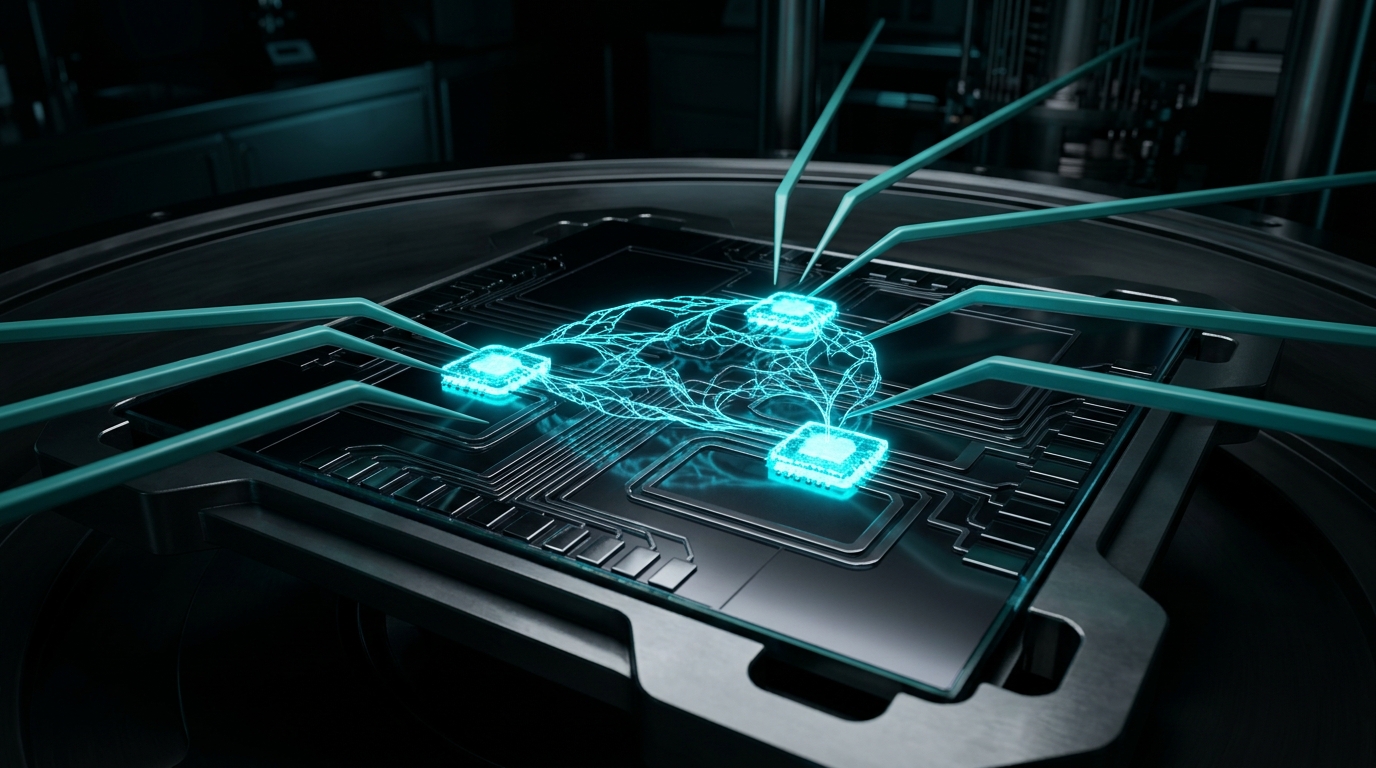
- A new analysis (arXiv:2606.09217) models four standard QKD protocols (BB84, B92, BBM92, E91) over Low Earth Orbit links under diffraction, turbulence, attenuation, and pointing errors — protocol choice, not hardware, dominates key-rate outcomes.
- High-dimensional HD-BB84 delivers higher key rates, superior noise tolerance, and more favorable key-rate distributions than HD-Extended B92, making it the stronger candidate for noisy uplinks.
- For your security posture: satellite QKD is the only credible path to break the distance ceiling of fiber-based quantum key exchange and harden global links against quantum attacks on RSA and Diffie-Hellman.
Why Fiber QKD Can’t Protect a Global Enterprise
A “harvest now, decrypt later” adversary is already capturing your TLS sessions, VPN tunnels, and inter-datacenter replication traffic. The bet is simple: store the ciphertext today, decrypt it the moment a cryptographically relevant quantum computer can factor the RSA or solve the Diffie-Hellman keys that protected it. Any data with a confidentiality shelf life beyond a decade — patient records, financial ledgers, state secrets, long-lived signing keys — is exposed the instant that key exchange is broken.
Quantum Key Distribution (QKD) answers this differently than post-quantum algorithms. Instead of swapping one math problem for a harder one, it derives keys whose security rests on physics: any eavesdropper measuring the quantum channel disturbs it and is detected. As the source states plainly:
“Quantum Key Distribution (QKD) has emerged as a fundamentally secure approach to communication in the era of quantum computing, offering protection against threats posed to classical cryptographic schemes such as RSA and Diffie-Hellman.” — arXiv:2606.09217
The catch is reach. Fiber-based QKD loses photons exponentially with distance, capping practical links at a few hundred kilometers without trusted-node relays — and every trusted node is a new attack surface you must physically secure. A continent-spanning or intercontinental QKD backbone built on fiber is not an engineering inconvenience; it is structurally impossible without compromising the trust model.
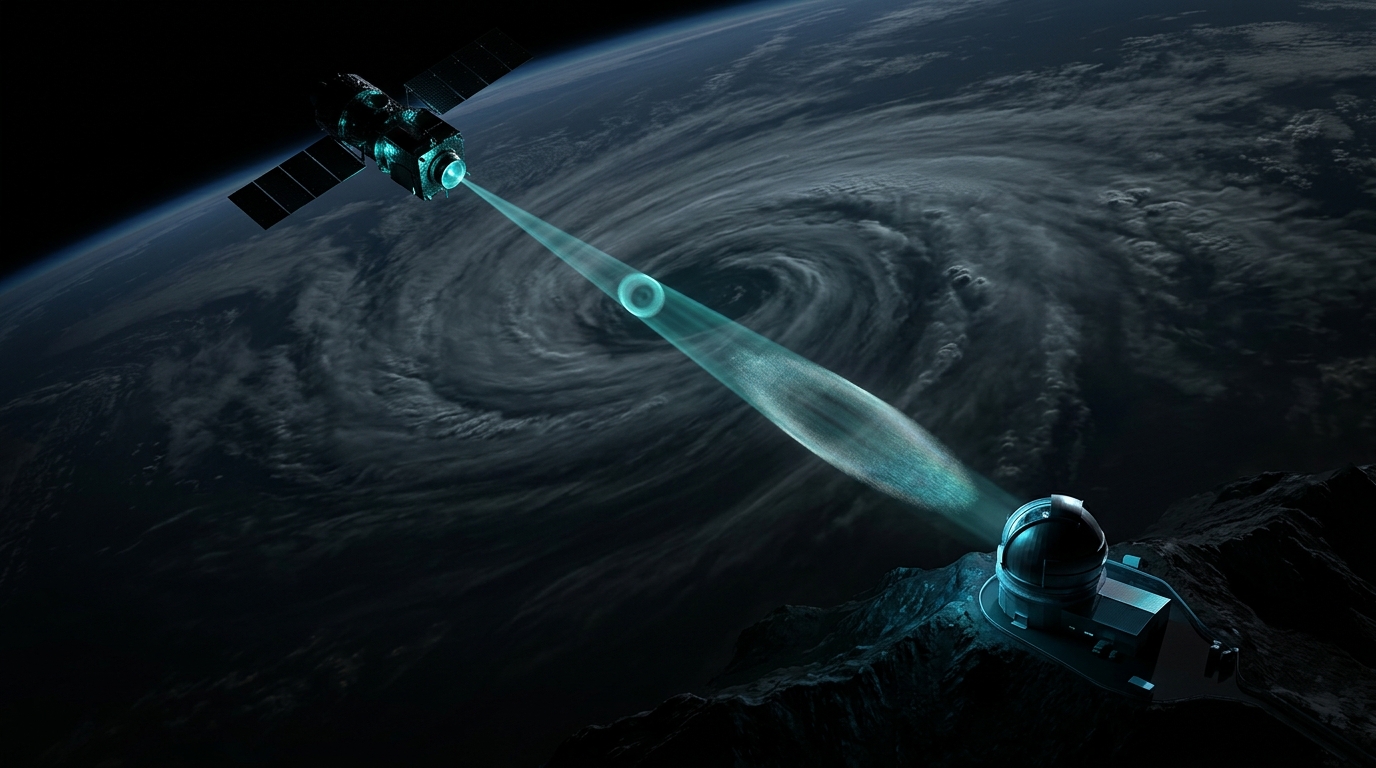
Satellite-based QKD removes the fiber from the longest leg. A Low Earth Orbit (LEO) satellite distributes keys to ground stations thousands of kilometers apart through free space, where loss scales far more gently than in glass. That is the architecture this research evaluates — and the reason it matters to anyone designing communication that must stay confidential into the 2040s.
What Is Satellite QKD? A Definition for Decision-Makers
Satellite Quantum Key Distribution is a method of generating shared secret keys between distant ground stations by transmitting single photons (or entangled photon pairs) through free-space optical links to and from an orbiting satellite, using the laws of quantum mechanics to guarantee that any interception is detectable. Unlike post-quantum cryptography, which replaces vulnerable algorithms with quantum-resistant math, QKD secures the key-exchange channel itself — the two approaches are complementary layers, not competitors.
The research splits the protocol landscape into two families, each tested over both uplink (ground-to-satellite) and downlink (satellite-to-ground) channels, because the two directions behave very differently.
Prepare-and-Measure vs. Entanglement-Based
- Prepare-and-measure protocols — BB84 and B92 — encode key bits into the polarization or phase of photons the sender prepares directly. They are simpler to deploy.
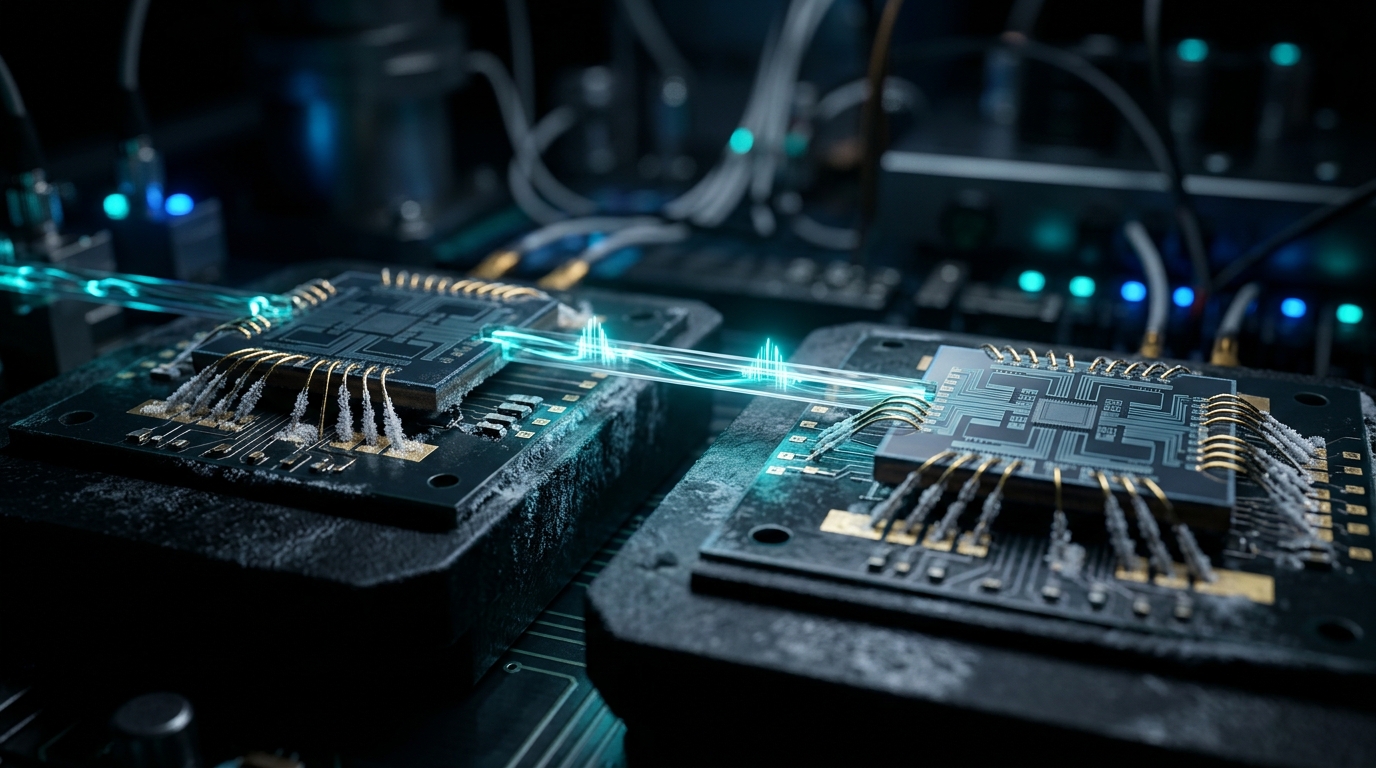
- Entanglement-based protocols — BBM92 and E91 — distribute entangled photon pairs and derive correlated keys from joint measurements. E91 additionally uses a Bell-inequality test, tying security to a verifiable physical violation rather than trust in the source.
[IMAGE: A single photon beam splitting as it travels from a LEO satellite through a turbulent atmospheric layer toward a ground station, with the beam distorting into an elliptical cross-section]
Technical Deep-Dive: Modeling the Atmosphere Honestly
The contribution that matters here is realism. Earlier QKD performance claims often assume idealized channels. This work runs the four standard protocols through a circular beam propagation model that incorporates the four physical effects that actually degrade a space link:
- Diffraction — the beam spreads geometrically over the link distance.
- Atmospheric turbulence — refractive-index fluctuations scatter and wander the beam.
- Attenuation — absorption and scattering drain photons from the channel.
- Pointing errors — imperfect satellite-to-ground tracking misaligns the beam.
Environmental noise is layered on top, and simulations sweep across varying weather conditions and zenith angles (the satellite’s angle from directly overhead — higher angles mean more atmosphere to punch through). The headline finding for architects:
Protocol performance is strongly influenced by channel asymmetries, beam propagation characteristics, and noise — meaning the “best” QKD protocol is not universal; it depends on whether you are securing an uplink or a downlink and the conditions you operate under.
This is the insight that changes procurement. A vendor demo showing strong key rates on a clear-sky downlink tells you almost nothing about how that same protocol performs on a turbulent uplink at a low zenith angle.
High-Dimensional QKD: More Bits Per Photon
The second half of the study pushes into high-dimensional (HD) QKD, where each photon carries more than one bit by encoding into a larger state space. To model turbulence accurately at high dimensions, the authors swap the circular model for an elliptic-beam approximation, which captures how turbulence distorts the beam into an elongated, wandering ellipse — a more faithful picture of what a real receiver sees.
Two HD protocols were investigated: HD-BB84 and HD-Extended B92. The result is decisive:
HD-BB84 achieves higher key rates, superior noise tolerance, and more favorable probability distributions of the key rate compared to HD-Extended B92 — making high-dimensional BB84 the front-runner for noisy, real-world satellite channels.
For a CISO, “superior noise tolerance” translates directly to uptime: a protocol that keeps producing usable key material through cloud cover and atmospheric scintillation is a link you can actually depend on for production traffic.
Comparison Table: Protocol Selection at a Glance
| Protocol | Family | Encoding | Reported Strength | Best-Fit Role |
|---|---|---|---|---|
| BB84 | Prepare-and-measure | Standard (qubit) | Well-studied baseline | Reference deployment, simpler links |
| B92 | Prepare-and-measure | Standard (qubit) | Minimal-state simplicity | Constrained hardware |
| BBM92 | Entanglement-based | Standard (qubit) | Source-independent keys | Untrusted-node topologies |
| E91 | Entanglement-based | Standard (qubit) | Bell-test-verified security | Highest-assurance links |
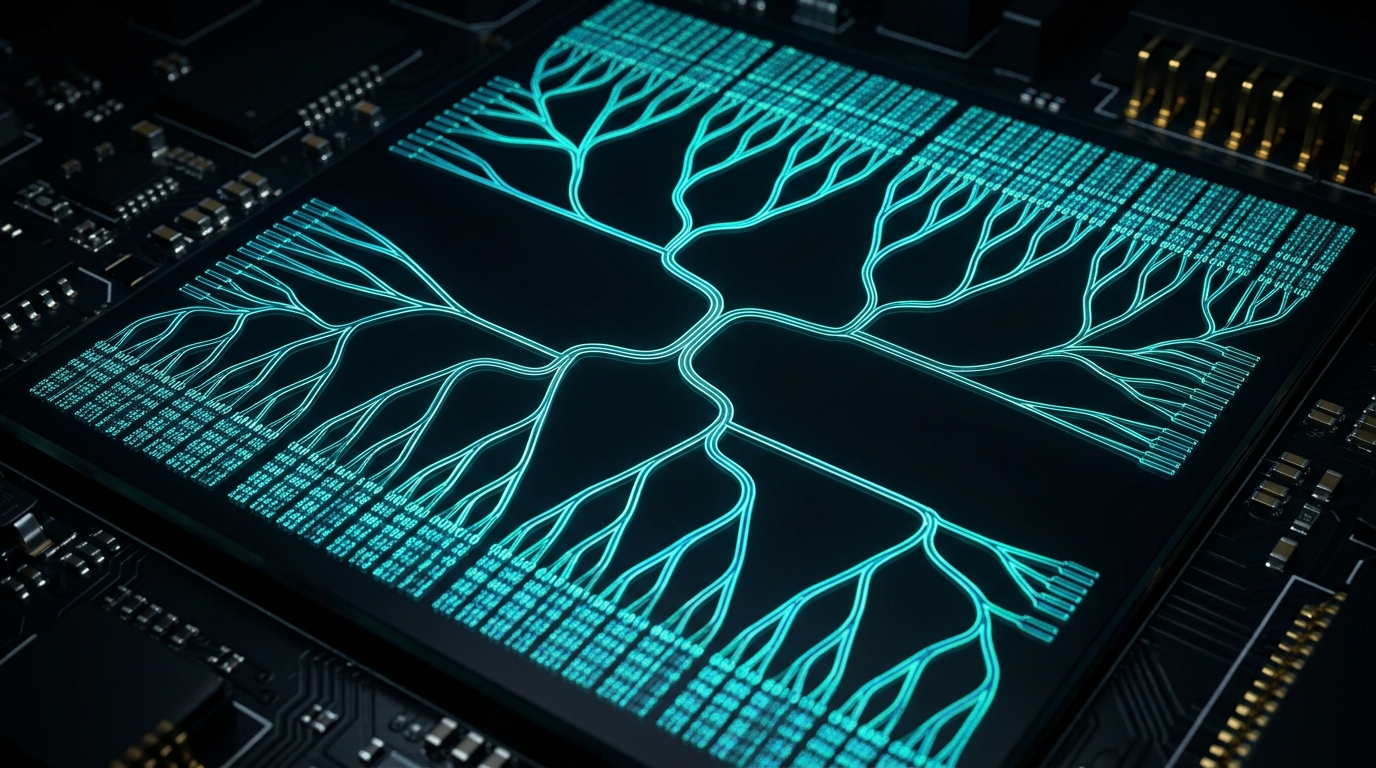
| HD-BB84 | High-dimensional | Elliptic-beam model | Higher key rate, superior noise tolerance | Noisy uplinks, throughput-critical links |
| HD-Extended B92 | High-dimensional | Elliptic-beam model | High-dimensional encoding | Lower-priority than HD-BB84 |
Last updated: June 10, 2026. Based on the protocol evaluation in arXiv:2606.09217. Specific key-rate figures (bits/second) and QBER thresholds were not published in the source abstract.
Industry Context: Where Satellite QKD Fits Your Roadmap
The regulatory clock is the forcing function. NIST finalized its first post-quantum standards (ML-KEM, ML-DSA) in 2024 and is steering federal systems toward migration this decade. PQC is the near-term, software-deployable answer for most enterprises. But PQC and QKD are not either/or: PQC hardens the algorithms, while QKD hardens the physical key-exchange channel for the highest-value links where you cannot afford to bet solely on the durability of a single math problem.
Real-world momentum is already visible in space. China’s Micius satellite demonstrated intercontinental entanglement-based key distribution years ago, and European and commercial programs are building toward operational constellations. What this research adds is the engineering discipline underneath those headlines: a quantitative basis for choosing which protocol to fly, given the brutal physics of the atmosphere.
The economic logic favors early auditing over early building. You do not need a satellite contract today. You need to know, today, which of your data flows have a confidentiality lifetime long enough to outlive RSA — because those are the flows that will eventually justify a quantum-secured channel, and the cost of identifying them now is trivial against the cost of discovering them after the fact.
The BeQuantum Perspective
The lesson we draw from this analysis is that channel-aware design beats protocol dogma. There is no single “most secure” QKD protocol — there is the right protocol for a given link direction, zenith angle, and noise floor. That maps directly onto how we think about layered quantum-secure architecture.
Our PQC Layer is the pragmatic first move: it deploys NIST-standardized post-quantum algorithms across your existing TLS and VPN endpoints now, with no orbital hardware required, closing the harvest-now-decrypt-later window for the bulk of your traffic. For the highest-assurance links — where a customer is planning toward satellite or free-space QKD — the value of work like this is a selection rubric: prefer entanglement-based protocols (E91, BBM92) where you cannot trust intermediate nodes, and prefer HD-BB84 where the channel is noisy and throughput matters.
Where QKD distributes the key, our Digital Notary anchors what that key protected. A blockchain-backed, quantum-resistant attestation records that a given message or artifact was authentic at a given time — so even as key-exchange technology evolves underneath you, the provenance record remains verifiable. The pairing is deliberate: QKD secures the channel, the Digital Notary secures the history.
What You Should Do Next
- Within 90 days, audit your TLS certificate chain and long-lived data flows. Identify every channel carrying data with a confidentiality requirement beyond 10 years. These are your quantum-migration priorities — and the only candidates that will ever justify QKD economics.
- Within 6 months, deploy a post-quantum key-exchange pilot on one high-value link using NIST-standardized ML-KEM. PQC is available now and addresses the same threat QKD targets, without waiting for orbital infrastructure.
- Track satellite QKD as a roadmap item, not a purchase. When you evaluate vendors, demand protocol-level performance data across both uplink and downlink and across realistic zenith angles and weather — not a single clear-sky downlink number.
FAQ
Q: Does satellite QKD replace post-quantum cryptography (PQC)? A: No. PQC replaces vulnerable algorithms like RSA with quantum-resistant math and deploys in software today. QKD secures the physical key-exchange channel using quantum mechanics. They are complementary layers — most enterprises should deploy PQC now and reserve QKD for the highest-assurance links.
Q: Why use a satellite instead of fiber for QKD? A: Fiber QKD loses photons exponentially with distance, capping practical links at a few hundred kilometers without trusted relay nodes that add attack surface. A LEO satellite distributes keys through free space, where loss scales far more gently, enabling continental and intercontinental quantum-secured links that fiber cannot reach. (arXiv:2606.09217)
Q: Which protocol should we plan for? A: It depends on the link. For untrusted-node topologies, favor entanglement-based protocols (E91, BBM92). For noisy channels where throughput matters, the research identifies HD-BB84 as delivering higher key rates and superior noise tolerance than HD-Extended B92.
Last updated: June 10, 2026.