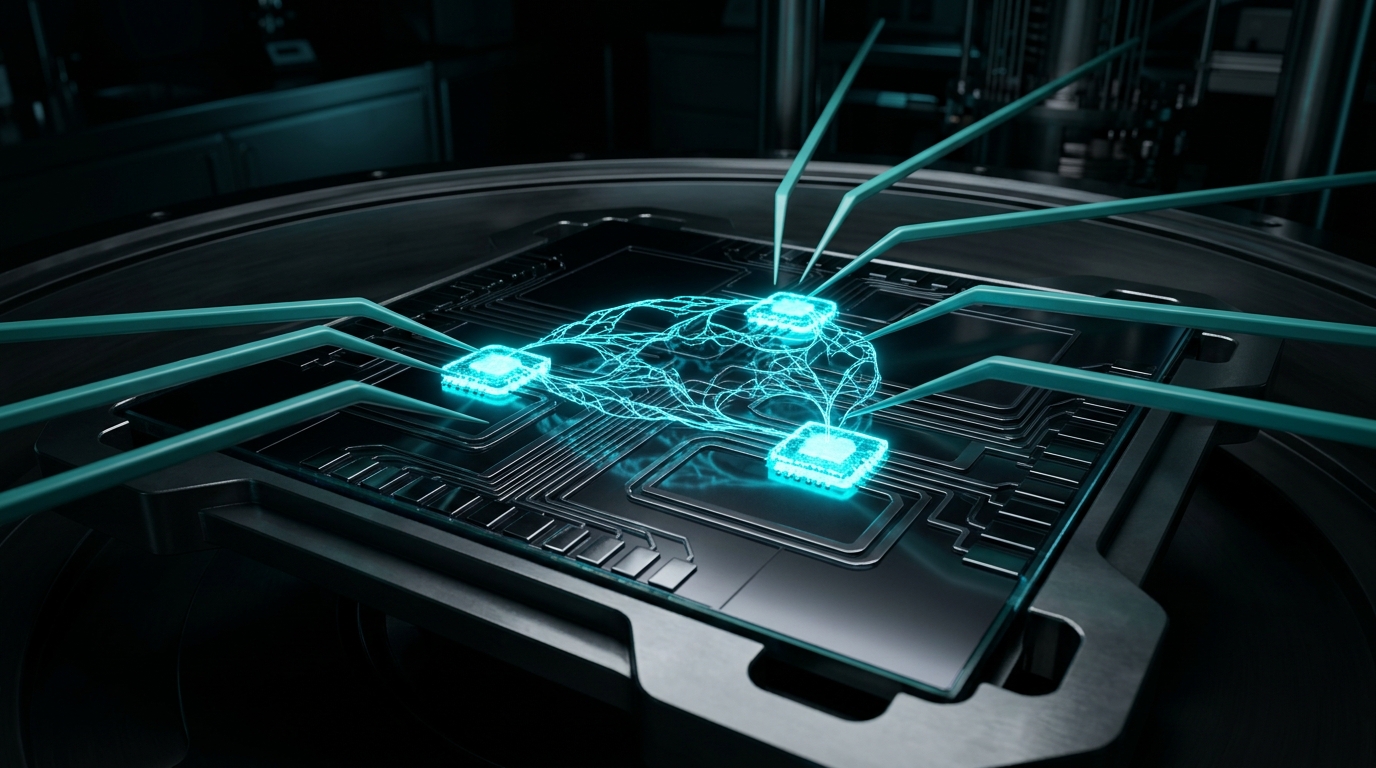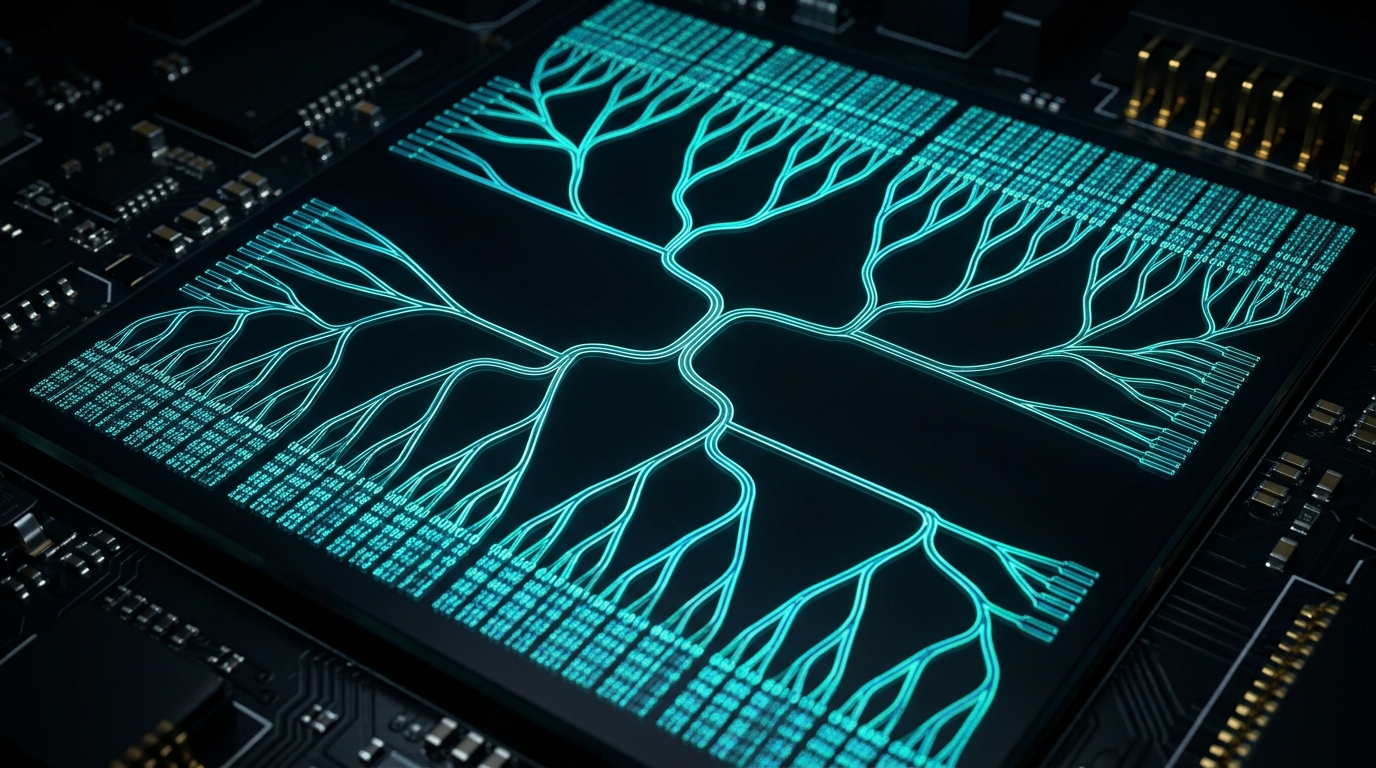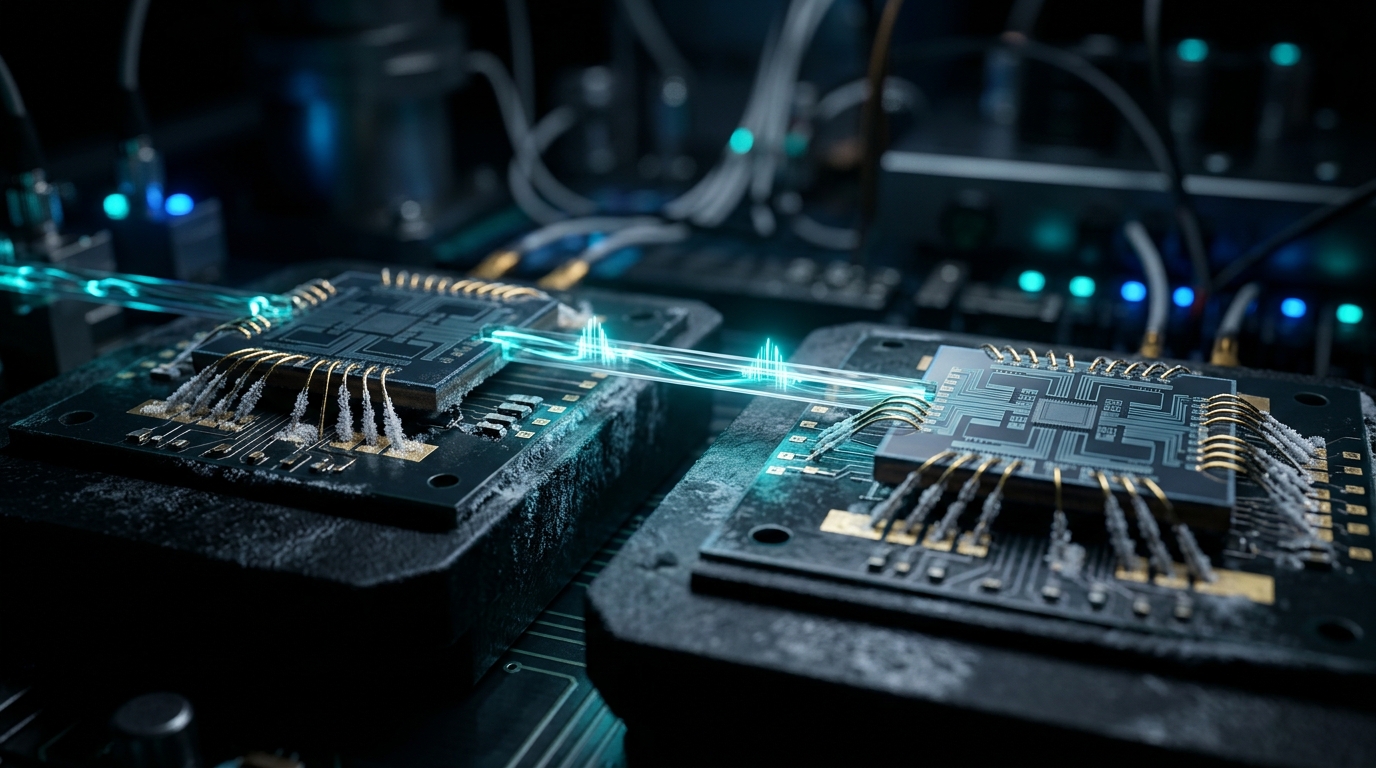
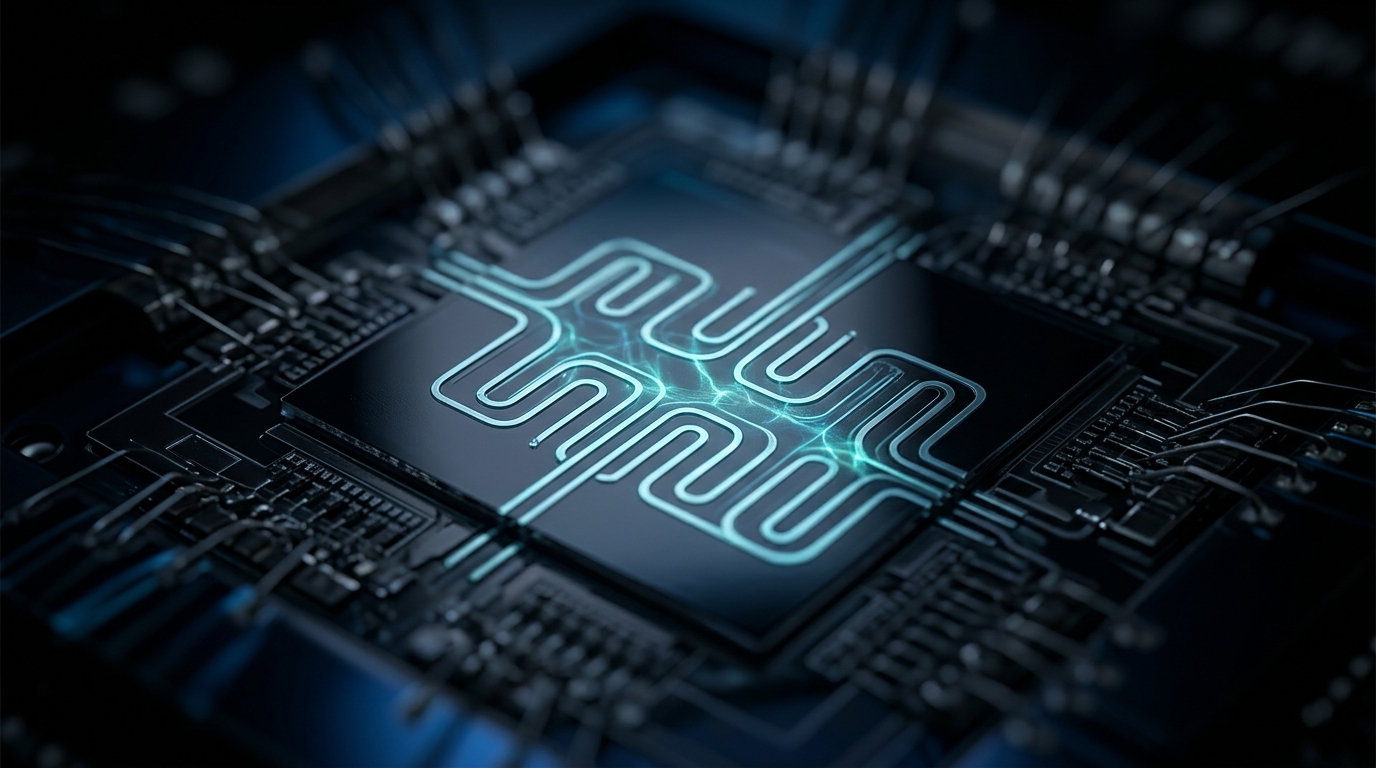
- A new neutral-atom demonstration ran up to 90 cycles of syndrome extraction in a toric quantum error correcting code — the first repeated correction explicitly designed to scale to arbitrary circuit depth (arXiv:2606.04079).
- The system replaced lost qubits mid-circuit and reloaded a qubit reservoir for indefinite coherent operation, and the larger code distance produced a lower absolute logical error rate — the signature of a system that improves as you scale it.
- The lab milestone that gates a cryptographically-relevant quantum computer — repeated, indefinitely-scalable error correction — has now been shown. Your RSA and ECC key material is on a depreciation schedule, even if the clock is measured in years.
Why This Milestone Changes Your Threat Model
Every prior “quantum breaks encryption” headline shared one quiet asterisk: the machines couldn’t correct their own errors for long enough to run a useful algorithm. A physical qubit decoheres in microseconds. Shor’s algorithm against a 2048-bit RSA key needs billions of reliable gate operations. Bridging that gap requires logical qubits — many noisy physical qubits encoding one protected qubit — and a correction cycle that runs over and over without the error rate creeping up to overwhelm it.
That last requirement is the one that has stalled. As the authors state plainly, prior to this work there had been no demonstration of repeated error correction scalable to arbitrary depth. Labs could show a round or two of correction. They could not show the loop — correct, measure, replace, repeat — running indefinitely without degradation. A quantum computer that cannot sustain the loop cannot run Shor’s algorithm, and your public-key infrastructure stays safe by default.
This paper closes that specific gap. For a CISO, the relevant translation is blunt: the primary engineering excuse for treating quantum risk as “someday” just weakened. The attack vector that matters here is not a live exploit — it is harvest-now-decrypt-later. Adversaries are recording your encrypted traffic today, betting on a fault-tolerant machine to decrypt it later. Any data with a confidentiality lifetime past ~2032 — patient records, financial contracts, state secrets, long-lived credentials — is already exposed to an attacker who is simply patient.
[IMAGE: Macro photograph of a tweezer-confined neutral atom array, individual atoms suspended as points of light in a vacuum chamber lattice, cyan laser beams crossing in the dark]
Technical Deep-Dive: What Repeated Correction Actually Requires
Definition — Quantum error correction (QEC): A scheme that encodes one logical qubit of protected information across many physical qubits, then repeatedly measures error syndromes (parity checks that reveal errors without collapsing the data) so that physical errors can be detected and corrected faster than they accumulate. The toric code is a topological QEC code that arranges qubits on a lattice with periodic boundaries, where logical information is stored non-locally and protected by the code’s distance — larger distance, more errors tolerated.
The demonstration sits on a platform of tweezer-confined neutral atoms: individual atoms held in optical traps. The authors highlight why this architecture is structurally suited to fault tolerance — it offers a direct path toward high qubit count, rapidly improving operation fidelities, and the ability to execute circuits with arbitrary qubit connectivity. That connectivity matters: it enables efficient correction with high encoding rates, time-efficient decoding, and resource-efficient architectures built on transversal gates (operations applied across logical qubits in a way that does not spread errors uncontrollably).
Three capabilities had to land together for the loop to close:
- Mid-circuit measurement — reading out syndrome qubits during the computation without destroying the logical data being protected.
- Replacement of lost qubits — neutral atoms physically escape their traps over time. The system detects loss and swaps in fresh atoms mid-circuit.
- Reservoir reloading — refilling the supply of standby atoms so the machine never runs out, enabling indefinite coherent operation.
“Here, we demonstrate many cycles of syndrome extraction in a toric quantum error correcting code, using mid-circuit measurement and replacement of lost qubits, including reloading of a qubit reservoir for indefinite coherent operation.” — arXiv:2606.04079
The authors characterized the logical error rate after up to 90 cycles of correction and compared two code distances across up to 8 rounds of syndrome extraction. The result that signals genuine scalability:
The larger code distance produced a lower absolute logical error rate. This is the defining behavior of a working error-correction scheme — adding physical qubits to grow the code makes the protected information more reliable, not less. A system that gets better as it gets bigger is a system on a path to fault tolerance.
Where This Demonstration Stops Short
Honest analysis requires naming what the source does not claim. The paper reports no specific physical or logical qubit counts, no numerical gate fidelities, no absolute error-rate figures, and does not name the two code distances beyond “larger” and “smaller.” Critically, it makes no direct connection to Shor’s algorithm, cryptography, or PQC timelines — that threat-model link is our analysis, not the authors’ claim. This is a building-block result, not a cryptographically-relevant machine. The distance between this lab and a key-breaking computer is still measured in orders of magnitude of qubits. The significance is the trajectory, not the arrival.
Current Standard vs. The Trajectory This Demonstrates
| Dimension | Pre-2026 QEC demonstrations | This neutral-atom result (arXiv:2606.04079) |
|---|---|---|
| Correction depth | A few rounds, fixed | Up to 90 cycles, designed to scale to arbitrary depth |
| Qubit loss handling | Lost atoms ended the run | Mid-circuit detection and replacement |
| Sustained operation | Bounded by initial atom supply | Reservoir reloading for indefinite coherent operation |
| Scaling behavior | Often degraded with size | Larger code distance → lower logical error rate |
| Connectivity | Often nearest-neighbor | Arbitrary qubit connectivity |
| Gate strategy | Varied | Transversal gates for resource efficiency |
The left column is why “quantum risk is decades away” was a defensible posture. The right column is why that posture now carries more risk than it did last quarter.
Industry Context: The Regulatory Clock Is Already Running
You do not need a cryptographically-relevant quantum computer to exist for the compliance obligation to bind — the regulators have already moved. In August 2024, NIST finalized the first three post-quantum cryptography standards: FIPS 203 (ML-KEM, the Kyber-based key encapsulation mechanism), FIPS 204 (ML-DSA, Dilithium signatures), and FIPS 205 (SLH-DSA, SPHINCS+ signatures). NIST’s published guidance signals deprecation of RSA-2048 and ECC after 2030 and disallowance after 2035.
That timeline is the operative deadline for your roadmap — not the date a quantum computer appears. The economic asymmetry is the part executives consistently underestimate: migrating a large enterprise’s cryptographic estate is a multi-year program touching TLS terminations, code-signing pipelines, VPNs, hardware security modules, IoT firmware, and certificate authorities. Most organizations cannot even produce a complete inventory of where their cryptography lives. The cost of inaction is not a future decryption event — it is starting a 5-year migration in year 4.
Market adoption is splitting along predictable lines. Hyperscalers and browser vendors have already deployed hybrid post-quantum key exchange (classical + ML-KEM) at scale to neutralize harvest-now-decrypt-later on transport. The lagging tier — regulated mid-market enterprises with deep legacy estates — is where the compliance burden will land hardest and latest.
The BeQuantum Perspective
The lesson security architects should take from a result like this is not “panic about qubit counts.” It is that cryptographic agility has to become a property of your infrastructure, because the threat timeline is now driven by an engineering curve that just bent, not a fixed date you can plan around.
This is the design principle behind how we approach the problem at BeQuantum. Our PQC Layer is built so that algorithm selection is a configuration decision, not a re-architecture — enabling hybrid classical-plus-ML-KEM key exchange so that the classical half guarantees today’s security while the post-quantum half defends against the recorded-traffic attack, with the ability to retire the classical component on a schedule you control. When NIST advances a parameter set or deprecates a curve, agile systems change a policy; brittle ones launch a project.
For data with long confidentiality horizons, the Digital Notary anchors integrity and timestamp proofs using post-quantum signature schemes (the FIPS 204/205 family), so that records signed today remain verifiable after classical signatures become forgeable. And because key material is only as safe as the hardware holding it, IceCase keeps root keys and signing operations inside a tamper-resistant boundary — the layer that determines whether a future fault-tolerant adversary who breaks an algorithm can also reach the keys.
None of this assumes the machine in this paper will break RSA next year. It assumes you cannot afford to find out you were wrong with a multi-year migration still ahead of you.
What You Should Do Next
- Within 90 days — inventory your cryptographic estate. Audit your TLS certificate chains, code-signing infrastructure, VPNs, and HSM-held keys to catalog every place RSA and ECC are used and the confidentiality lifetime of the data each protects. You cannot migrate what you cannot see, and this inventory is the long pole.
- Within 6 months — prioritize by data lifetime. Rank systems by how long their data must stay confidential. Anything that must remain secret past 2032 is already exposed to harvest-now-decrypt-later and should be first in line for hybrid PQC key exchange.
- Within 12 months — pilot crypto-agility. Deploy hybrid classical + ML-KEM (FIPS 203) on at least one production transport path, and validate that your architecture can swap algorithms via policy rather than re-engineering. Treat the NIST 2030 deprecation as a hard deadline, not a target.
FAQ
Q: Does this demonstration mean a quantum computer can break RSA now? A: No. This is a building-block result showing repeated, scalable error correction on a small neutral-atom system — it reports no qubit counts and makes no cryptographic claim. Breaking RSA-2048 requires thousands of logical qubits running billions of operations, which remains orders of magnitude beyond any current machine. The significance is that the trajectory toward fault tolerance is advancing, which shortens planning assumptions.
Q: Why migrate to post-quantum cryptography before a quantum computer that can break encryption even exists? A: Two reasons. First, the harvest-now-decrypt-later attack means adversaries are recording your encrypted data today to decrypt later, so any long-lived secret is already at risk. Second, NIST guidance deprecates RSA and ECC after 2030 — and enterprise cryptographic migration typically takes several years, so starting late means missing the compliance deadline regardless of the hardware timeline.
Q: What makes neutral-atom platforms significant for quantum error correction? A: The authors cite a direct path to high qubit count, rapidly improving fidelities, and arbitrary qubit connectivity, plus the ability to physically replace lost qubits and reload a reservoir for indefinite operation. Together these enable efficient, transversal-gate-based correction schemes that can sustain the correction loop across many cycles — the prerequisite for fault-tolerant computation.
Last updated: June 13, 2026. Primary source: “Quantum error correction with the toric code” (arXiv:2606.04079).