- A new arXiv preprint (arXiv:2606.01953) proposes a quantum encryption protocol built on the quantum kicked top operating in the quantum resonance regime, guaranteeing perfect data recovery for authorized users while intercepted states appear fully mixed to eavesdroppers.
- The protocol delivers something classical and lattice-based PQC cannot: data on a shared quantum computer stays inaccessible even to the service provider, with tamper detection built into the physics rather than bolted on.
- For your security posture, this reframes the cloud trust model — the question shifts from “do I trust my provider’s controls” to “does my provider mathematically need to be trusted at all.”
The Problem: Your Cloud Provider Is Inside Your Threat Model
Every enterprise running workloads on shared infrastructure accepts an uncomfortable assumption: the service provider can, in principle, read your data while it is being processed. Encryption at rest and in transit protects the storage layer and the wire — but at compute time, the data is decrypted in memory the provider controls. This is the persistent gap that confidential-computing enclaves, homomorphic encryption, and contractual controls all try to paper over.
Quantum computing is about to make that gap wider. As enterprises queue up to run optimization, chemistry, and machine-learning workloads on shared quantum hardware delivered as a cloud service, the same trust problem reappears — except now the “memory” is a register of qubits owned and operated by the provider. A financial institution running a quantum portfolio-optimization job is handing its position data to a third party’s processor. The attack surface is no longer just the network or the disk; it is the compute substrate itself.
The research community has been clear that migration off classically-breakable cryptography is a when, not an if. NIST finalized its first post-quantum standards — ML-KEM (FIPS 203), ML-DSA (FIPS 204), and SLH-DSA (FIPS 205) — to harden the transport and signature layers against a future cryptographically-relevant quantum computer. But those standards still rest on computational hardness assumptions, and none of them solve the provider-blind compute problem. That is the specific gap this new protocol targets.
Technical Deep-Dive: Encryption From Spin Dynamics
The protocol described in “Quantum resonance encryption for secure data storage and communication with quantum kicked top” is what the authors call a genuine quantum protocol — security derives from quantum dynamics, not from the conjectured difficulty of a math problem.
What “Quantum Resonance Encryption” Means
Definition: Quantum resonance encryption is a method that encodes user data into the time-evolution of a quantum spin system — the quantum kicked top — driven in its quantum resonance regime. Authorized users who hold the correct evolution parameters recover the original state with perfect fidelity. Anyone who intercepts the encoded state without those parameters sees a mixed state carrying no usable information.
The quantum kicked top is a well-studied model of spin dynamics: a collective spin subjected to periodic “kicks.” In the quantum resonance regime, that periodic driving produces a structured, reversible evolution. The protocol exploits this reversibility as the encryption/decryption operation — the same dynamics that scramble the data for an outsider cleanly unscramble it for the key-holder.
The central claim is that the protocol “protects user’s data which is not accessible even to the service provider” — meaning the trust boundary moves off the provider entirely. (arXiv:2606.01953v1)
Three properties make this more than an academic curiosity:
- Perfect recovery for authorized users — no lossy approximation; the legitimate party reconstructs the exact input state.
- Mixed states for eavesdroppers — an intercepted register is information-theoretically degraded, not merely hard to decode.
- Built-in tampering detection — interference with the encoded state is detectable, giving you an integrity signal without a separate MAC or signature layer.
The same construction extends to two practical use cases beyond storage: secure communication between parties in different geographic locations, and quantum key distribution (QKD).
How It Compares to What You Run Today
| Property | Classical / RSA-ECC | NIST PQC (ML-KEM / ML-DSA) | Quantum Resonance Encryption |
|---|---|---|---|
| Security basis | Integer factoring / discrete log | Lattice hardness (conjectured) | Quantum spin dynamics |
| Survives a quantum computer | No | Yes (assumed) | Yes (by construction) |
| Provider-blind compute | No | No | Yes — provider cannot read user data |
| Tamper detection | Separate MAC/signature | Separate signature | Built in |
| Eavesdropper sees | Ciphertext (breakable later) | Ciphertext (hardness-bound) | Mixed state (no information) |
| Deployable today | Yes | Yes (software) | Lab demo on current quantum platforms; full use needs quantum memory + networks |
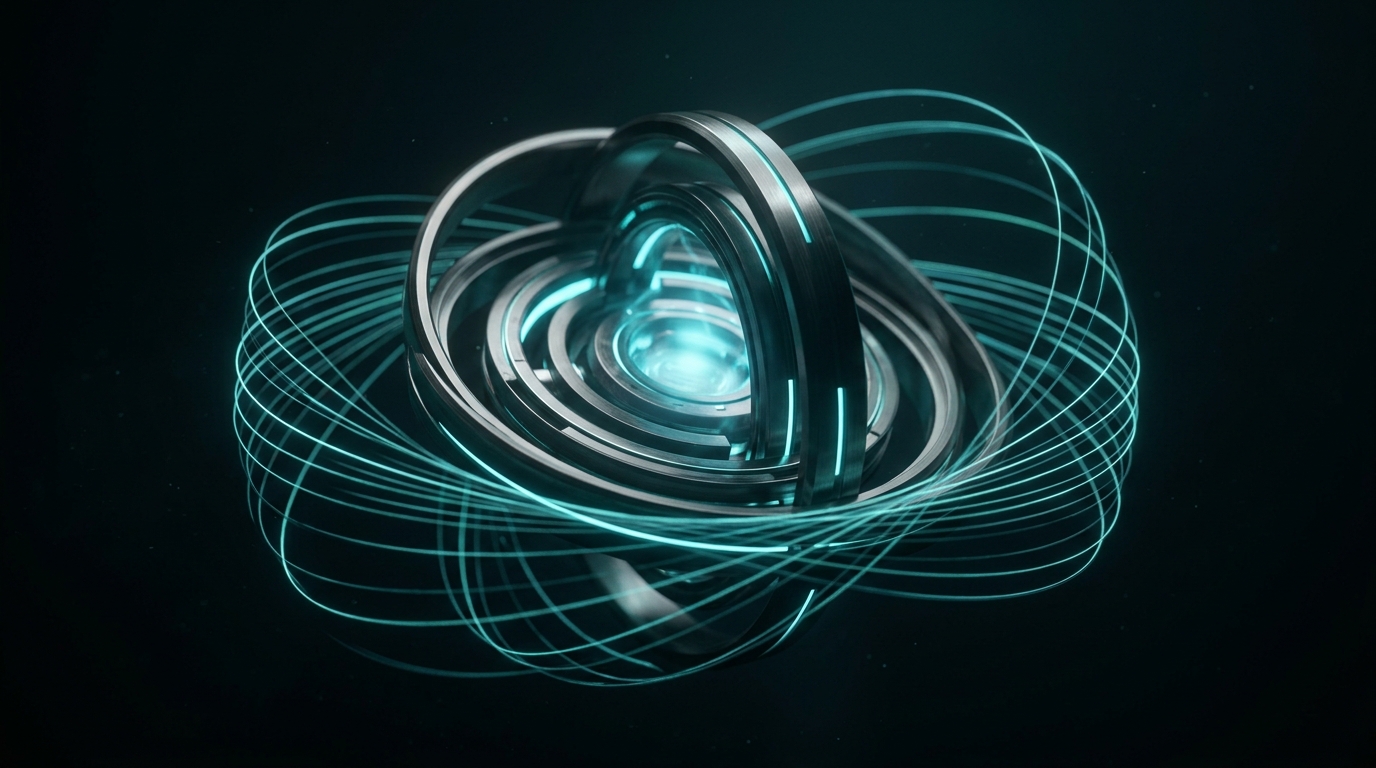
[IMAGE: A collective spin precessing under periodic kicks, rendered as a glowing gyroscopic top wrapped in entangled light traces against deep black]
The deployment caveat is the most important line in that table. The authors state effectiveness is demonstrated assuming a quantum computer with quantum memory and functioning quantum networks — infrastructure that does not yet exist at scale. Critically, though, they note that in the absence of those, the protocol can presently be demonstrated in a laboratory using currently available quantum computing platforms. It is testable now, even if production deployment waits on the broader quantum stack.
Industry Context: Two Clocks Are Running
Security leaders are already managing a dual timeline. The first clock is the “harvest now, decrypt later” threat — adversaries capturing encrypted traffic today to decrypt once a quantum computer arrives. That clock is why NIST pushed its standards out and why agencies are setting migration deadlines for high-value systems. Lattice-based PQC addresses this clock.
The second clock is quantum-as-a-service adoption. As shared quantum compute moves from research labs to cloud catalogs, the provider-trust problem becomes a procurement and compliance question. Regulated industries — finance, healthcare, defense — will face auditors asking who can access data during quantum computation. “We trust the provider’s controls” is a weaker answer than “the provider is cryptographically unable to read it.”
The economic asymmetry favors early preparation. A cryptographic migration is a multi-year program touching certificate chains, key-management systems, and application code; organizations that start auditing now spread that cost over time. Organizations that wait absorb it as an emergency once a provider-blind requirement lands in a contract or regulation. The cost of inaction is not a line item today — it is a forced, compressed migration tomorrow.
The BeQuantum Perspective
A protocol whose security comes from quantum dynamics rather than computational hardness fits the architecture we already advocate: defense in depth that does not depend on a single unbroken assumption.
Provider-blind encryption maps directly onto how we think about the PQC Layer — it should not assume the compute substrate is trusted. The resonance approach pushes that principle to its logical end: the substrate cannot be trusted, and the cryptography is designed for exactly that condition. For workloads moving onto shared quantum hardware, that is the right default posture.
The protocol’s built-in tampering detection is the property we find most operationally useful today. It aligns with the Digital Notary model — an integrity signal that travels with the data rather than living in a separate audit trail. When the encoding itself reveals interference, you get tamper-evidence as a physical property of the state, not as a log you have to correlate after the fact.
We are not claiming this protocol is production-ready — the authors themselves bound it to lab demonstration absent quantum memory and networks. The honest framing for a CISO is: this is a research signal about where provider-blind compute is heading, and the architectural lesson — design for an untrusted substrate, fold integrity into the encoding — is actionable in your classical and PQC deployments right now.
What You Should Do Next
- Within 90 days, inventory your quantum-as-a-service exposure. Identify any current or planned workloads on shared quantum hardware and document what data they expose to the provider at compute time. You cannot manage a trust boundary you have not mapped.
- Within 6 months, complete a PQC migration audit of your TLS certificate chain and key-management systems. This addresses the “harvest now, decrypt later” clock today using finalized NIST standards, independent of when resonance-class protocols mature.
- Add “provider-blind compute” to your vendor evaluation criteria. When assessing quantum cloud providers, ask explicitly whether the architecture requires trusting the provider with cleartext during computation — and track research like this protocol as the benchmark for what “no” should eventually look like.
FAQ
Q: Does quantum resonance encryption replace NIST’s post-quantum standards like ML-KEM? A: No. NIST’s lattice-based standards secure classical transport and signatures today and run in software you can deploy now. This protocol targets a different problem — keeping data inaccessible to the service provider on shared quantum hardware — and currently requires quantum memory and networks for full deployment. They are complementary, not competing.
Q: Can my organization use this protocol in production today? A: Not yet for production. The authors state it can be demonstrated in a laboratory on currently available quantum computing platforms, but full effectiveness assumes quantum memory and functioning quantum networks that are not yet available at scale. Treat it as a research signal informing architecture, not a deployable control.
Q: Why does “security from quantum dynamics” matter versus computational hardness? A: Hardness-based schemes (including lattice PQC) are secure as long as no efficient algorithm breaks the underlying math problem — an assumption that can erode. A protocol where intercepted states are physically mixed leaks no information regardless of an attacker’s computing power, removing that standing assumption from the threat model.
Last updated: June 7, 2026. Based on arXiv:2606.01953v1.