- Crosstalk is widely considered one of the major problems that must be solved for any quantum computing platform to operate at scales beyond one or two qubits (arXiv:2605.26528v1).
- The flaw exists in every quantum platform — but its mechanism and severity differ sharply between superconducting and non-superconducting systems, making cross-platform risk assessment non-trivial.
- Crosstalk carries known, consequential security vulnerabilities that are routinely omitted from device benchmarks — meaning the hardware your vendor demos may be exploitable in ways the spec sheet never mentions.
A recent review, Crosstalk In Contemporary Quantum Devices (arXiv:2605.26528v1), makes an uncomfortable argument for anyone evaluating quantum hardware: the same physical effect that limits how large a quantum computer can grow also creates a side channel an attacker can exploit. Most procurement teams have never heard of it.
Why Quantum Crosstalk Should Be On Your Risk Register
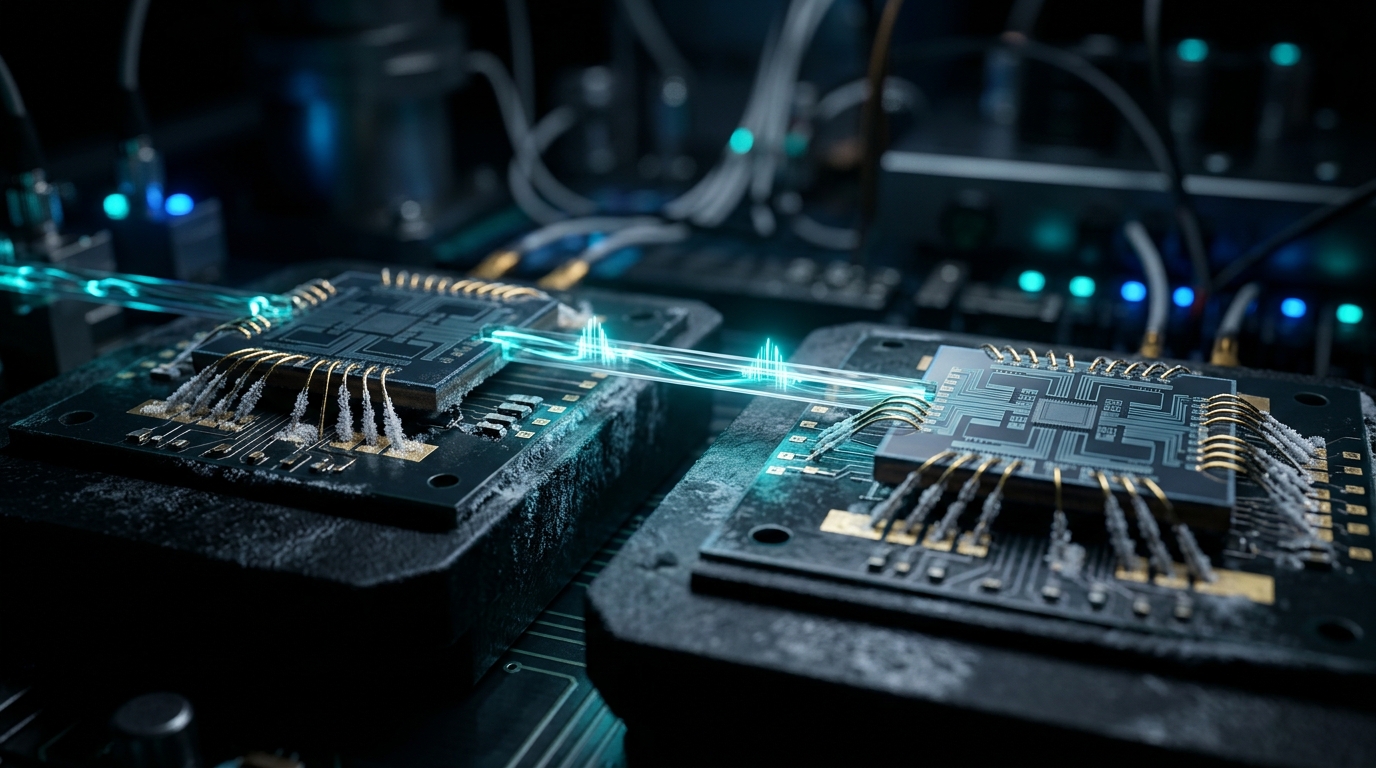
Picture the scenario that vendor demos never show. You provision time on a multi-tenant quantum processor. Your workload runs on qubits 4 through 9. Another tenant — possibly an adversary — runs on qubits 10 through 15 on the same physical die. Their gate operations leak into your register. Their pulses perturb your state. In the worst case, the activity on their qubits becomes a readout of activity on yours.
That is crosstalk: phenomena in quantum devices that inhibit the individual addressability of a qubit or cause unintended interactions between qubits. It is the physics equivalent of a power-line side channel, except it is baked into the substrate of the machine rather than into a software stack you can patch.
The review is blunt about the stakes. Crosstalk is “widely considered one of the major problems to be solved for a quantum computing platform to operate at scales beyond one or two qubits.” Two qubits is a lab curiosity. Every roadmap that matters — fault-tolerant error correction, Shor’s algorithm at cryptographically relevant scale, quantum advantage in optimization — lives on the far side of that threshold. Crosstalk is the toll booth on the road to all of it.
For a security architect, the implication is concrete: the maturity signal you should track is not raw qubit count. It is how a platform demonstrably contains crosstalk. A 1,000-qubit machine with uncharacterized crosstalk is not a thousand usable qubits — it is a thousand sources of correlated error and potential leakage.
Technical Deep-Dive: How Crosstalk Manifests Across Platforms
Crosstalk is not one defect. The review describes multiple distinct mechanisms spanning all major quantum computing platforms, each with its own physical origin, its own mitigation playbook, and — critically — its own security exposure. The common thread is a breakdown of the idealized model where each qubit is a perfectly isolated, individually addressable two-level system.
In practice, control signals spill. Couplings that should be off are merely small. Shared control hardware correlates errors across qubits that the programming model treats as independent. The potential for crosstalk exists in all quantum platforms, but the mechanisms and severity vary significantly between them — which is exactly why a benchmark run on one architecture tells you little about the risk profile of another.
The most important finding for buyers is this:
Crosstalk is usually addressed implicitly — through device design, tuning, and mitigation techniques — rather than reported as an explicit, measured security property. The hardening happens, but it happens off the spec sheet.
That gap between “mitigated in engineering” and “disclosed to the customer” is the entire problem. You cannot audit a control you cannot see.
Superconducting vs. Non-Superconducting Exposure
The security research itself is uneven. According to the review, work on the security implications of crosstalk is accelerating, but it is far more mature for superconducting systems than for non-superconducting ones, where many avenues remain unexplored. That asymmetry should shape your trust model.
| Dimension | Superconducting systems | Non-superconducting systems |
|---|---|---|
| Crosstalk presence | Present, well-documented | Present, mechanism varies by modality |
| Mitigation maturity | Established design/tuning techniques | Varies; less standardized |
| Security research depth | Accelerating, relatively explored | Early-stage, more avenues open |
| Buyer implication | Ask for crosstalk characterization data | Treat absence of published attacks as unknown, not safe |
The trap is reading the right-hand column as the safer choice. Fewer published attacks against a platform are not evidence of fewer vulnerabilities — they are evidence of less research. For non-superconducting hardware, the absence of a known crosstalk exploit means the security community has not yet looked hard, not that the door is locked.
Industry Context: A Blind Spot In Quantum Procurement
The near-term consequence lands on anyone evaluating quantum hardware in the next one to two years. Crosstalk-induced security vulnerabilities are frequently omitted from the descriptions used to benchmark devices and characterize algorithm execution. Decision-makers are therefore comparing machines on metrics that exclude a known attack surface.
Over a three-to-five-year horizon, the picture sharpens into a gating function. As devices scale beyond one or two qubits, crosstalk mitigation becomes a prerequisite for reliable multi-qubit operation across every hardware platform — and it raises the research barrier highest for the non-superconducting systems that security work has barely touched. Platforms will increasingly compete not on how many qubits they have, but on how cleanly those qubits can be operated and isolated at scale.
Long term, the review frames crosstalk as one of the major problems that must be solved for quantum computing to operate at meaningful scale. That reframes the entire quantum timeline for defenders. The arrival of a cryptographically relevant quantum computer — the event that breaks RSA and ECC and justifies the migration to post-quantum cryptography — is gated by the same crosstalk problem that today corrupts two-qubit experiments. Your PQC migration deadline and the maturity of quantum crosstalk control are two sides of one timeline.
That is the connection enterprise teams miss. Crosstalk is simultaneously a brake on the quantum threat and a live vulnerability in the quantum hardware some organizations are already renting. Both facts demand the same discipline: stop treating quantum systems as black boxes.
The BeQuantum Perspective
The lesson here generalizes beyond quantum gates. Crosstalk is a case study in a failure mode we design against constantly: a system whose real security properties are implicit in the hardware rather than explicit in a verifiable record. When mitigation happens through tuning that never appears on a spec sheet, trust becomes an act of faith — and faith does not survive an audit.
This is the principle behind BeQuantum’s Digital Notary. The defense against undisclosed, implicit hardware behavior is cryptographic attestation: binding a claim about a system’s state or output to a tamper-evident, independently verifiable record. When a quantum or classical workload produces a result, the question a CISO should be able to answer is not “do I trust the vendor’s characterization?” but “can I verify this output was produced under the conditions claimed?” Notarization turns an implicit assurance into an explicit, checkable one.
The same logic drives our PQC Layer roadmap. The crosstalk review is, indirectly, a status report on the quantum threat clock — and that clock is the entire justification for migrating key exchange and signatures to quantum-resistant algorithms now, while the gating problems are still unsolved. The organizations handling this well are not waiting for a cryptographically relevant quantum computer to appear; they are treating its eventual arrival as a fixed liability and building crypto-agility ahead of it. For hardware-isolation concerns — multi-tenant leakage being the cleanest analog to a crosstalk side channel — physically partitioned execution of the kind our IceCase hardware is designed around removes the shared-substrate assumption that crosstalk attacks depend on.
None of this is a product pitch. It is the same engineering stance applied at three layers: never accept an implicit security property where an explicit, verifiable one is possible.
What You Should Do Next
- Add crosstalk characterization to your quantum vendor questionnaire — within 90 days. Ask for measured crosstalk data, the specific mitigation techniques applied, and any known security implications. If a vendor cannot produce this, treat the omission as a finding, not a non-answer. “Implicitly handled” is not an acceptable response to a security control question.
- Treat non-superconducting platforms as under-researched, not low-risk. Where you evaluate trapped-ion, photonic, neutral-atom, or other modalities, document explicitly that the security literature is immature (per arXiv:2605.26528v1) and weight your risk model toward unknowns rather than published attack counts.
- Tie your PQC migration timeline to quantum hardware maturity signals, not headlines. Track crosstalk mitigation progress as a leading indicator of how fast scalable quantum machines — and therefore the threat to RSA/ECC — are actually arriving. Begin or accelerate a crypto-agility program so algorithm swaps are a configuration change, not a re-architecture.
FAQ
Q: Is quantum crosstalk a software bug I can patch? A: No. Crosstalk originates in the physical device — control signals leaking between qubits and unintended couplings in the hardware substrate. It is addressed through device design, tuning, and mitigation techniques, not a software update. That is precisely why it belongs in hardware procurement and risk assessment rather than your patch cycle.
Q: Does crosstalk make today’s quantum computers a threat to my encryption? A: Not directly, and the relationship is counterintuitive. Crosstalk is currently a barrier to building the large-scale machines that could break RSA or ECC — it is one of the major problems blocking operation beyond one or two qubits. But that same barrier is your migration clock: when crosstalk and related scaling problems are solved, cryptographically relevant quantum computing moves much closer. Track its progress as a threat indicator.
Q: If a quantum platform has no published crosstalk attacks, is it secure? A: Treat that as unknown, not safe. The review notes security research on crosstalk is accelerating but remains far less developed for non-superconducting systems. A lack of published exploits often reflects a lack of research attention rather than genuine resistance — a distinction that matters enormously when you are signing a multi-year hardware commitment.
Last updated: 2026-06-07
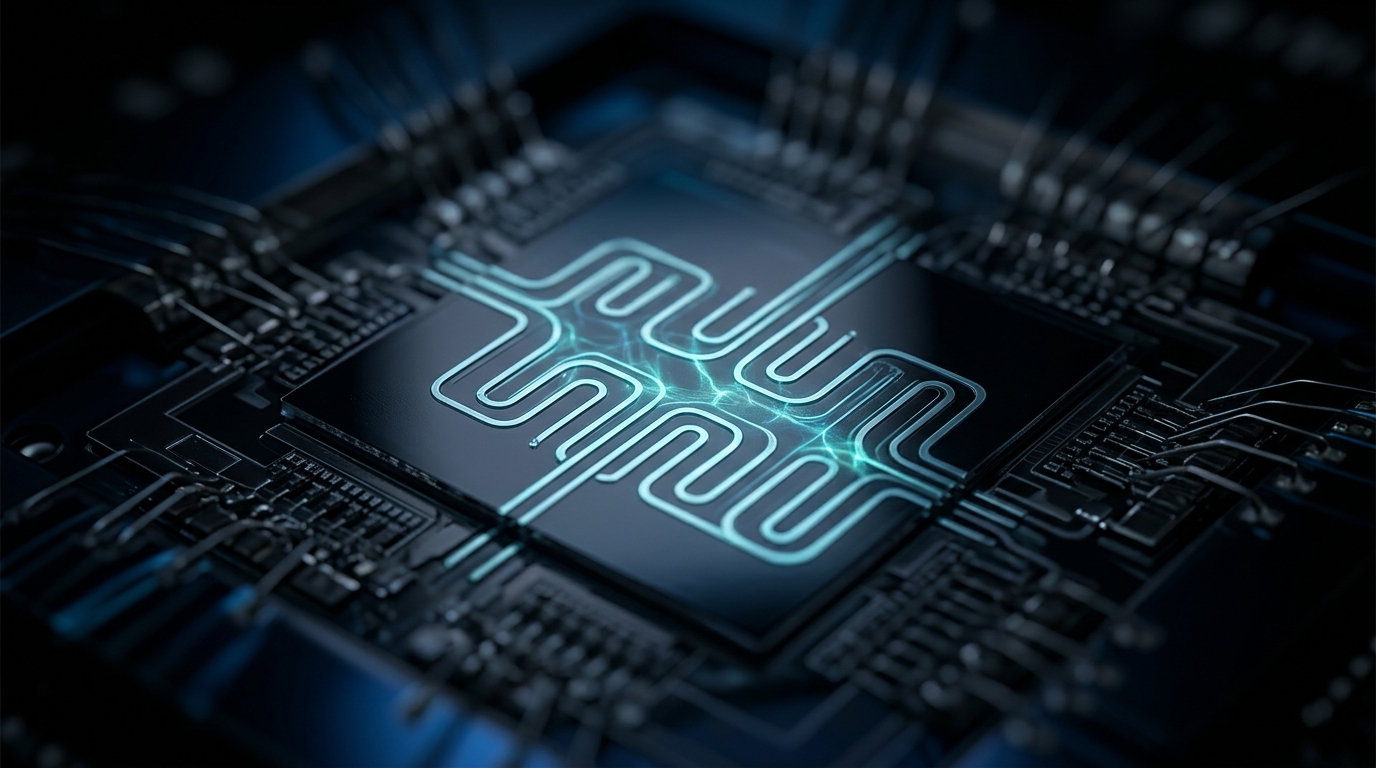
[IMAGE: macro photograph of a superconducting quantum processor die with faint cyan signal traces bleeding between adjacent qubit resonators]