
Last updated: June 2025
[IMAGE: A macro-perspective render of a quantum annealing processor chip with thousands of superconducting qubit nodes glowing in amber and teal, interconnected by luminous flux lines against a deep black background, cinematic depth-of-field, 8K quality]
Key Takeaways
- Quantum annealers already realise programmable spin systems with thousands of qubits, making them among the largest controllable quantum devices available today — but their threat to public-key cryptography remains indirect and near-term limited
- Quantum annealing is not expected to solve NP-hard problems in polynomial time in the worst case; it functions as a physically motivated heuristic for discrete optimisation and sampling tasks, not a universal cryptographic threat
- For security architects, the real risk window is 3–5 years out, when annealing-assisted machine learning and quantum simulation could begin probing the edges of classical cryptographic assumptions — making PQC migration planning a now decision, not a later one
Why Quantum Annealing Belongs in Your Threat Model
Picture your organisation’s PKI infrastructure in 2028. A threat actor deploys a hybrid classical-quantum pipeline that uses a quantum annealer to pre-solve the discrete optimisation sub-problems embedded in lattice-based key exchange — not breaking the algorithm outright, but shaving enough complexity off the attack surface to make brute-force feasible at scale. Your certificates, issued today under RSA-2048, are already archived and waiting.
This is not a speculative scenario. It is the logical extension of what a peer-reviewed paper submitted to arXiv in May 2025 (arXiv:2605.06857v1) describes as quantum annealing’s operational reality: a paradigm that traverses complex energy landscapes through quantum fluctuations, tunnelling processes, and dissipative dynamics — operating in regimes that are difficult to access using classical simulation.
The primary keyword here is quantum annealing security. Understanding what this technology can and cannot do is the first line of defence for any CISO building a post-quantum roadmap.
What Quantum Annealing Actually Does — and Doesn’t Do
Quantum annealing is a metaheuristic optimisation technique that maps a computational problem onto the energy landscape of an interacting quantum system, then evolves that system dynamically to find low-energy states corresponding to near-optimal solutions. The system continuously transforms a simple initial Hamiltonian — a mathematical description of the system’s starting energy configuration — into a target Hamiltonian whose ground state encodes the solution to the problem.
This is fundamentally different from gate-based quantum computing, which uses discrete logical operations (analogous to classical logic gates) applied to qubits in superposition. Quantum annealing does not execute algorithms in the circuit sense. It relaxes toward solutions.
Critical finding from arXiv:2605.06857v1: “Quantum annealing is not expected to provide polynomial-time solutions to NP-hard problems in the worst case. It offers a physically motivated heuristic for navigating rugged energy landscapes.”
For security architects, this distinction is operationally significant. Quantum annealing does not threaten elliptic curve cryptography or RSA through Shor’s algorithm — that remains the domain of fault-tolerant gate-based quantum computers, which require millions of error-corrected qubits still years away. The annealing threat vector is subtler: it targets the optimisation sub-problems embedded in cryptographic protocols and the sampling tasks that underpin certain classes of side-channel and lattice attacks.
Technical Deep-Dive: How Quantum Annealers Work
The Hamiltonian Evolution Mechanism
A quantum annealer begins in the ground state of a simple, well-understood Hamiltonian — typically a transverse-field Hamiltonian where all qubits are in equal superposition. The system then slowly interpolates toward a problem Hamiltonian that encodes the cost function of the optimisation problem. If the evolution is slow enough (adiabatic), the system remains in the ground state throughout, arriving at the solution.
In practice, real hardware operates far from the ideal adiabatic limit. Thermal noise, finite coherence times, and control imprecision mean the system explores the landscape through a combination of:
- Quantum tunnelling: Crossing energy barriers that would trap classical simulated annealing
- Quantum fluctuations: Exploring multiple solution paths simultaneously
- Dissipative dynamics: Interactions with the environment that can either help or hinder convergence
Computational performance is shaped by three factors: tunnelling rates, spectral gaps (the energy difference between the ground state and first excited state), and open-system effects. Narrow spectral gaps — which occur frequently in hard optimisation instances — cause the system to fail adiabaticity and return suboptimal solutions.
Current Hardware Capabilities
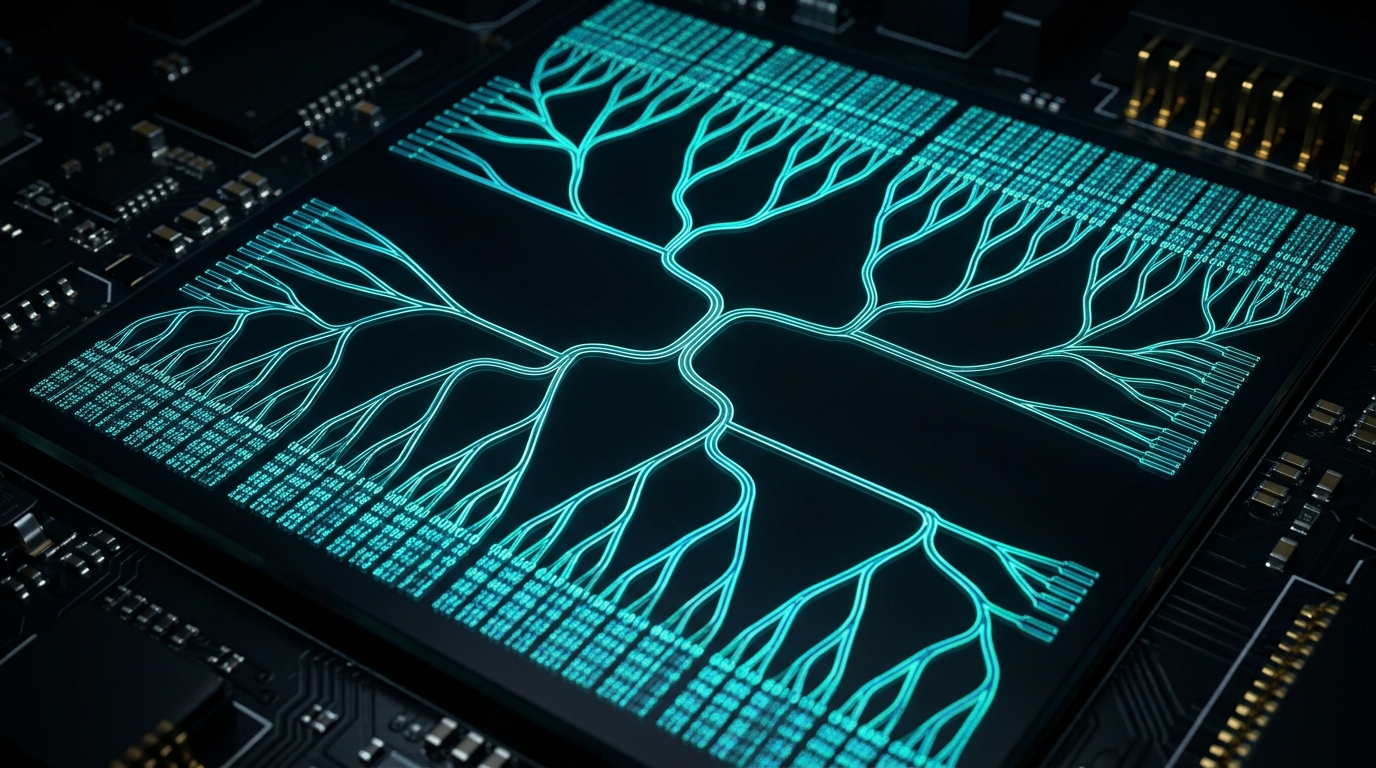
Modern quantum annealers realise programmable spin systems with thousands of qubits, placing them among the largest controllable quantum devices currently available. This is not a trivial claim. Gate-based quantum computers from IBM, Google, and IonQ operate in the hundreds-of-qubits range for their most advanced systems. Quantum annealers have scaled faster in raw qubit count — but with important caveats around connectivity, coherence, and programmability.
[IMAGE: Side-by-side schematic comparison of quantum annealer qubit topology versus gate-based quantum circuit architecture, teal node-and-edge graph style on black background, 8K technical illustration]
Quantum Annealing vs. Gate-Based Quantum Computing: Security Relevance
| Dimension | Quantum Annealing | Gate-Based Quantum Computing |
|---|---|---|
| Primary use case | Discrete optimisation, sampling | Universal computation, cryptanalysis |
| Cryptographic threat | Indirect (optimisation sub-problems) | Direct (Shor’s, Grover’s algorithms) |
| Current qubit scale | Thousands (programmable spin systems) | Hundreds (error-corrected logical qubits: far fewer) |
| Fault tolerance | Not required for heuristic use | Required for cryptographic attacks |
| Timeline to crypto-relevance | 3–5 years (hybrid attack vectors) | 5–15 years (fault-tolerant Shor’s) |
| Classical simulation difficulty | High (non-equilibrium many-body dynamics) | High (deep circuits) |
| Complementary or competing? | Complementary — different problem classes | Competing for enterprise mindshare |
What this table means for your organisation: The gate-based quantum threat to RSA and ECC dominates NIST’s PQC standardisation narrative — and rightly so. But quantum annealing’s ability to operate in regimes difficult to classically simulate means it could accelerate hybrid attacks on lattice-based PQC candidates before fault-tolerant gate-based systems arrive. Your migration timeline should account for both vectors.
Industry Context: Where Quantum Annealing Fits the Compliance Landscape
NIST Timelines and the Annealing Blind Spot
NIST’s post-quantum cryptography standards — ML-KEM (FIPS 203), ML-DSA (FIPS 204), and SLH-DSA (FIPS 205), finalised in August 2024 — were designed primarily to resist gate-based quantum attacks via Shor’s and Grover’s algorithms. The standards do not explicitly address quantum annealing-assisted attacks on the optimisation structures within lattice problems.
This is not an oversight so much as a reflection of current consensus: quantum annealing is not expected to break NIST PQC algorithms in the near term. However, the research community — including the authors of arXiv:2605.06857v1 — positions quantum annealing as a distinctive paradigm at the intersection of optimisation, stochastic sampling, and programmable quantum dynamics. As benchmarking matures and hybrid classical-quantum pipelines become commercially accessible, the compliance burden on organisations will expand to include annealing-specific threat modelling.
Organisations subject to CNSA 2.0 (NSA’s Commercial National Security Algorithm Suite) face a hard deadline: all NSS (National Security Systems) must complete PQC migration by 2033. The annealing threat vector adds urgency to the 2026–2028 window, when hybrid attack tooling is most likely to emerge.
Market Adoption: Who Is Moving
The quantum annealing market is consolidating around a small number of hardware providers, with enterprise adoption concentrated in financial services (portfolio optimisation), logistics (vehicle routing), and pharmaceuticals (molecular simulation). Security-specific applications — including cryptanalytic research — remain largely in academic and national-laboratory settings.
The medium-term implication (3–5 years) is that as benchmarking, scaling, and control challenges are addressed, quantum annealing will expand into machine learning and quantum simulation applications. These are precisely the domains where adversarial use cases — probing cryptographic assumptions, optimising attack parameters — become plausible.
The Cost of Inaction
Organisations that delay PQC migration until gate-based quantum computers become cryptographically relevant are already making a strategic error — “harvest now, decrypt later” attacks mean adversaries are archiving encrypted traffic today. Quantum annealing adds a second dimension to this calculus: the optimisation capabilities of near-term annealers could reduce the classical computational cost of certain lattice attacks, compressing the timeline for hybrid threats.
The cost of migration is measurable and bounded. The cost of inaction is open-ended.
The BeQuantum Perspective: Addressing Both Quantum Threat Vectors
At BeQuantum, our threat modelling explicitly separates the gate-based quantum timeline from the annealing-assisted optimisation timeline — because conflating them leads to either premature panic or dangerous complacency.
Here is how organisations working with our platform are addressing this dual-vector landscape:
On the gate-based front, BeQuantum’s PQC Layer implements ML-KEM and ML-DSA across TLS handshakes and certificate chains, replacing RSA-2048 and ECDH-256 with NIST-standardised algorithms. This directly addresses the Shor’s algorithm threat vector with a defined migration path and measurable compliance checkpoints.
On the annealing front, the threat is less about breaking algorithms and more about reducing the attack surface that optimisation-capable adversaries can probe. BeQuantum’s Digital Notary service addresses this by anchoring document and transaction integrity to blockchain-verified hash chains — ensuring that even if an adversary uses annealing-assisted techniques to probe cryptographic parameters, the integrity record itself remains tamper-evident and independently verifiable.
For organisations evaluating hardware security modules, BeQuantum’s IceCase hardware enforces key isolation at the physical layer, ensuring that cryptographic material is never exposed to environments where annealing-assisted side-channel analysis could be applied.
The research framing from arXiv:2605.06857v1 — that quantum annealing is complementary to both classical algorithms and gate-based quantum computing — is precisely why a layered defence strategy is required. No single migration addresses both threat classes simultaneously.
What You Should Do Next
Within 30 days — Map your optimisation-adjacent attack surface. Audit which cryptographic protocols in your stack rely on discrete optimisation assumptions (key exchange parameter selection, lattice-based signature schemes). Document which systems handle data with a sensitivity lifetime exceeding 5 years — these are your highest-priority migration targets.
Within 90 days — Initiate TLS certificate chain migration. Replace RSA-2048 and ECDH certificates with ML-KEM hybrid key exchange on externally facing endpoints. NIST FIPS 203 is production-ready. Your CA and load balancer vendors support it. The migration path exists — the only variable is your organisation’s execution timeline.
Within 180 days — Establish a quantum threat monitoring cadence. Subscribe to arXiv cs.CR and quant-ph feeds for annealing benchmarking results. Assign a security architect to track D-Wave and emerging annealer hardware announcements. When a quantum annealer demonstrably outperforms classical solvers on a problem class relevant to your cryptographic stack, you need to know within days, not quarters.
FAQ: Quantum Annealing and Enterprise Security
Q: Does quantum annealing break current encryption algorithms like AES-256 or RSA-2048?
A: No — not directly, and not in the near term. Quantum annealing is not expected to provide polynomial-time solutions to NP-hard problems in the worst case, which means it cannot execute Shor’s algorithm to factor RSA keys or solve discrete logarithm problems. AES-256 remains secure against both annealing and gate-based quantum attacks at current hardware scales. The threat is indirect: annealing could reduce the classical computational cost of hybrid attacks on certain lattice-based cryptographic structures, particularly as hardware scales beyond thousands of qubits.
Q: How is quantum annealing different from the quantum computers that NIST designed its PQC standards to resist?
A: NIST’s PQC standards (ML-KEM, ML-DSA, SLH-DSA) were designed to resist gate-based quantum computers running Shor’s and Grover’s algorithms — universal quantum computation that can execute arbitrary logical circuits. Quantum annealing is a specialised, near-term approach aimed at discrete optimisation and sampling tasks, not universal computation. It operates by evolving a physical system toward low-energy states rather than executing logical gate sequences. The two paradigms are complementary, not identical, and they present distinct threat profiles that require separate analysis in your security architecture.
Q: When should my organisation start treating quantum annealing as an active threat rather than a research curiosity?
A: Monitor for two specific milestones: first, published benchmarking results showing a quantum annealer outperforming the best classical solvers on problem instances with direct cryptographic relevance (e.g., shortest vector problem instances at security-relevant dimensions); second, commercial availability of hybrid classical-quantum annealing pipelines accessible to well-resourced adversaries. Based on current hardware trajectories and the research framing in arXiv:2605.06857v1, the 3–5 year window (2027–2030) is the most likely period for these milestones to converge. Your PQC migration should be complete before that window opens.