- A trapped-ion device ran nine distinct quantum error-correcting codes across three families (qLDPC, topological, concatenated) with zero hardware reconfiguration (arXiv:2606.06455v1).
- A qLDPC code encoding 4 logical qubits into 18 physical qubits achieved a logical error rate up to 9× better than a comparable superconducting demonstration — and reached breakeven, where logical qubit lifetimes match or exceed physical ones.
- For security teams: error-correction overhead is the wall standing between today’s noisy machines and a cryptographically relevant quantum computer. That wall is cracking — and your migration clock is shorter than your last risk assessment assumed.
Why a Lab Result in Phoenix Should Reset Your Crypto-Agility Timeline
Most CISO quantum-risk models rest on one fragile assumption: that fault-tolerant quantum computing remains a decade-plus engineering slog, blocked by the staggering number of physical qubits needed to stabilize a single logical one. That assumption is your justification for deferring post-quantum migration to the next budget cycle.
A new result published as arXiv:2606.06455v1 — “Breakeven demonstration of quantum low-density parity-check codes” — directly undercuts that assumption. The error-correction overhead that has bottlenecked scalable quantum computing is beginning to break. And the threat model that matters most to encrypted data isn’t “when can a quantum computer break RSA” — it’s harvest-now, decrypt-later. Adversaries are already capturing your TLS-protected traffic, VPN sessions, and archived databases today, betting they can decrypt them once a capable machine exists. Every month that machine arrives sooner is a month of intercepted data that retroactively becomes readable.
The specifics below matter because they compress the timeline. Let’s get into the mechanics.
The Technical Deep-Dive: What Breakeven Actually Proves
Defining qLDPC Codes (and Why They Change the Math)
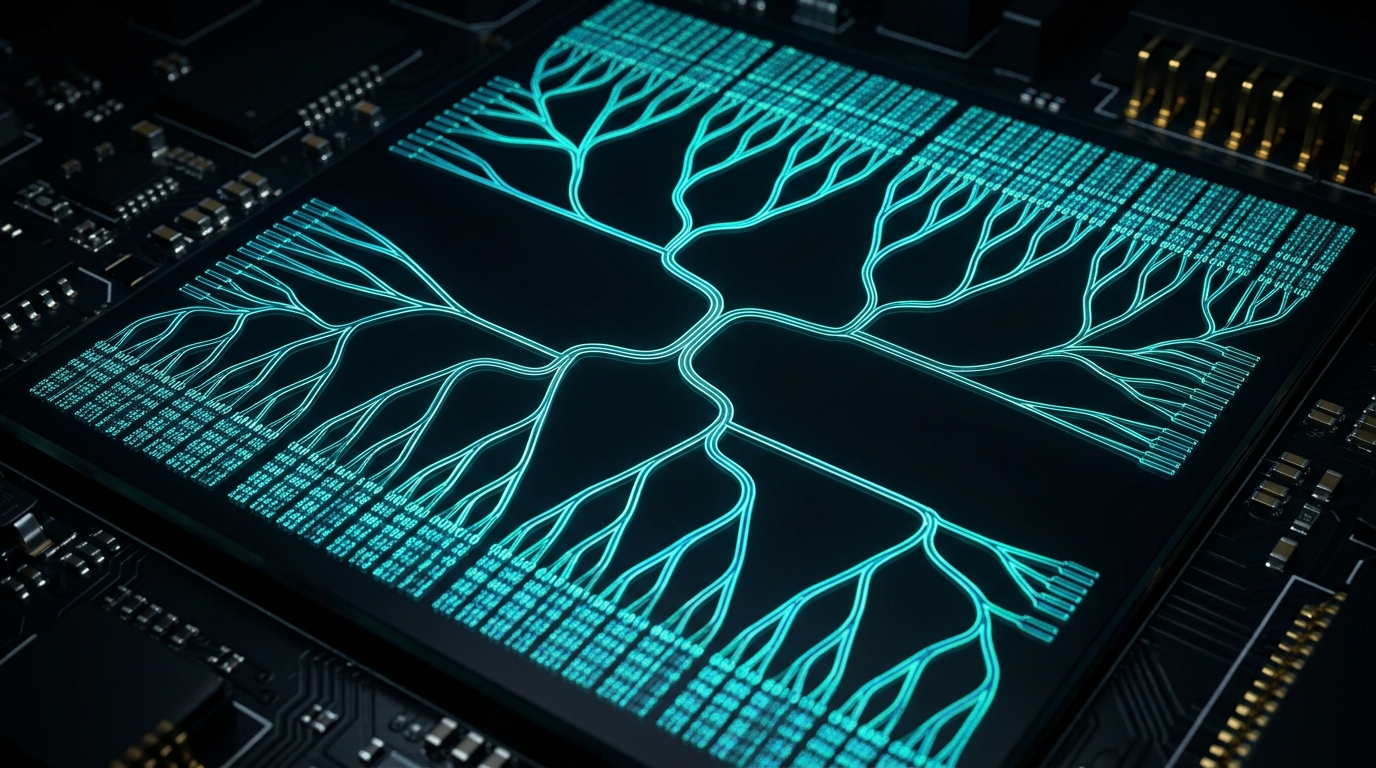
A quantum low-density parity-check (qLDPC) code is a quantum error-correction scheme in which each parity check involves only a small, sparse set of physical qubits, while still protecting a comparatively large number of logical qubits. The payoff is encoding rate: qLDPC codes pack more logical qubits per physical qubit than planar alternatives such as the surface code, the long-standing default for fault-tolerant designs.
That efficiency has always carried a hardware tax. qLDPC implementations typically demand long-range couplers — physical connections between qubits that aren’t neighbors — which superconducting solid-state platforms struggle to deliver at scale. The surface code stayed dominant not because it was efficient, but because its nearest-neighbor layout was buildable.
The new work attacks both problems at once on a single trapped-ion device.
The Result: Nine Codes, One Chip, No Rewiring
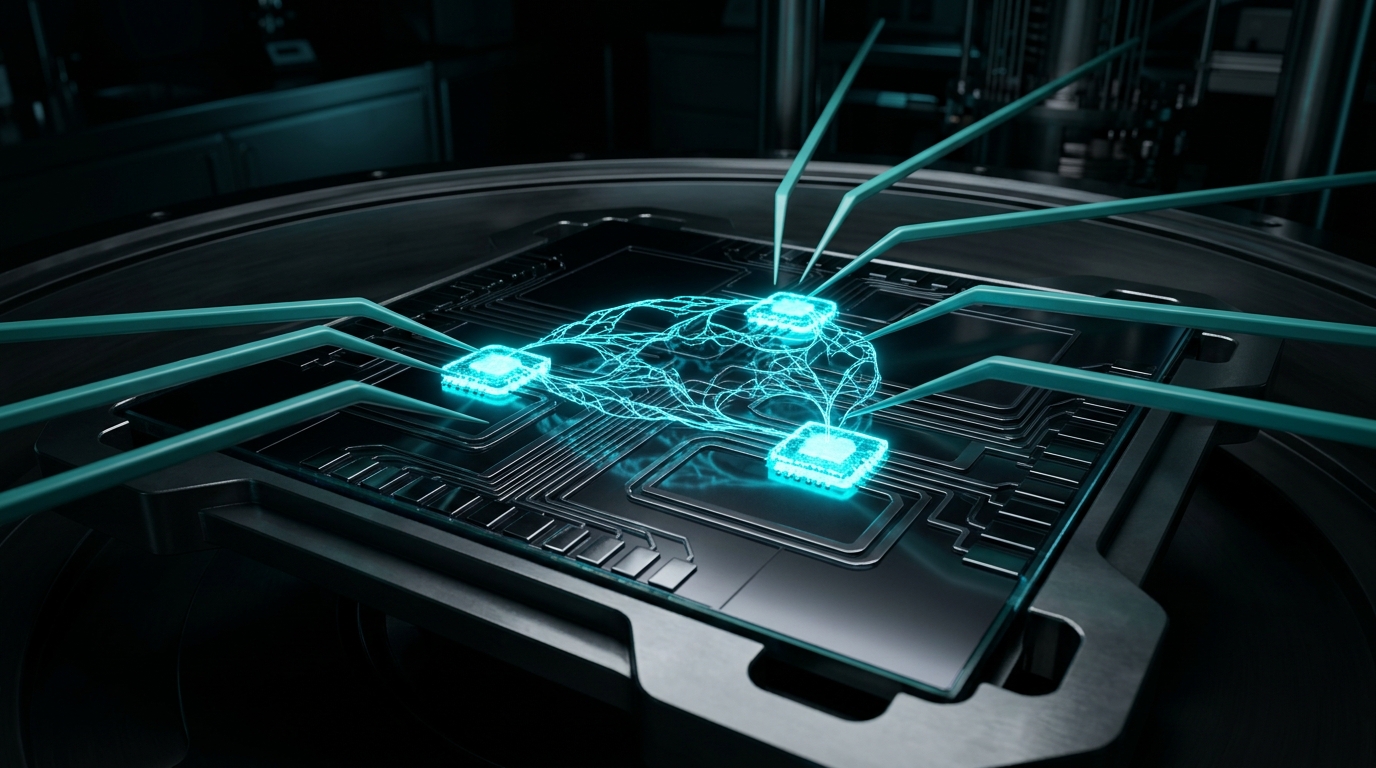
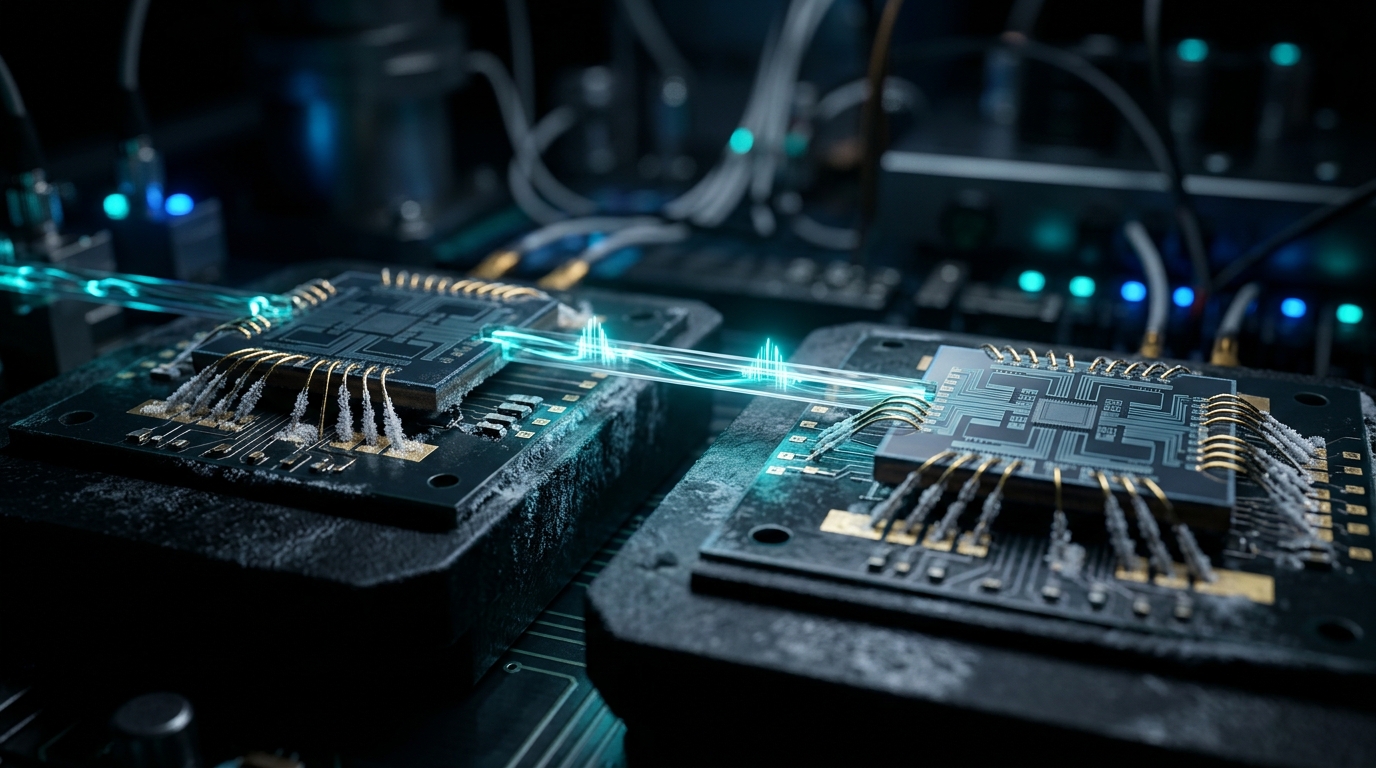
The researchers demonstrated nine quantum error-correcting codes with starkly different qubit-connectivity requirements on one trapped-ion device — without any hardware reconfiguration. The nine span three families:
- qLDPC codes (high encoding rate)
- Topological codes (e.g., the surface-code family)
- Concatenated codes (nested layers of protection)
The headline instance is a qLDPC code encoding 4 logical qubits into 18 physical qubits.
“With a qLDPC code encoding 4 logical qubits into 18 physical qubits, we achieve a logical error rate up to 9× better than a previous demonstration of a similar code on superconducting solid-state qubits. Moreover, our implementation exhibits breakeven performance, with some instances achieving qubit lifetimes comparable to or slightly exceeding that of our trapped-ion qubits.” — arXiv:2606.06455v1
Breakeven is the threshold that matters. Below it, error correction adds noise — the encoded logical qubit decays faster than a bare physical one, so correcting is worse than doing nothing. At or above breakeven, the logical qubit lives at least as long as its physical components. It is the line that separates a science demo from a building block.
How They Removed the Overhead Tax
The device uses a novel implementation of the optical-metastable-ground (OMG) architecture, which enables addressable mid-circuit measurement and reset — you can read out and reuse individual qubits mid-computation without disturbing their neighbors. Critically, the experiments ran without any ion transport and without dedicated coolant ions, two operations that normally consume a large fraction of a trapped-ion machine’s runtime or qubit budget.
| Dimension | Surface Code (conventional) | qLDPC on OMG Trapped-Ion (this work) |
|---|---|---|
| Encoding rate | Low — many physical qubits per logical qubit | Higher — 4 logical in 18 physical |
| Connectivity needs | Nearest-neighbor (easy to build) | Long-range couplers (historically hard) |
| Demonstrated breakeven | Established benchmark | Achieved, lifetimes ≥ physical qubits |
| Logical error rate vs. superconducting | Baseline | Up to 9× better |
| Codes per device | Typically fixed layout | 9 codes, no reconfiguration |
| Transport / coolant overhead | Common per-cycle cost | Eliminated |
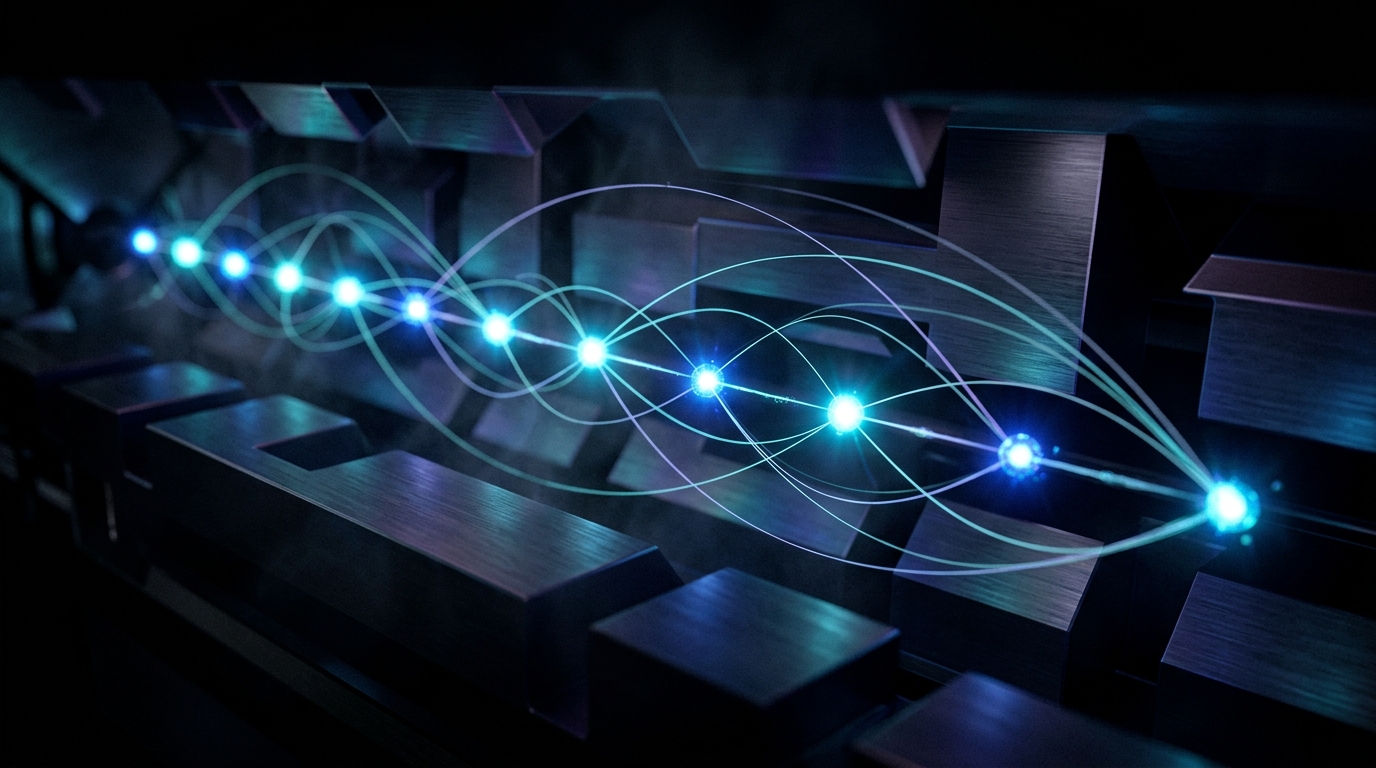
[IMAGE: Macro view of a linear trapped-ion chain suspended in an electromagnetic trap, individual ions glowing as addressable qubits with sparse long-range connections traced in cyan light]
One caveat worth stating plainly, because your risk model depends on honest inputs: the paper reports a relative 9× improvement, not absolute logical error rates, and does not enumerate per-code results or scaling behavior beyond 18 physical qubits. This is a milestone, not a shipped cryptanalytic engine.
Industry Context: What This Compresses, and What It Doesn’t
The Regulatory Clock Is Already Running
NIST finalized its first post-quantum cryptography standards — ML-KEM (FIPS 203), ML-DSA (FIPS 204), and SLH-DSA (FIPS 205) — in August 2024, and has signaled deprecation of RSA-2048 and ECC-256-class algorithms around 2030, with disallowance by 2035. Those dates were set against conservative hardware assumptions. Results like this one are precisely the kind of evidence that pulls such timelines forward, not back.
The asymmetry is brutal. A motivated adversary needs to build one cryptographically relevant machine. You need to re-architect every system, certificate chain, and embedded device you own — a multi-year program for most enterprises.
Who’s Moving, Who’s Exposed
Hyperscalers have already acted: major browsers and cloud providers deployed hybrid post-quantum key exchange (X25519 paired with ML-KEM) across hundreds of millions of TLS connections through 2024–2025. The exposed cohort is the long tail — enterprises with hardcoded crypto libraries, decade-lived IoT and OT hardware, and certificate inventories nobody has fully mapped.
The economic calculus is straightforward. Migration is a known, schedulable cost. Inaction is an unbounded liability: the present value of every secret with a shelf life longer than your harvest-now exposure window. Data classified today as “protect for 10 years” is already inside the threat envelope.
The BeQuantum Perspective: Engineering for an Accelerating Threat
We read a breakeven qLDPC demonstration the way a structural engineer reads a stress test that exceeds spec — not as cause for panic, but as confirmation that the safety margin in everyone’s planning was thinner than assumed. The right response is architectural, and it rests on one principle: crypto-agility, the ability to swap algorithms without re-architecting the systems that depend on them.
Three concrete approaches we build around:
- PQC Layer. Hybrid key establishment (classical + ML-KEM) means a single deployed integration stays valid whether the relevant quantum machine lands in 2030 or 2034. You don’t re-bet every time a lab result like this moves the timeline; the abstraction absorbs the volatility.
- Digital Notary. Long-lived signatures and audit records are the most exposed asset class, because they must remain verifiable for years or decades. Anchoring them with quantum-resistant signature schemes (ML-DSA, SLH-DSA) ensures that a document notarized today survives the arrival of a capable adversary tomorrow.
- IceCase hardware. Keys that never leave a tamper-resistant boundary in classical form are insulated from harvest-now collection at the endpoint, narrowing the window adversaries are betting on.
The through-line: you cannot predict the exact arrival date of a cryptographically relevant quantum computer, and this result is a reminder that the error-correction obstacle is more fragile than the consensus held. So you engineer to make the arrival date irrelevant to your security posture.
What You Should Do Next
- Within 90 days — inventory and classify. Audit your TLS certificate chains, code-signing keys, and VPN configurations for RSA and ECC dependencies. Tag every data store by required confidentiality lifetime; anything above five years is already in the harvest-now threat window and is your migration priority.
- Within 6 months — pilot hybrid key exchange. Deploy X25519 + ML-KEM on one internet-facing service. The goal is operational learning — certificate sizing, handshake latency, library maturity — before regulatory deadlines force a rushed cutover.
- Continuously — build crypto-agility into procurement. Make algorithm-swap capability a hard requirement in every new system, vendor contract, and embedded-hardware purchase. The devices you buy this year will still be running when NIST disallows today’s algorithms.
FAQ
Q: Does this qLDPC breakeven result mean my RSA encryption is breakable now? A: No. The demonstration encodes 4 logical qubits into 18 physical qubits — far below the thousands of stable logical qubits needed to run Shor’s algorithm against RSA-2048. Its significance is directional: it shows the error-correction overhead long assumed to block scaling is starting to give way, which compresses the timeline rather than ending it.
Q: Why is “breakeven” the metric everyone is citing? A: Below breakeven, error correction makes a logical qubit less stable than a bare physical qubit, so the encoding is net-negative. At breakeven, the protected qubit lasts at least as long as its components — the minimum bar for error correction to be useful at all. Crossing it on a high-rate qLDPC code, not just the easier surface code, is the milestone.
Q: Should I wait for clearer quantum timelines before migrating? A: Waiting is itself a decision to extend your harvest-now exposure. Adversaries collect encrypted data today to decrypt later, so any data with a multi-year confidentiality requirement is already at risk regardless of the exact arrival date. Hybrid deployment lets you act now without betting on a specific timeline.
Last updated: June 6, 2026. Primary source: “Breakeven demonstration of quantum low-density parity-check codes,” arXiv:2606.06455v1. Note: the source is a quantum hardware result and makes no claims about cryptography; the security and migration analysis here is BeQuantum’s own assessment of its implications.