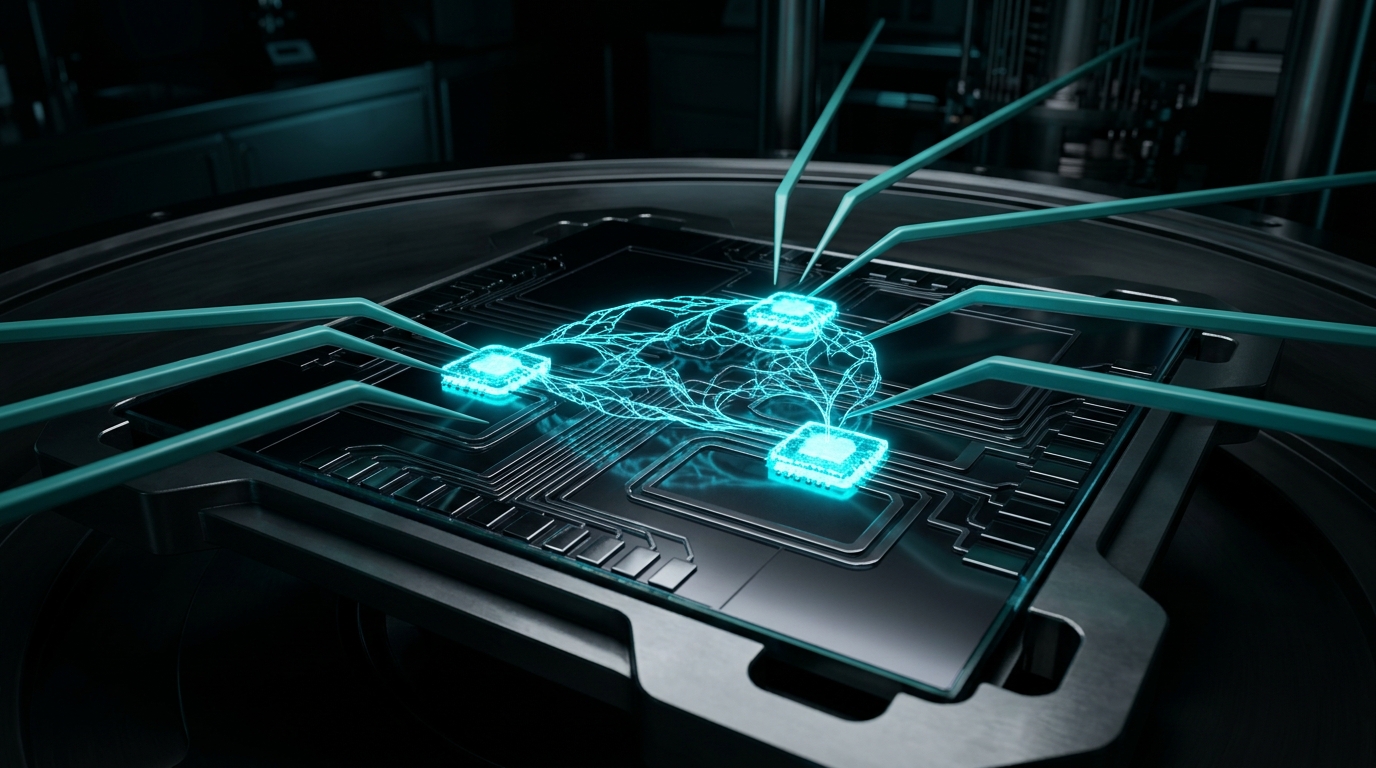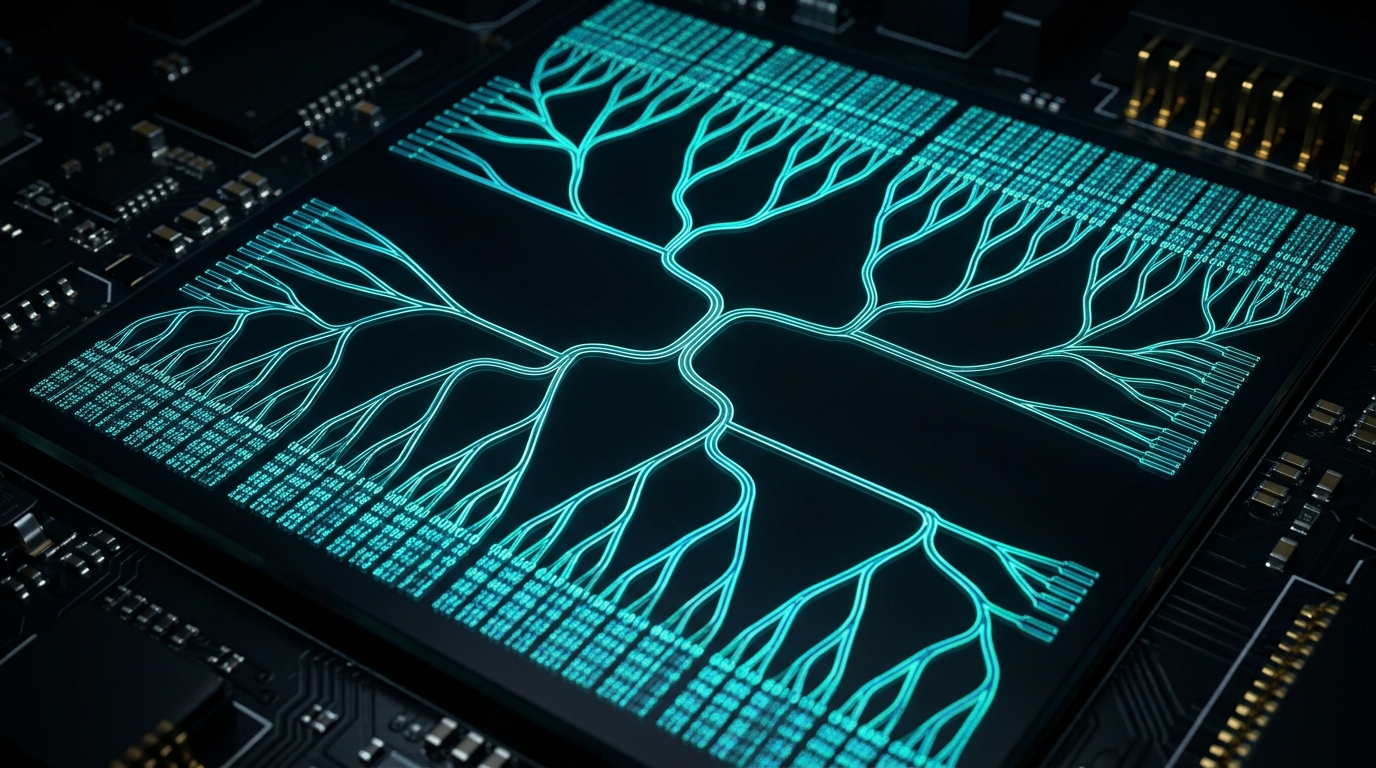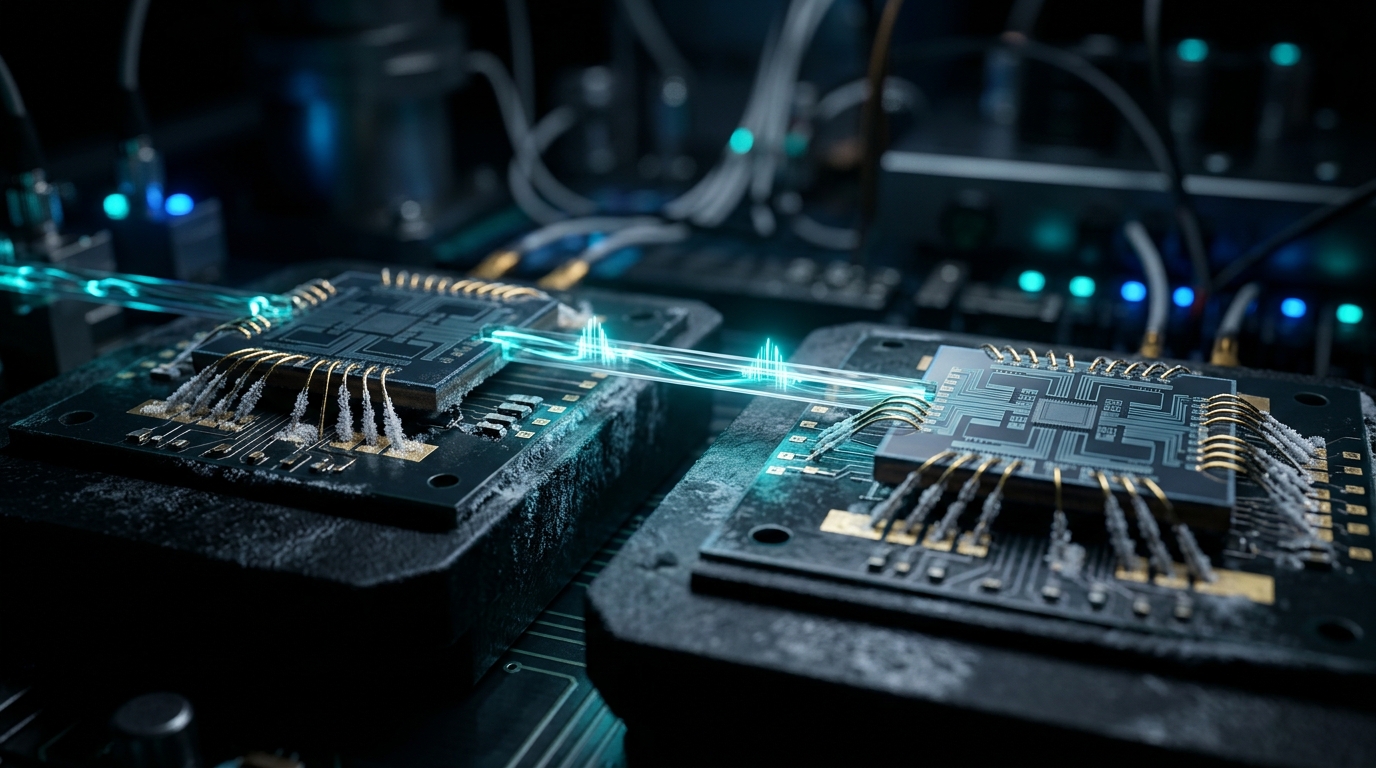
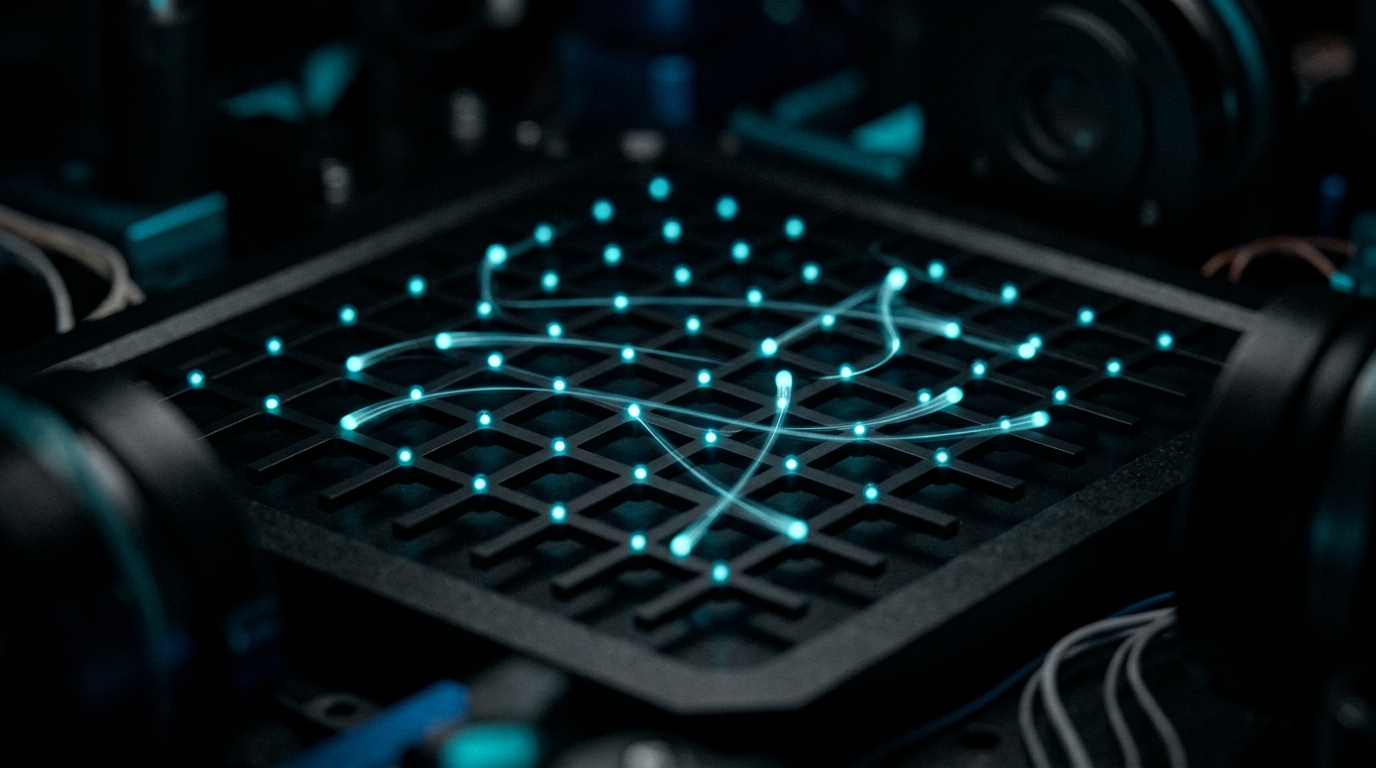
- qSIEVE co-designs non-local qLDPC error-correcting codes with physical atom movement in neutral-atom arrays, targeting the qubit-overhead problem that has kept fault-tolerant quantum computing out of reach (arXiv:2311.16980v3).
- Local codes like the surface code carry high qubit overhead; qLDPC codes offer better asymptotic encoding rates but have resisted hardware implementation — the gap qSIEVE attacks with a mixed memory-plus-compute architecture.
- For your security posture, hardware efficiency is the variable that governs the “harvest now, decrypt later” clock. Every overhead reduction in fault-tolerant quantum computing compresses the window you have to migrate to post-quantum cryptography.
Why a Quantum Hardware Paper Belongs on Your Risk Register
A security team encrypting data with RSA-2048 or ECC today is making a bet: that no adversary will field a cryptographically-relevant quantum computer (CRQC) before that data stops being sensitive. For a 10-year merger document, a 25-year patient record, or a sovereign cryptographic key, that bet runs long.
The bet has a hidden term. The arrival date of a CRQC is not gated by quantum algorithms — Shor’s algorithm has existed since 1994. It is gated by quantum hardware: specifically, how many physical qubits you must spend to protect one logical qubit long enough to run a deep computation. That ratio is the qubit overhead, and it is the single largest obstacle between today’s noisy prototypes and a machine that can factor a 2048-bit key.
The qSIEVE work, published as arXiv:2311.16980v3, is an attack on exactly that ratio. It does not announce a working codebreaker. It does something more consequential for long-horizon planning: it proposes an architecture that could make fault-tolerant quantum memory cheaper to build. When the overhead drops, the timeline moves toward you.
The paper frames the core obstacle directly: despite theoretical progress on these codes, “hardware implementations of these codes has been a longstanding challenge.” qSIEVE is a proposal to close that gap — and closing it is what turns a theoretical threat into a scheduled one.
Technical Deep-Dive: How qSIEVE Attacks Qubit Overhead
Quantum error correction protects fragile quantum information by spreading one logical qubit across many physical qubits. The choice of code determines how many physical qubits that costs and how the qubits must be wired together.
Surface Codes: Cheap to Wire, Expensive to Scale
The surface code is the industry default because it only requires near-neighbor connections — each qubit talks to its immediate physical neighbors on a 2D grid. That locality is hardware-friendly: it maps cleanly onto fixed chip layouts. The cost is overhead. Local codes such as the surface code carry a high qubit overhead, meaning you burn a large number of physical qubits per protected logical qubit. At the scale needed to break RSA, that overhead translates into millions of physical qubits.
qLDPC Codes: Efficient in Theory, Hard to Build
Non-local quantum low-density parity-check (qLDPC) codes offer good asymptotic encoding rates — far more logical qubits per physical qubit than the surface code. The catch is in the word non-local: these codes require connections between qubits that are not physical neighbors. Fixed-wiring hardware cannot provide that connectivity, which is why qLDPC codes have remained largely theoretical.
Definition — qLDPC code: A quantum error-correcting code defined by sparse parity-check constraints (each check touches only a few qubits) whose connectivity graph is non-local, allowing high encoding rates at the price of requiring long-range interactions between qubits.
The qSIEVE Primitive: Movement as Connectivity
Neutral-atom arrays change the rules. Atoms can be physically moved — relocated within the array — so that two qubits that need to interact can be brought together on demand. This movement-based communication is the primitive qSIEVE exploits to achieve the non-local connectivity that qLDPC codes demand.
The contribution is a co-design: rather than taking an arbitrary qLDPC code and hoping the hardware can route it, qSIEVE defines a restricted family of qLDPC codes that can be implemented efficiently using systolic movement — structured, rhythmic relocation of atoms in the array. By constraining the code family to match a regular movement pattern, the proposal makes the non-local routing tractable.
The architecture is mixed by design. Data is held in qLDPC memory using qSIEVE — the storage-efficient regime — and loaded into surface codes when computation is required, where the surface code’s near-neighbor structure suits gate operations.
| Dimension | Surface-Code-Only (standard) | Mixed qLDPC Memory + Surface Compute (qSIEVE) |
|---|---|---|
| Connectivity required | Near-neighbor only | Non-local, via systolic atom movement |
| Qubit overhead (storage) | High | Lower — leverages qLDPC encoding rate |
| Hardware substrate | Fixed-layout friendly | Neutral-atom arrays (movement-capable) |
| Code family | General surface code | Restricted qLDPC family matched to movement |
| Role | Storage and compute | qLDPC for memory, surface code for compute |
The structural insight that makes this work: a code’s non-locality stops being a hardware dealbreaker when the hardware can move. qSIEVE turns physical atom transport into the wiring that fixed chips cannot provide — and reserves the surface code for the compute step where its locality is an asset.
The paper evaluates the proposal by comparing the cost of running benchmark programs on a standard surface-code-only architecture against the mixed architecture.
Industry Context: Hardware Efficiency Sets the Migration Clock
The security relevance of this paper is indirect but real, and it is worth stating its limits plainly. The source reports an architecture and a benchmarking methodology, not measured results — no qubit counts, overhead-reduction percentages, encoding rates, or fidelity figures appear in the abstract, and the specific code parameters of the restricted family are not disclosed. This is experimental quantum-computing research at the architecture-design stage, not a demonstrated machine. Treat it as a leading indicator, not a breach notification.
That said, leading indicators are how migration planning is supposed to work. The regulatory clock is already running independently of any single paper:
- NIST finalized its first post-quantum standards in August 2024 — FIPS 203 (ML-KEM) for key encapsulation, FIPS 204 (ML-DSA) and FIPS 205 (SLH-DSA) for signatures. These are production-ready today.
- NIST guidance points toward deprecating RSA-2048 and ECC around 2030 and disallowing them by 2035. That is not a distant horizon for systems with multi-year procurement and certification cycles.
The economic asymmetry is the core of the argument. Migration to PQC is a known, bounded engineering cost: certificate inventory, library upgrades, crypto-agility refactoring. The cost of inaction is unbounded — it is the present value of every secret that an adversary harvests today and decrypts the day a CRQC arrives. Hardware advances like qSIEVE are exactly the developments that move that arrival date, and therefore the discount rate, in the wrong direction.
The BeQuantum Perspective
The practical lesson from a co-design paper like qSIEVE is that the quantum threat timeline is driven by engineering progress you do not control and cannot see in advance. You cannot plan around a fixed “Q-Day” because there isn’t one — there is a probability distribution that hardware research keeps reshaping. The only defensible response is architectural: build systems that can change their cryptography without re-architecting.
This is the principle behind BeQuantum’s PQC Layer — a crypto-agility abstraction that lets an organization swap key-exchange and signature algorithms (including the NIST FIPS 203/204/205 primitives) without rewriting the applications that depend on them. When the timeline compresses, agility is the difference between a configuration change and a multi-year re-platforming.
For data with long confidentiality horizons, the complementary move is integrity that survives the transition. BeQuantum’s Digital Notary anchors quantum-resistant signatures and timestamps so that records signed today remain verifiable after classical signatures are deprecated — closing the gap where a harvested archive could later be repudiated or forged. The point is not to predict qSIEVE’s success; it is to make your security posture indifferent to whether it succeeds.
What You Should Do Next
- Within 90 days, complete a cryptographic inventory. Audit your TLS certificate chains, code-signing keys, VPN tunnels, and data-at-rest encryption for RSA and ECC usage. You cannot migrate what you have not catalogued, and most organizations underestimate their dependency surface by an order of magnitude.
- Classify data by confidentiality lifetime, then prioritize by overlap with the threat window. Any secret that must stay protected past ~2032 and is transmitted or stored today is already exposed to harvest-now-decrypt-later. That subset is your migration front line.
- Pilot hybrid PQC on one high-value channel this year. Deploy a hybrid classical-plus-ML-KEM key exchange (the conservative path during transition) on a single critical link to surface integration and performance issues before they become enterprise-wide blockers.
FAQ
Q: Does the qSIEVE paper mean quantum computers can break encryption now? A: No. qSIEVE is an architecture proposal for more efficient quantum error-correcting memory; it reports no working codebreaker and no measured qubit counts. Its relevance is that reducing qubit overhead is a prerequisite for a future cryptographically-relevant quantum computer, so the work is a signal about timeline, not a present-day capability.
Q: What is qubit overhead and why should a CISO care about it? A: Qubit overhead is the number of physical qubits required to protect one logical qubit through a computation. It is the dominant cost driver standing between today’s prototypes and a machine that can run Shor’s algorithm at scale. When research lowers that overhead, the projected arrival of a quantum threat to RSA and ECC moves earlier — directly shortening your migration runway.
Q: Should we wait for the quantum hardware to mature before migrating to PQC? A: No. The NIST standards (FIPS 203/204/205) are finalized and production-ready, and migration takes years across a typical enterprise estate. Harvest-now-decrypt-later means data you transmit today is already at risk; waiting only enlarges the archive an adversary can decrypt later.
Last updated: 2026-06-08
Source: qSIEVE: Efficient qLDPC Memory via Systolic Movement in Atom Arrays (arXiv:2311.16980)