- A new trapped-ion architecture encodes 110 logical qubits into only 2,514 physical qubits using LDPC codes — roughly 23 physical qubits per logical qubit, a dramatic overhead reduction versus surface-code baselines.
- The design executes approximately 1,000,000 T gates per day and can simulate the Heisenberg model on 100 sites within one month using 10,000 physical qubits.
- Enterprise quantum-risk timelines should contract: hundreds of logical qubits running millions of gates are now engineering work, not physics speculation.
The Quantum Threat Just Moved Closer to Your Production Keys
Your 2048-bit RSA certificates are calendared for retirement. The question CISOs have asked for a decade is when. A preprint posted to arXiv — “Fault-Tolerant Quantum Computing with Trapped Ions: The Walking Cat Architecture” — pulls that answer uncomfortably forward.
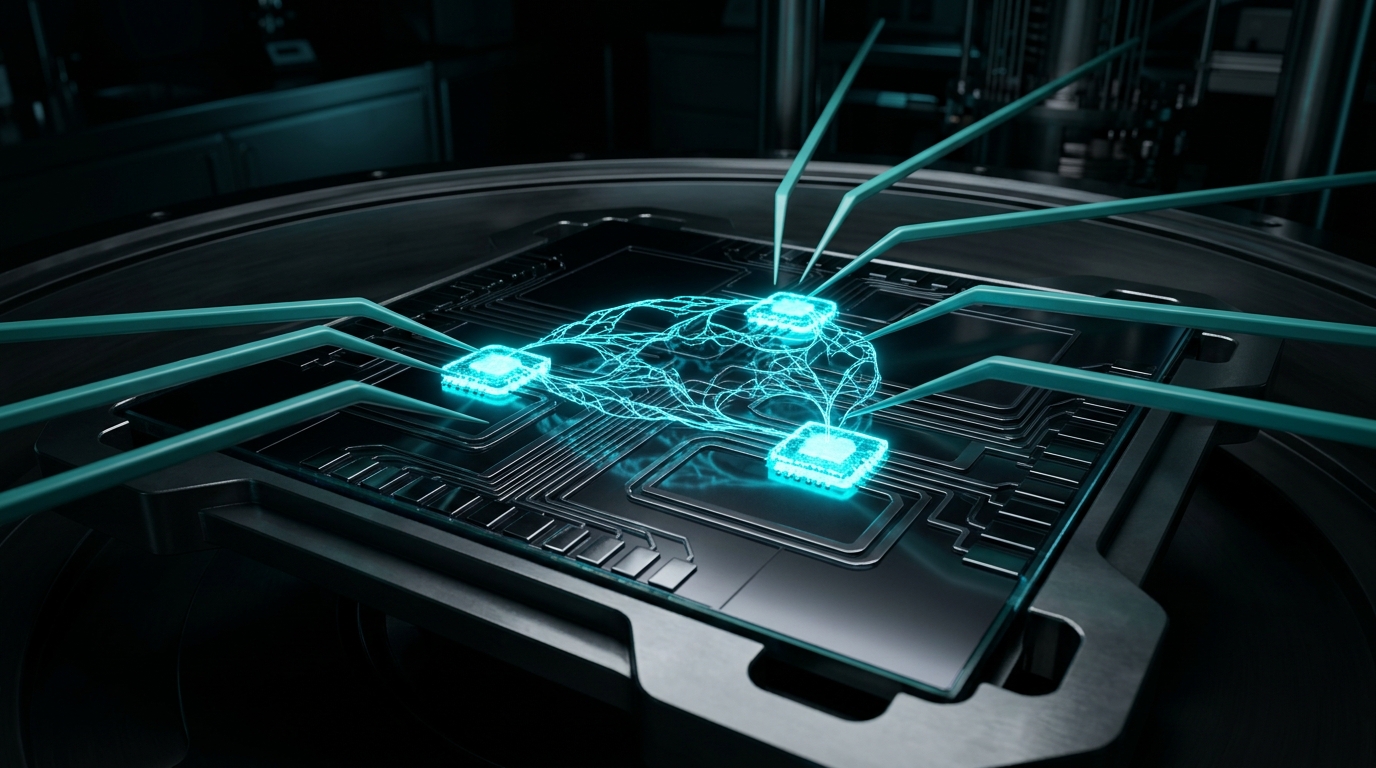
The paper proposes a complete trapped-ion fault-tolerant blueprint: compiler, quantum error-correction protocols, micro-architecture, fast decoder, and simulations. Every hardware component it relies on has already been demonstrated experimentally on small devices. That is the part security architects need to read twice. The bottleneck is no longer discovering new physics — it is integration.
For an enterprise still negotiating a five-year PQC migration budget, a practical path to hundreds of logical qubits running millions of gates rewrites the attack-surface calendar. Harvest-now-decrypt-later adversaries exfiltrating your TLS-wrapped data in 2026 are betting on architectures exactly like this one.
[IMAGE: macro photograph of a linear trapped-ion chain glowing with entangled laser beams above a cryogenic chip package, deep black background with cyan photon streaks]
What the Walking Cat Architecture Actually Is
Definition
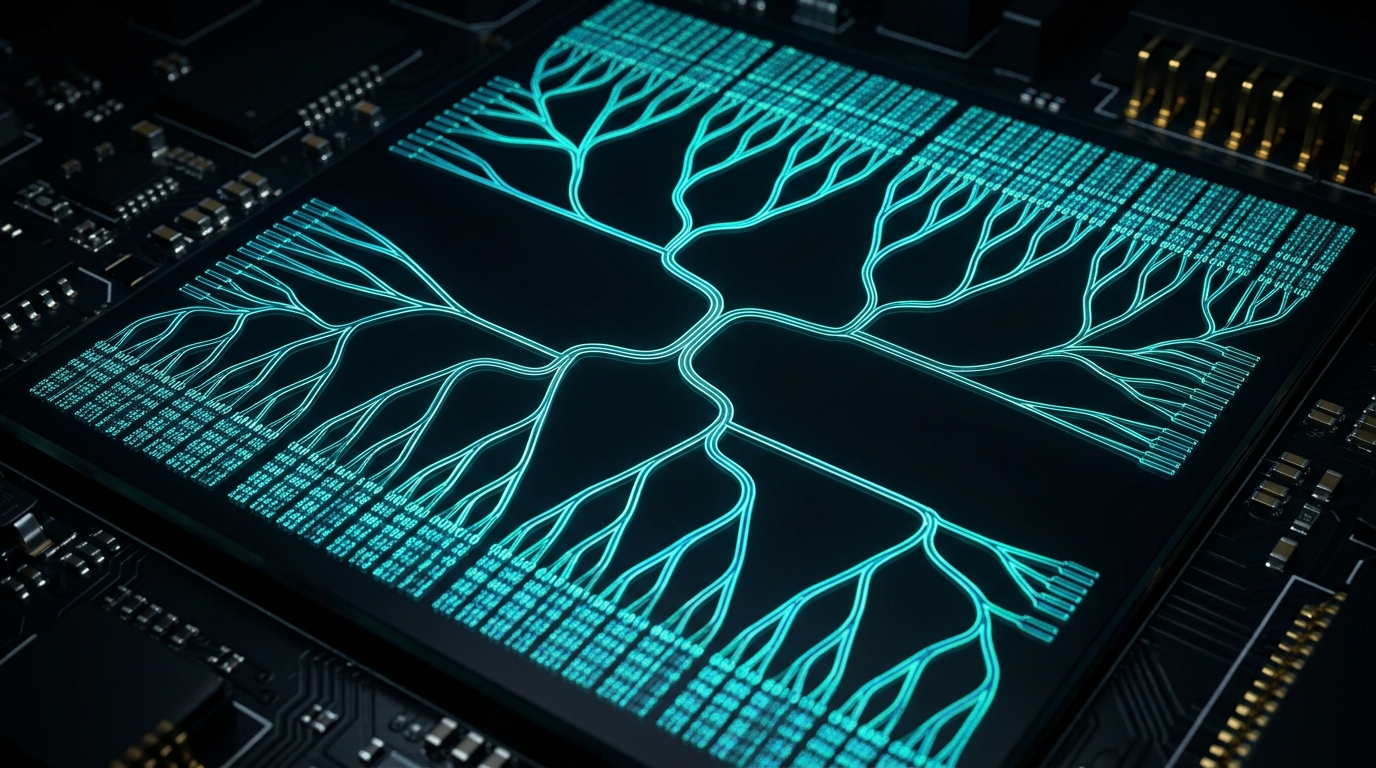
The Walking Cat Architecture is a fault-tolerant quantum computing blueprint for trapped-ion hardware whose backbone is a cat factory — a dedicated subsystem that continuously produces cat states, distributes them across the machine, and consumes them to execute logical operations. The entire design sits on top of low-density parity-check (LDPC) codes rather than surface codes, which is where the qubit-efficiency gains originate.
The authors publish three variants, each tuned for a different engineering trade-off:
| Variant | Code | Logical Qubits | Key Property |
|---|---|---|---|
| Simple | Single LDPC code | Baseline | Minimal component count, easiest to validate |
| Fast | [[70, 6, 9]] | 6 per block | Fast logical gates via Clifford-frame tracking on any 6-qubit Clifford gate |
| Dense | [[102, 22, 9]] | 22 per memory block | 110 logical qubits at ~1M T gates/day using 2,514 physical qubits |
Why Cat States, Why LDPC
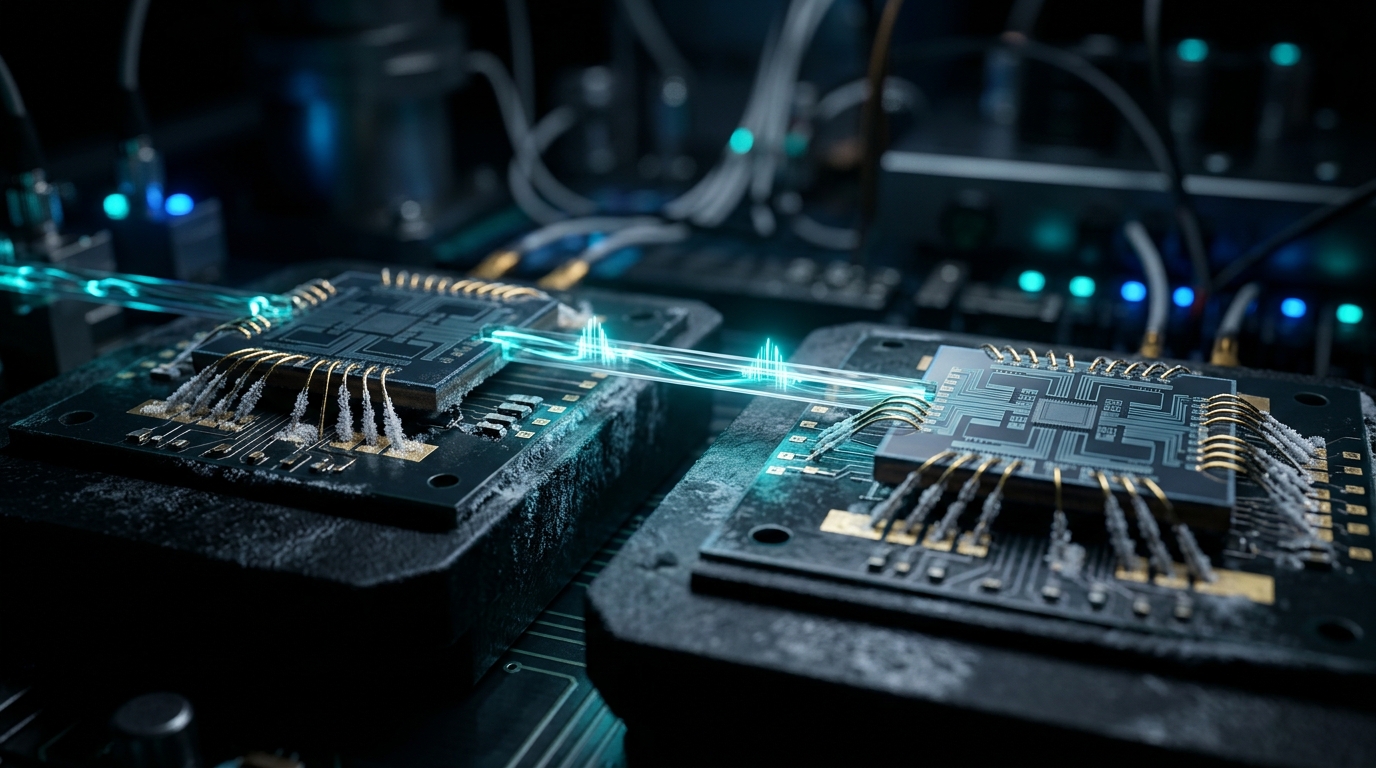
Cat states — superpositions of two coherent states with opposite phase — give trapped-ion systems a natural resource for bias-preserving operations. Producing them in a centralized factory and piping them to logical blocks decouples state preparation from computation, which is how the architecture keeps the physical-qubit budget lean.
LDPC codes replace the surface code’s geometric locality requirement with sparse, long-range parity checks. On ion traps — where qubits can be shuttled and re-grouped — long-range connectivity is cheap. The surface code’s two-dimensional tiling was never the right fit for this hardware. The Walking Cat paper commits fully to that thesis.
Critical finding: “Our dense architecture provides a design with 110 logical qubits executing about one million T gates per day using only 2,514 physical qubits.” — arXiv:2604.19481
For context, commonly cited surface-code estimates for comparable logical-qubit counts land in the tens of thousands of physical qubits. A ~10x reduction, if validated, collapses the hardware-scaling runway substantially.
Clifford-Frame Tracking: Where the Speed Comes From
The fast variant uses a [[70, 6, 9]] code and tracks Clifford gates in software rather than executing them physically. Any 6-qubit Clifford gate becomes a metadata update on the classical controller — zero physical operations, zero error accumulation, near-zero latency. T gates remain the expensive resource, which is why the paper’s T-gate-per-day metric is the correct one to benchmark against.
Industry Context: Your NIST Migration Clock Just Sped Up
NIST finalized the first three post-quantum standards — ML-KEM, ML-DSA, and SLH-DSA — in August 2024. Federal mandates under CNSA 2.0 require national security systems to complete migration by 2035. That timeline was calibrated against a conservative view of quantum hardware progress.
Architectures like Walking Cat pressure-test that conservatism. The Heisenberg-model result — simulating 100 sites to chemical accuracy in one month on 10,000 physical qubits — is itself cryptographically irrelevant, but it signals something material: devices at the 10,000-qubit scale become useful for something, which means somebody funds building them. Once 10,000 physical qubits exist, scaling to the regime that threatens RSA-2048 is an engineering continuation, not a research problem.
The Cost of Waiting
- Data encrypted today with classical algorithms and stolen in transit can be decrypted retroactively once capable hardware exists. Compliance deadlines are downstream of adversary capability.
- Certificate-chain dependencies compound. A single long-lived root CA using RSA-2048 invalidates the trust posture of everything beneath it.
- Hybrid deployments (classical + PQC) are the only safe stance for the next 36 months — single-algorithm bets in either direction carry unacceptable tail risk.
The BeQuantum Perspective
Architectures like Walking Cat are why BeQuantum’s stance has been assume the adversary gets there first. Three design choices in our stack respond directly to the scenario this paper describes:
PQC Layer deploys ML-KEM and ML-DSA in hybrid mode alongside existing X25519 and ECDSA chains. If a trapped-ion system matching the Walking Cat specifications goes operational inside a nation-state lab, the ECDSA half fails — the ML-DSA half holds. Hybrid is not hedging; it is the only construction with a non-zero survival probability across both failure modes.
Digital Notary anchors content authenticity proofs to a blockchain layer whose signature scheme is PQC-native. A document notarized today produces a verification path that does not depend on RSA or ECDSA remaining unbroken. The verification timeline extends past any plausible quantum-deployment horizon.
IceCase hardware stores long-lived keys in an air-gapped tamper-evident enclosure precisely because harvest-now-decrypt-later attacks target exfiltrated ciphertext plus stolen keys. Remove the network path to the key material and the quantum-era attack has nothing to decrypt.
None of these choices assume Walking Cat ships. They assume something like it eventually does — and that enterprises who waited for certainty paid the migration cost under duress instead of on schedule.
What You Should Do Next
- Within 30 days — inventory. Generate a cryptographic bill of materials. Every TLS endpoint, every signed artifact, every key-exchange protocol in your environment. You cannot migrate what you have not catalogued. Use CISA’s PQC inventory guidance as the baseline template.
- Within 90 days — audit certificate longevity. Any certificate or signed attestation with a validity or trust horizon past 2030 should be flagged for PQC migration or rotation. Long-lived root CAs are the top priority.
- Within 180 days — pilot hybrid PQC. Deploy ML-KEM alongside your current KEX on a non-production TLS termination. Measure latency overhead, capture telemetry, tune cipher-suite negotiation. The first production rollout should never be the first time the stack runs hybrid traffic.
FAQ
Q: Does the Walking Cat Architecture mean quantum computers will break RSA soon? A: Not directly — the paper does not claim RSA-breaking capability and its headline simulation target (the Heisenberg model) is a physics problem, not cryptanalysis. It does, however, demonstrate that hundreds of logical qubits with million-gate budgets are engineering-feasible on already-demonstrated hardware, which shortens the runway for Shor-scale machines built on similar principles.
Q: Why are LDPC codes a bigger deal than they sound? A: Qubit overhead has been the single largest barrier to useful fault-tolerant quantum computing. Moving from surface codes — which typically need tens of thousands of physical qubits for a few hundred logical qubits — to LDPC architectures at ~23 physical qubits per logical qubit changes the hardware-scaling economics by roughly an order of magnitude. That shifts which organizations can afford to build one.
Q: Should we wait for more data before starting PQC migration? A: No. NIST standards are finalized, federal timelines are fixed, and harvest-now-decrypt-later attacks are active regardless of when fault-tolerant hardware arrives. The migration is a multi-year effort for any enterprise with a non-trivial cryptographic footprint — starting late is the expensive failure mode.
Last updated: April 23, 2026.
Source: “Fault-Tolerant Quantum Computing with Trapped Ions: The Walking Cat Architecture”