- A single quantum attention head (QHA) provably represents order-k token correlations that any classical self-attention layer with embedding dimension m, H heads, and p-bit precision satisfying mHp = o(N/log log N) cannot — at circuit depth O(log k) and O(k) two-qubit gates (arXiv:2606.11673).
- QHA generalized hidden-subset parity for every order k ≤ 6 at a 6.5× smaller parameter budget than a larger classical attention head, which collapsed past order 2.
- For security and ML leaders: the result is an expressivity proof, not a deployed system — but it signals where quantum machine learning may eventually beat classical models on high-order, Fourier-heavy correlation tasks like parity and epistasis detection.
Why Higher-Order Interactions Break Classical Attention
A transformer’s self-attention layer is the workhorse behind every large language model your organization touches. Inside a single layer, dot-product self-attention computes only pairwise (order-2) interactions between tokens. That limit is invisible most of the time — language is full of low-order structure that pairwise attention captures well.
It stops being invisible the moment the signal lives in a higher-order combination. Consider fraud detection where the malicious pattern only appears when five specific transaction features co-occur, or genomics where a disease phenotype emerges only from a precise combination of six interacting genes. The signal is invisible to any pairwise model unless you stack enough layers — or pay super-quadratic cost — to synthesize the interaction across depth.
The research paper “Higher-Order Token Interactions via Quantum Attention” states the constraint precisely: representing a generic order-k interaction requires either super-quadratic resources in one layer or composition across depth. For a CISO evaluating ML-based detection systems, that translates directly into a cost-and-latency tax: the higher the interaction order you need to catch, the deeper and more expensive your classical model becomes.
The Technical Core: Synthesizing Order-k Inside the Circuit
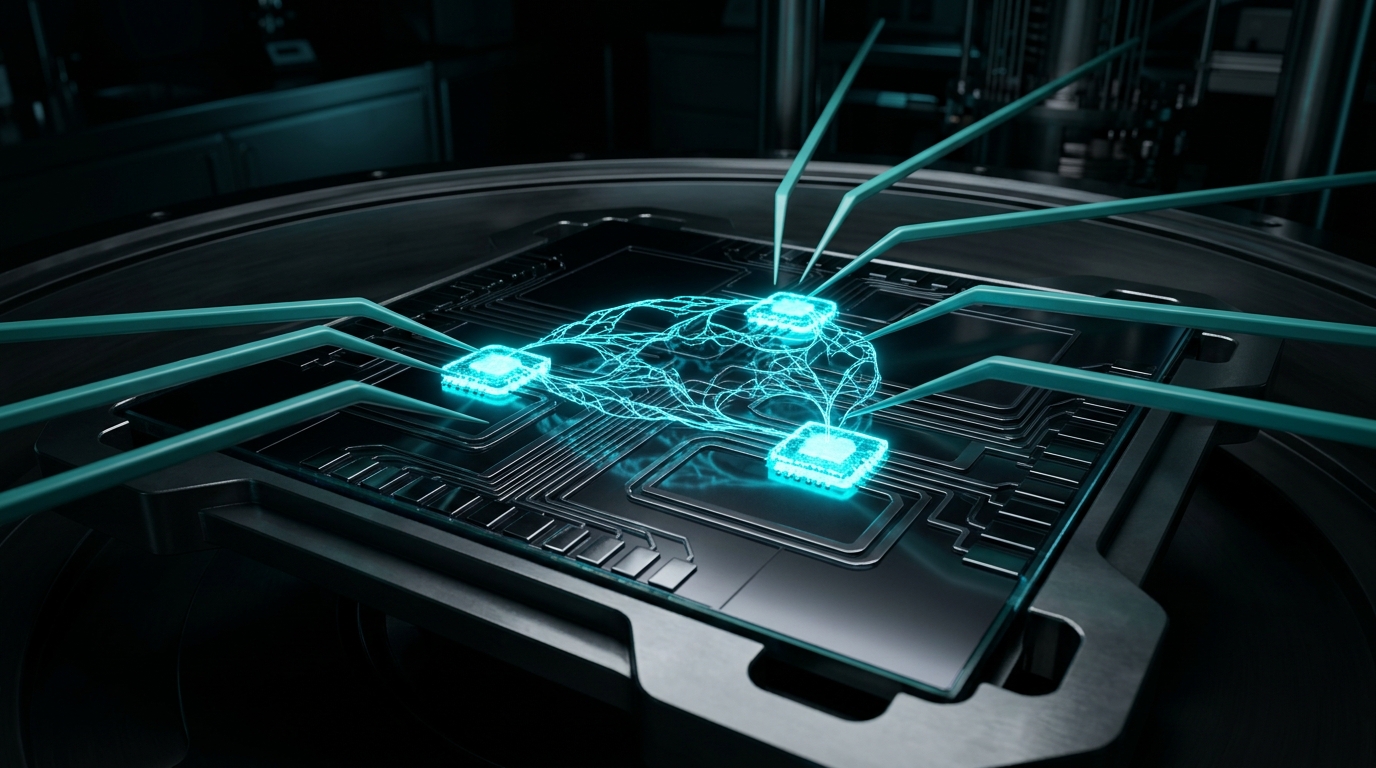
Quantum Higher-Order Attention (QHA) is a shallow, hardware-realizable quantum attention head. Instead of approximating high-order interactions by stacking layers, it synthesizes order-k token interactions directly inside the quantum circuit using two mechanisms:
- Data re-uploading — feeding the input into the circuit multiple times across rotation gates, which raises the effective polynomial degree the circuit can express.
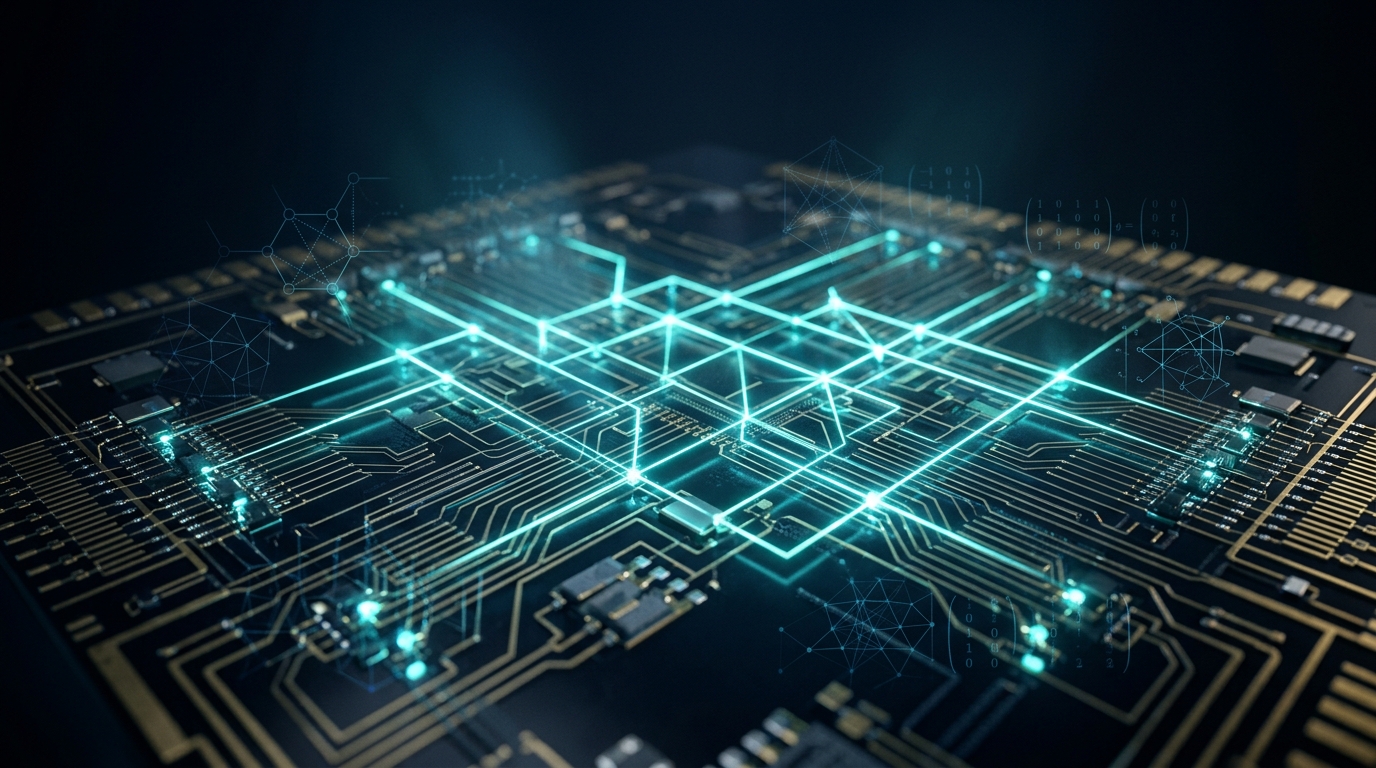
- An all-to-all non-Clifford entangler — a single entangling block that couples every qubit to every other, generating the cross-token correlations a classical pairwise layer cannot.
The interactions are then read out through a local single-qubit measurement, which matters enormously for trainability (more on that below).
The paper’s central claim is a clean expressivity separation.
“Any single standard self-attention layer with embedding dimension m, H heads and p-bit precision satisfying mHp = o(N/log log N) cannot represent the order-k correlation family that one QHA head represents with circuit depth O(log k) (O(k) two-qubit gates).” — arXiv:2606.11673
In plain terms: below a precision-and-width threshold, the classical layer is mathematically incapable of representing what one quantum head represents using logarithmic depth and a linear number of two-qubit gates.
Classical Self-Attention vs. Quantum Higher-Order Attention
| Dimension | Standard Self-Attention | Quantum Higher-Order Attention (QHA) |
|---|---|---|
| Interaction order per layer | Order-2 (pairwise) only | Order-k synthesized in-circuit |
| Cost to reach order-k | Super-quadratic in one layer, or extra depth | Depth O(log k), O(k) two-qubit gates |
| Mechanism | Dot-product similarity | Data re-uploading + all-to-all non-Clifford entangler |
| Read-out | Softmax over scores | Local single-qubit measurement |
| Parity benchmark (k ≤ 6) | Collapses past order 2 | Generalizes at 6.5× smaller parameter budget |
| Trainability (local design) | N/A | Gradient variance Ω(1/poly(n)), no barren plateau |
The Trainability Caveat You Cannot Ignore
Expressivity is worthless if the model can’t be trained. Quantum circuits are notorious for barren plateaus — regions where gradients vanish exponentially with system size, making optimization hopeless. The paper proves a guarantee for the local-design instantiation: with local read-out and O(log n) depth, gradient variance is Ω(1/poly(n)), meaning no barren plateau. This is confirmed empirically.
Here is the tension a technical reader must hold onto:
The trainability guarantee covers the local design — but the more expressive all-to-all instantiation that is actually benchmarked shows exponentially decaying gradients. The configuration with the strongest expressivity is not the configuration with the proven trainability.
That gap is the difference between a theorem and a product. It bounds how far these results scale today.
Industry Context: Where This Sits on the Quantum-ML Curve
The empirical results are narrow but striking. QHA generalized hidden-subset parity for every order k ≤ 6 from disjoint inputs at a 6.5× smaller parameter budget, while a larger classical attention head collapsed past order 2. The size of the advantage tracks the target’s Fourier degree — largest for pure parity, shrinking when low-order structure is present. In other words, the quantum head wins most decisively exactly where classical models are weakest: high-degree, structure-poor correlations.
The authors position QHA as a compact high-order interaction detector across three domains where field-standard linear methods fail:
- Genetic epistasis — detecting gene combinations that jointly drive a trait.
- Learning-parity-with-noise (LPN) — a problem family whose hardness underpins certain cryptographic constructions.
- Graph triangle detection — finding higher-order structural motifs.
Across all three, QHA reached the noise ceiling at the smallest parameter budget where linear baselines failed.
A candid disclosure for decision-makers: this is a quantum machine-learning expressivity paper, not a security or post-quantum cryptography result. The source reports no hardware platform, no qubit count, no absolute accuracy or runtime numbers, no dataset sizes, and no author or venue information — only relative parameter budgets and qualitative noise-ceiling claims. Treat the 6.5× figure as a benchmark signal, not a production guarantee.
The BeQuantum Perspective
We track quantum ML the same way we track quantum hardware: as a capability curve that will eventually intersect our threat model and our tooling. Two threads in this result matter to how we think about authenticity and detection.
First, high-order interaction detection is a defensive primitive. Much of what our Digital Notary and content-authenticity pipeline does is separate genuine signal from adversarially constructed noise — exactly the regime where a model’s ability to capture order-k structure determines whether a crafted artifact slips through. A detector that needs 6.5× fewer parameters to model a sixth-order correlation is a detector that costs less to run at the edge, where IceCase hardware operates under tight power and latency budgets. That is the property worth watching, independent of whether the underlying head is quantum or classical.
Second, the LPN connection deserves sober framing. Learning-parity-with-noise is a hardness assumption behind some lattice-adjacent cryptography. A model that learns parity structure more efficiently is a research curiosity, not a break — the benchmarked orders (k ≤ 6) and the unproven trainability of the expressive variant are nowhere near cryptographic scale. We flag it because our PQC Layer roadmap requires us to monitor any learning method that erodes a hardness assumption, even at the theoretical margin. Today this is a tripwire, not an alarm.
Our approach is the same one we apply to every pre-hardware result: instrument now, integrate later. We don’t re-architect a detection stack around a theorem with a known trainability gap. We do add it to the watchlist that governs how aggressively we shorten migration timelines.
What You Should Do Next
- Within 90 days — inventory your high-order detection exposure. Identify which ML-driven controls (fraud, anomaly, content-authenticity) depend on capturing interactions above order 2, and document where you currently pay for that with model depth. This tells you where a more expressive head would actually move a metric.
- Within 6 months — separate quantum-ML hype from quantum-ML signal in your roadmap. Brief your data-science and security teams that current quantum attention results are expressivity proofs with an unresolved trainability gap at the expressive end. Set a re-evaluation trigger: published results on real hardware with absolute accuracy and qubit counts.
- Ongoing — keep LPN and lattice-hardness research on your PQC watchlist. Any learning method that improves on parity-with-noise at scale is a signal to revisit migration urgency. Nothing in this paper changes your NIST migration timeline today — but it is exactly the kind of result that should be reviewed, not ignored.
FAQ
Q: Does Quantum Higher-Order Attention threaten current encryption or PQC schemes? A: No. The source is a quantum machine-learning expressivity paper with no cryptographic break. Its connection to learning-parity-with-noise is a benchmark domain (orders k ≤ 6), not an attack on deployed cryptography. It belongs on a research watchlist, not in a threat assessment.
Q: Can I deploy QHA today to improve my detection models? A: Not in production. The most expressive benchmarked variant shows exponentially decaying gradients, and the paper reports no hardware platform, qubit count, or absolute performance numbers. The proven no-barren-plateau guarantee applies only to the less expressive local-design version.
Q: Why does a quantum attention head beat a larger classical one on parity? A: Classical self-attention computes only pairwise interactions per layer, so it collapses on high-order targets like parity. QHA synthesizes order-k interactions directly in-circuit via data re-uploading and an all-to-all entangler, generalizing every order up to k = 6 at a 6.5× smaller parameter budget. The advantage grows with the target’s Fourier degree.
Last updated: June 18, 2026 · Source: “Higher-Order Token Interactions via Quantum Attention,” arXiv:2606.11673