
- A new 6G far-edge architecture, Q-FE, embeds CSIDH-512 post-quantum key material (≤64 bytes) directly into MAC-layer control frames, cutting cryptographic overhead 62% versus ML-KEM/Kyber-1024 (arXiv:2606.03611).
- It holds P99.9 URLLC latency at 0.78 ms and accelerates federated-learning model convergence 31% over synchronous training — quantum security without breaking the sub-millisecond budget.
- For your organization: harvest-now-decrypt-later (HNDL) exposure in Industrial IoT can be closed at the wireless control plane, not bolted on as a separate handshake that blows your latency SLA.
Why Quantum Risk Reaches Your Factory Floor First
Picture an autonomous mobile robot on a 6G-connected production line. It exchanges control commands every few hundred microseconds with an edge node coordinating a fleet of industrial actuators. That traffic is encrypted today with classical public-key cryptography — ECDH or RSA underneath your TLS sessions.
An adversary does not need a quantum computer today to threaten that link. Under the harvest-now, decrypt-later (HNDL) threat model, they capture the encrypted control traffic now and decrypt it once a cryptographically relevant quantum computer exists. For consumer web sessions, the captured data is stale within hours. For industrial control systems, machine-tuning parameters, plant topology, and safety-interlock logic stay sensitive for the operational life of the equipment — often decades.
That is the exposure Q-FE targets. Far-edge devices in 6G Industrial IoT must satisfy three constraints simultaneously: sub-millisecond latency, 10⁻⁷-class reliability, and cryptographic security that survives for decades. Most post-quantum retrofits satisfy the third constraint by sacrificing the first two — they add handshake bytes that fragment packets and inflate latency past the URLLC budget. Q-FE is a co-designed architecture built to satisfy all three at once.
Q-FE Technical Deep-Dive: Three Co-Designed Components
Q-FE (Quantum-Native 6G Far-Edge) integrates three components that are designed together rather than layered after the fact:
Micro-Digital Twins (μDTs) are lightweight digital-twin instances co-located with 6G base stations and high-capability endpoints, pulling computation off the centralized cloud and onto the far edge. A μDT handover migration — moving a twin as a device roams between base stations — completes in 1.9 ± 0.3 ms, measured across 10⁴ simulated migration events.
A Cross-Layer Post-Quantum Key Exchange module is the cryptographic core. Instead of negotiating keys in a separate application-layer handshake, Q-FE embeds CSIDH-512 isogeny-based key material directly inside MAC-layer control frames.
An Asynchronous Federated Learning (AFL) protocol governs distributed model training across edge nodes, coordinated by lightweight DAG smart contracts running at Mobile Edge Computing (MEC) nodes.
Why CSIDH-512 Instead of Kyber
The choice of CSIDH-512 over the NIST-standardized ML-KEM (Kyber) is the architectural pivot. CSIDH-512 produces uniquely compact keys of ≤64 bytes. That size fits inside existing MAC-layer control frames without triggering packet fragmentation. Kyber-1024 keys are an order of magnitude larger and force fragmentation or a separate exchange — both of which add latency and overhead at the exact layer where 6G can least afford it.
By embedding ≤64-byte isogeny key material inside MAC-layer control frames, Q-FE reduces MAC-layer overhead by 62% versus ML-KEM/Kyber-1024 while maintaining P99.9 URLLC latency at 0.78 ms. (Q-FE, arXiv:2606.03611)
The AFL protocol carries an aggregation complexity of O(N log R) per round. By running asynchronously, it eliminates straggler bottlenecks — slow nodes no longer stall every other participant — and accelerates global-model convergence 31% over synchronous federated learning. The DAG-smart-contract governance layer prevents model-poisoning and Sybil attacks without exposing raw data, keeping device-local data private while still defending the shared model.
How the Approaches Compare
| Dimension | ML-KEM / Kyber-1024 (baseline) | Q-FE with CSIDH-512 |
|---|---|---|
| Key size | Large (forces fragmentation) | ≤64 bytes |
| Key placement | Separate handshake layer | Inside MAC-layer control frames |
| MAC-layer overhead | Baseline | 62% lower |
| P99.9 URLLC latency | Strained by added bytes | 0.78 ms |
| Learning protocol | Synchronous FL (straggler-bound) | Asynchronous FL (+31% faster convergence) |
| Poisoning / Sybil defense | Not integral | DAG smart contracts at MEC |
| μDT handover migration | — | 1.9 ± 0.3 ms |
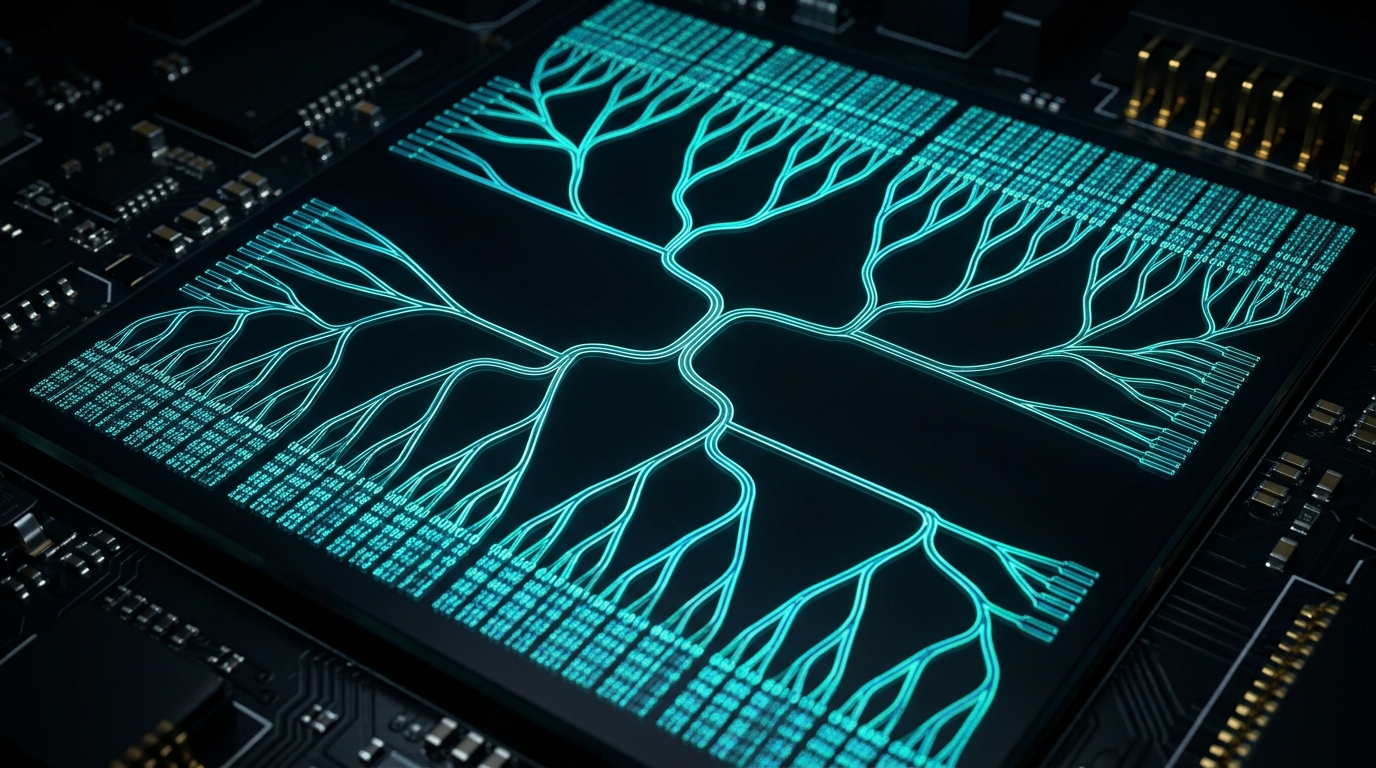
[IMAGE: isogeny key material flowing through a 6G base station MAC-layer frame stack, cyan data threads]
The paper backs these numbers with a formal threat model confirming resilience against quantum eavesdropping, model-poisoning, and Sybil attacks, validated through end-to-end simulation in NS-3 + PySyft.
Industry Context: Where This Sits in the PQC Timeline
NIST finalized its first post-quantum standards — ML-KEM among them — and the migration clock is running for every regulated industry. The standards body’s guidance points enterprises toward deprecating classical public-key cryptography well before a quantum computer makes the threat concrete, precisely because HNDL collapses the usual “wait until it’s broken” timeline.
Q-FE is a research preprint, not a deployed standard, and that distinction matters for your planning. It is a published-but-not-yet-peer-reviewed arXiv contribution. What it demonstrates is direction: post-quantum security for 6G critical infrastructure is most efficient when designed into the wireless control plane, not appended to it.
The economic argument is the asymmetry between migration cost and inaction cost. Re-architecting packet structures across a deployed Industrial IoT estate is expensive and slow. An approach that slots compact PQC keys into existing MAC frames — a 62% overhead reduction over the lattice-based alternative — lowers the migration barrier enough that quantum resilience stops competing with your URLLC latency targets. The cost of inaction is a decade of harvested control traffic decrypted at the adversary’s convenience.
The BeQuantum Perspective
The Q-FE result validates a principle our engineering team has applied across the BeQuantum PQC Layer: post-quantum security must be co-designed with the transport it protects, not stapled on as a separate handshake. The 62% overhead reduction Q-FE reports comes entirely from that co-design discipline — choosing a primitive (CSIDH-512) whose key size fits the frame it travels in.
We see three direct connections to how organizations like ours address far-edge quantum risk:
- Digital Notary for handover integrity. Q-FE’s μDT migrations complete in under 2 ms across thousands of events. Each migration is a trust boundary — a twin moving between base stations is a moment where state can be tampered with. A blockchain-anchored notary that timestamps and verifies each migration gives you an auditable chain of custody for twin state, complementing Q-FE’s in-band key exchange.
- PQC Layer beyond a single primitive. Q-FE commits to CSIDH-512. Isogeny cryptography carries open cryptanalytic questions about parameter sizing, which is why we treat PQC as a crypto-agile layer — the ability to swap primitives without re-architecting the data plane is itself a security control when any single scheme’s long-term strength is still being established.
- IceCase hardware for key custody. Embedding key material in MAC-layer frames assumes the endpoint generating those keys is trustworthy. Hardware-rooted key storage at the far-edge device closes the gap between an elegant protocol and a physically attackable actuator on a factory floor.
The honest framing: Q-FE is simulation-validated (NS-3 + PySyft), not yet proven on hardware testbeds, and reports no energy or compute-cost figures. That is exactly the gap where production-grade engineering — hardware roots of trust, crypto-agility, and verifiable audit trails — turns a promising architecture into a deployable one.
What You Should Do Next
- Within 90 days, inventory your HNDL exposure. Audit which of your Industrial IoT and Digital Twin data flows carry information with a multi-year or multi-decade sensitivity horizon. Control parameters, plant topology, and safety logic are the priority targets — that long-lived data is what HNDL adversaries harvest first.
- Within 6 months, evaluate crypto-agility, not just a single PQC pick. Whether you lean toward NIST’s ML-KEM or watch isogeny approaches like CSIDH mature, the decision that ages well is the ability to swap primitives without re-architecting your transport. Map where your current stack hard-codes a key-exchange algorithm.
- Before any 6G/MEC procurement, ask vendors where PQC lives in the stack. A separate application-layer handshake is a latency and overhead liability for URLLC workloads. Push vendors to specify whether post-quantum key exchange is integrated at the control plane — and what it costs you in P99.9 latency.
FAQ
Q: Is Q-FE production-ready for my Industrial IoT deployment? A: No. Q-FE is a research preprint (arXiv:2606.03611) validated through NS-3 and PySyft simulation, not on physical hardware testbeds, and it reports no energy or compute-cost figures. Treat it as architectural direction for your roadmap, not a product to deploy today.
Q: Why use CSIDH-512 when NIST standardized ML-KEM (Kyber)? A: The driver is key size. CSIDH-512 keys are ≤64 bytes, small enough to embed inside existing MAC-layer control frames without packet fragmentation — yielding the reported 62% overhead reduction versus Kyber-1024. The trade-off is that isogeny cryptography is less mature than lattice-based schemes and carries open questions about parameter sizing, which argues for a crypto-agile deployment.
Q: What does the 62% overhead reduction actually buy my organization? A: Headroom in your latency budget. Q-FE holds P99.9 URLLC latency at 0.78 ms while adding quantum-resistant key exchange — meaning you can close harvest-now-decrypt-later exposure on time-critical control links without breaching the sub-millisecond SLA those links depend on.
Last updated: 2026-06-03. Primary source: Q-FE: A Quantum-Native 6G Far-Edge Architecture, arXiv:2606.03611.