- A single FPGA running at 150 MHz explored 10^13 quantum error patterns in 20 days — the same validation would take over a year on an Intel Core i9 with 128 GB RAM.
- Diversity-based Belief Propagation decoders match BP+OSD accuracy while reducing post-processing activation by up to 96.93% and delivering 30-80% average speed improvements.
- Faster QEC validation compresses the runway to cryptographically-relevant quantum computers, forcing CISOs to accelerate post-quantum cryptography migration planning.
Why FPGA Quantum Decoders Just Changed Your PQC Timeline
Every CISO planning a post-quantum migration has been working from the same assumption: cryptographically-relevant quantum computers remain years away because quantum error correction (QEC) is still too slow, too expensive, and too unvalidated for commercial deployment. A recent preprint on arXiv challenges that assumption directly.
Researchers have built an FPGA hardware emulator that validates QEC decoders at logical error rates of 10^-12 — the threshold required for running Shor’s algorithm against RSA-2048 — in 20 days. The same statistical validation on optimized C++ software running on an Intel Core i9 with 128 GB RAM would take more than a year.
That 365x acceleration matters because it removes one of the last engineering bottlenecks between theoretical quantum computing and the fault-tolerant hardware that would break current public-key cryptography. If your 2030 PQC migration plan assumed decoder validation would remain a slow, serial process, that assumption is now outdated.
What a QEC Decoder Actually Does
A quantum error correction decoder is the classical control logic that keeps a quantum computer alive. Every qubit decoheres. Every gate introduces noise. Without a decoder that reads syndrome measurements and issues corrections in real time, a quantum processor cannot complete any algorithm long enough to threaten cryptographic systems.
The performance of this classical component — not just the qubits themselves — determines three things that matter to security architects:
- Code distance achievable in hardware, which sets the logical error rate
- Qubit overhead required per logical qubit, which drives system cost and timeline
- Quantum-classical connectivity bandwidth, which caps how fast logical operations run
When researchers improve decoder speed and accuracy, they shorten the gap between experimental quantum systems and cryptographically-relevant ones. That gap is your PQC migration window.
Technical Deep-Dive: Diversity Decoding and FPGA Emulation
The paper tackles Quantum Low-Density Parity-Check (QLDPC) codes — specifically hypergraph product codes, lifted product codes, and bivariate bicycle codes. These families are leading candidates for fault-tolerant quantum architectures because they offer better encoding rates than surface codes.
The standard decoding approach, Belief Propagation with Ordered Statistics Decoding (BP+OSD), is accurate but computationally expensive. Its post-processing step activates on a large fraction of decoding cycles, creating latency spikes incompatible with real-time quantum control.
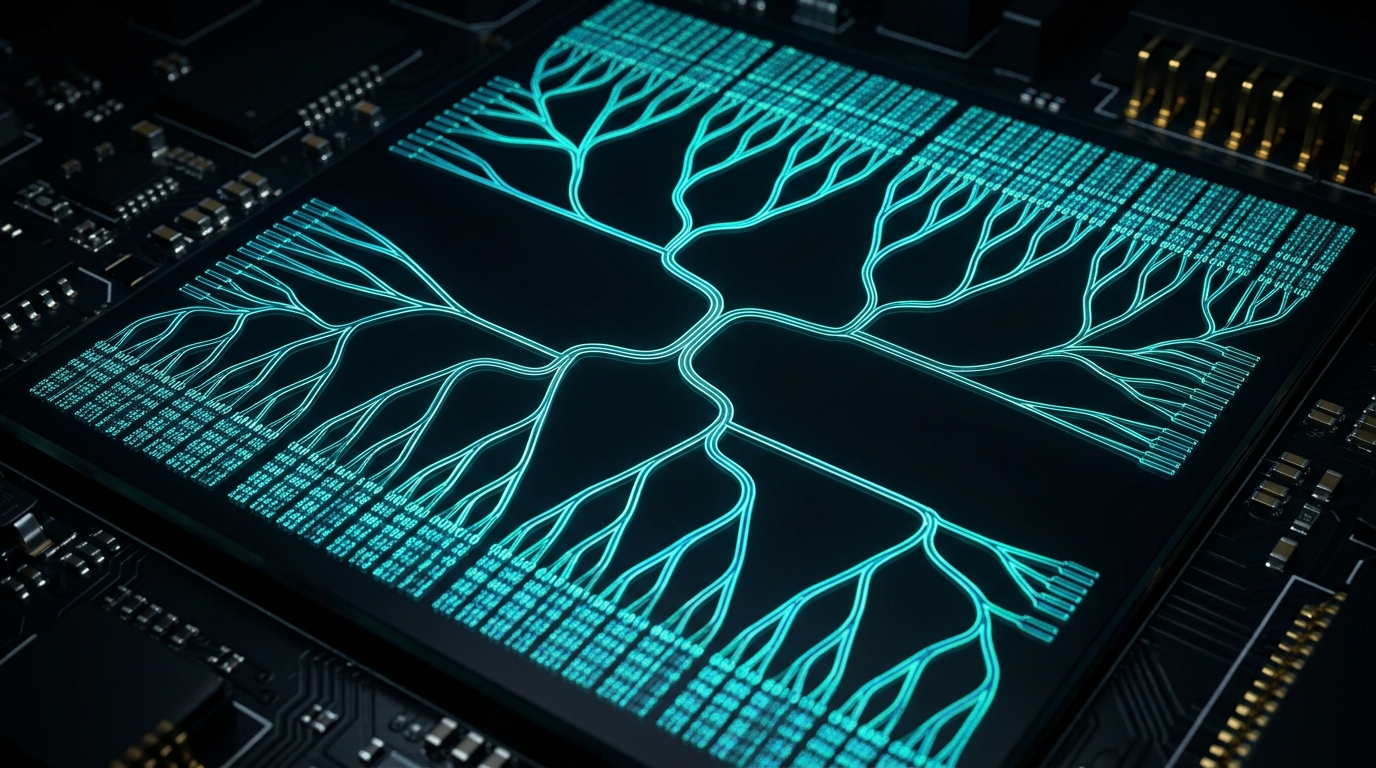
The new approach uses diversity-based decoding: running multiple BP decoders in parallel, each with different quantization levels. Individually, each decoder performs poorly. Combined, they outperform floating-point BP and match BP+OSD accuracy without its post-processing cost.
Performance Comparison: BP+OSD vs. Diversity-Based BP
| Metric | BP+OSD (baseline) | Diversity-Based BP |
|---|---|---|
| Logical error rate | Reference | Matches baseline |
| Average speed improvement | — | 30% to 80% faster |
| Worst-case speed improvement | — | 10% to 120% faster |
| Post-processing activation | High | Reduced by 47% to 96.93% |
| Hardware compatibility | Software-dominated | FPGA-native |
| Noise model tested | Phenomenological | Circuit-level (bivariate bicycle) |
“The emulator can explore 10^13 different error patterns in 20 days with a single FPGA device running at 150 MHz, guaranteeing the decoder’s performance at logical rates of 10^-12, the requirement for most quantum algorithms. In contrast, an optimized C++ software on an Intel Core i9 with 128 GB RAM would take over a year to achieve similar results.”
The emulator also stores uncorrectable error patterns for offline analysis — a capability software simulation cannot match at this scale. For any organization certifying QEC hardware for regulatory or assurance purposes, deterministic reproduction of failure cases is the difference between a research result and a deployable system.
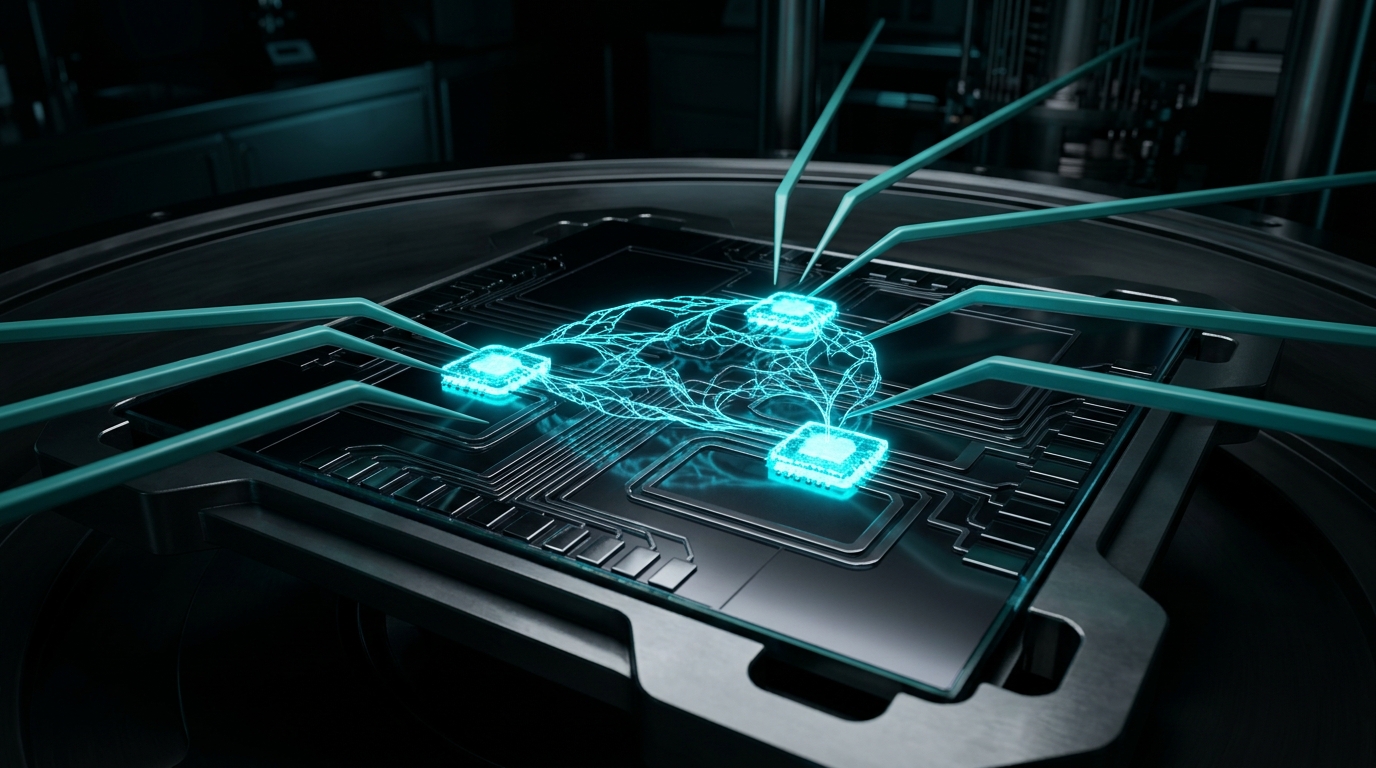
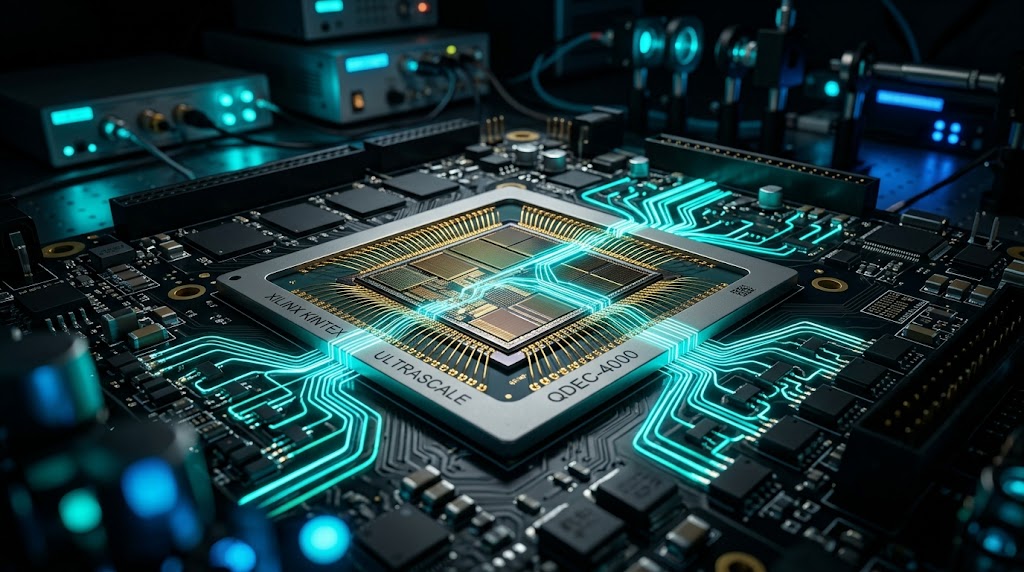
[IMAGE: close-up of an FPGA board with glowing cyan traces representing quantum error syndromes flowing through parallel decoder paths]
Industry Context: Why This Compresses the Migration Window
NIST finalized its first post-quantum cryptography standards — ML-KEM, ML-DSA, and SLH-DSA — in August 2024. The federal government’s deprecation schedule for RSA and ECC currently extends to 2035. Most Fortune 500 migration plans assume a similar timeline.
Those plans embed a specific assumption: that fault-tolerant quantum computing will remain bottlenecked by classical control hardware for at least another decade. The FPGA emulation result does not prove that assumption wrong, but it removes one of the key reasons the assumption was safe.
Three shifts follow:
Near-term (1-2 years). Enterprises building quantum-safe infrastructure can now validate QEC decoders at realistic 10^-12 error rates in weeks rather than years. Hardware security module vendors claiming PQC compliance will face harder questions about their underlying validation methodology.
Medium-term (3-5 years). Reduced classical control costs make fault-tolerant quantum systems commercially tractable sooner. Expect updated estimates from and similar sources to shift left.
Long-term (5+ years). Lower qubit overhead per logical qubit shortens the runway to Shor’s algorithm at cryptographically relevant scale. Any encrypted data captured today under a harvest-now-decrypt-later strategy becomes more exposed with each such advance.
For CISOs, the operational implication is simple: your cryptographic inventory and PQC migration roadmap need to be reviewed against compressed timelines, not the 2035 default.
The BeQuantum Perspective: Validation-First Migration
The common failure mode in PQC migrations is not algorithm selection — NIST has done that work. It is assurance: proving that the cryptographic primitives, key exchange flows, and signature verifications in your production systems actually deliver post-quantum security under real operational conditions.
The FPGA emulation research underscores a principle BeQuantum builds into its PQC Layer: cryptographic claims require hardware-grounded validation, not just mathematical proof. The same way the researchers use FPGA emulation to stress-test decoders at 10^13 error patterns, production PQC deployments need validation against realistic attack patterns at scale before being trusted with long-lived secrets.
Three technical approaches apply directly:
- Digital Notary verification creates tamper-evident records of cryptographic transitions, so auditors can prove when a system moved from classical to post-quantum primitives.
- PQC Layer hybrid operation runs classical and post-quantum algorithms concurrently during migration, bounding risk if either primitive is later broken.
- IceCase hardware isolation protects migration keys during the window when both old and new cryptographic material co-exist in production.
None of this makes quantum computers arrive slower. It makes the migration verifiable.
What You Should Do in the Next 90 Days
-
Audit your TLS certificate chain and long-lived key material. Identify every RSA-2048, RSA-3072, and ECC P-256/P-384 key protecting data with a confidentiality lifespan beyond 2030. These are your harvest-now-decrypt-later exposure.
-
Inventory cryptographic agility in your stack. For each identified key, determine whether the consuming system can accept ML-KEM-768 or ML-DSA-65 without code changes. The systems that cannot are your migration bottleneck, independent of quantum timeline.
-
Update your quantum risk assumptions to quarterly review. The FPGA decoder result will not be the last acceleration. Treat the quantum threat timeline as a living variable tied to peer-reviewed hardware advances, not a fixed 2035 anchor.
Frequently Asked Questions
Q: Does this FPGA research mean quantum computers can break RSA sooner?
A: Not directly. The research accelerates the validation of quantum error correction decoders, not the construction of logical qubits. But decoder performance is one of three coupled constraints — along with physical qubit count and gate fidelity — that gate the arrival of cryptographically-relevant quantum computers. Removing one constraint compresses the overall timeline.
Q: Should we delay PQC migration until NIST finalizes more standards?
A: No. ML-KEM, ML-DSA, and SLH-DSA are finalized. The Federal CIO Council’s M-23-02 memorandum requires federal agencies to be inventorying cryptographic systems now. Commercial organizations with regulatory exposure (PCI DSS, HIPAA, GDPR) face similar pressure through sector-specific guidance. The cost of delayed migration scales with the volume of long-lived encrypted data being collected today.
Q: What makes FPGA validation different from software simulation?
A: Determinism, speed, and failure-case capture. FPGAs execute the exact logic path a production decoder would use, at hardware clock speeds, while storing every uncorrectable error pattern for offline analysis. Software simulation approximates decoder behavior and cannot reach 10^-12 logical error rates in commercially reasonable time.