
- A preprint co-design study (arXiv:2605.15297) shows a five-layer Optimistic Quantum Fourier Transform (OQFT) that roughly halves runtime using four “hot zones,” at a cost of ~500 additional logical ancillae and peak parallelism of 128 logical qubits across 256–2048-bit instances.
- The work demonstrates that leading ripple-carry adders (Gidney 2018 vs. Cuccaro 2004) carry similar space-time volume but demand different parallelism — meaning runtime is now a tunable architectural dial, not a fixed cost.
- The Quantum Fourier Transform is the core subroutine of Shor’s algorithm. Every credible reduction in its fault-tolerant cost compresses the window you have to migrate off RSA and ECC.
Why a QFT Scheduling Paper Belongs on Your Risk Register
Your TLS certificate chain, your code-signing keys, and the VPN tunnels carrying your most sensitive traffic share a single assumption: that factoring a 2048-bit integer stays computationally infeasible. Shor’s algorithm breaks that assumption on a sufficiently large fault-tolerant quantum computer, and the Quantum Fourier Transform (QFT) is the subroutine that does the heavy lifting at the end of the factoring circuit.
For years, the comfort blanket was cost. Running a QFT under fault-tolerant error correction was projected to consume enormous space-time volume — so much that practical large-integer factoring looked decades out. That projection is not a law of physics. It is an engineering estimate, and engineering estimates fall when someone redesigns the architecture.
That is exactly what the OQFT co-design study does. It does not announce a working machine. It does something more consequential for planning: it shows the runtime of the bottleneck is tunable, and it quantifies the price of buying speed. When the cost curve of an attack primitive becomes negotiable, the prudent CISO treats the migration deadline as closer than the headline qubit counts suggest.
Technical Deep-Dive: The Optimistic QFT Under a Surface-Code Model
The study is an architecture-algorithm co-design of the Optimistic Quantum Fourier Transform under a surface-code fault-tolerant execution model, targeting reconfigurable neutral-atom hardware. Three design choices drive the result.
Definition: What the Hot-Zone Architecture Actually Does
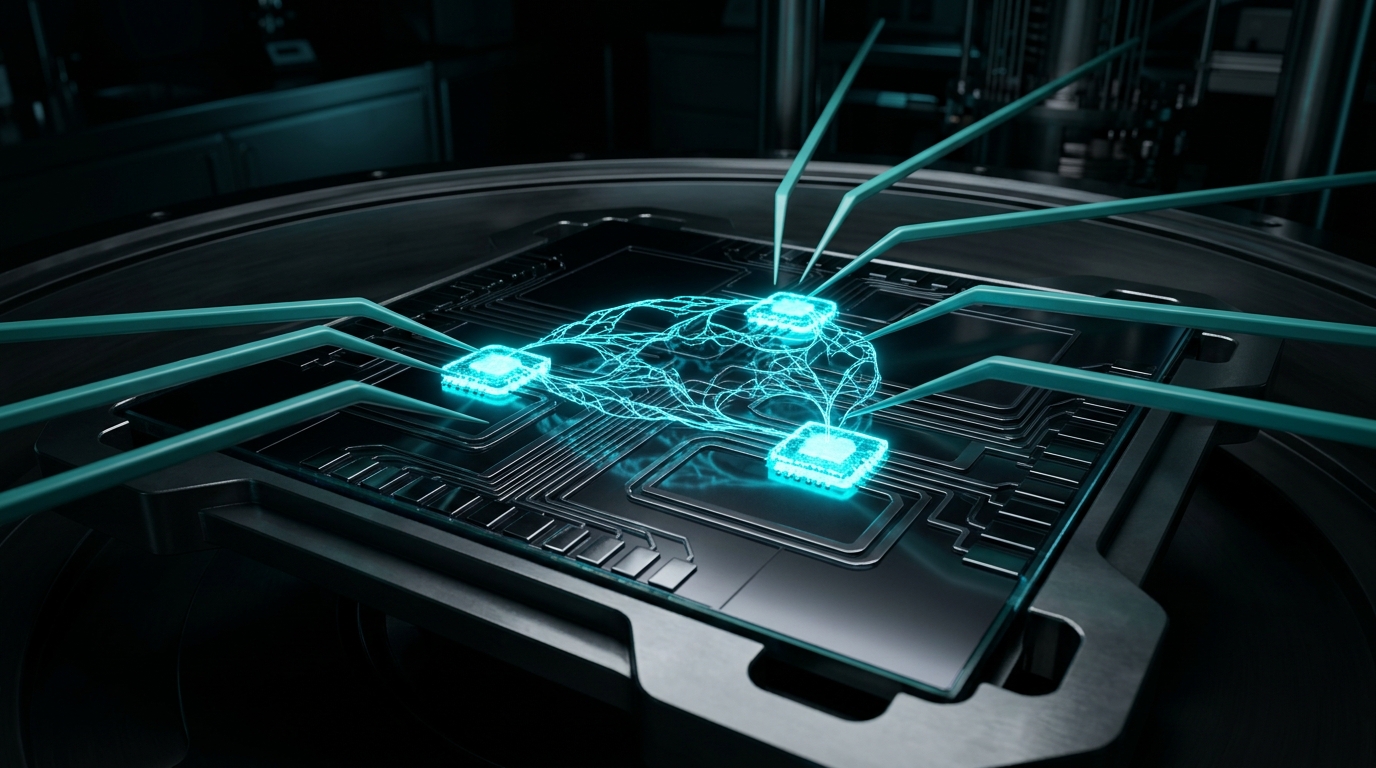
A hot-zone architecture decouples data storage from data processing. Instead of dragging stationary data qubits to fixed processing units, it keeps data regions stationary and dynamically routes mobile resource packages — magic-state factories, bridge qubits, and phase-gradient registers — to those regions on demand. On reconfigurable neutral-atom hardware, where atoms are physically shuttled with optical tweezers, this matches the machine’s native strength: moving resources, not rewiring connectivity.
The OQFT itself relies on phase-gradient resources and small-scale blocks rather than a monolithic circuit. Rotation insertions are routed through catalytic phase-gradient addition, and the underlying ripple-carry adders are heuristically micro-scheduled down to patch-level moves on the surface-code lattice.
The Five-Layer Structure and the Parallelism Dial
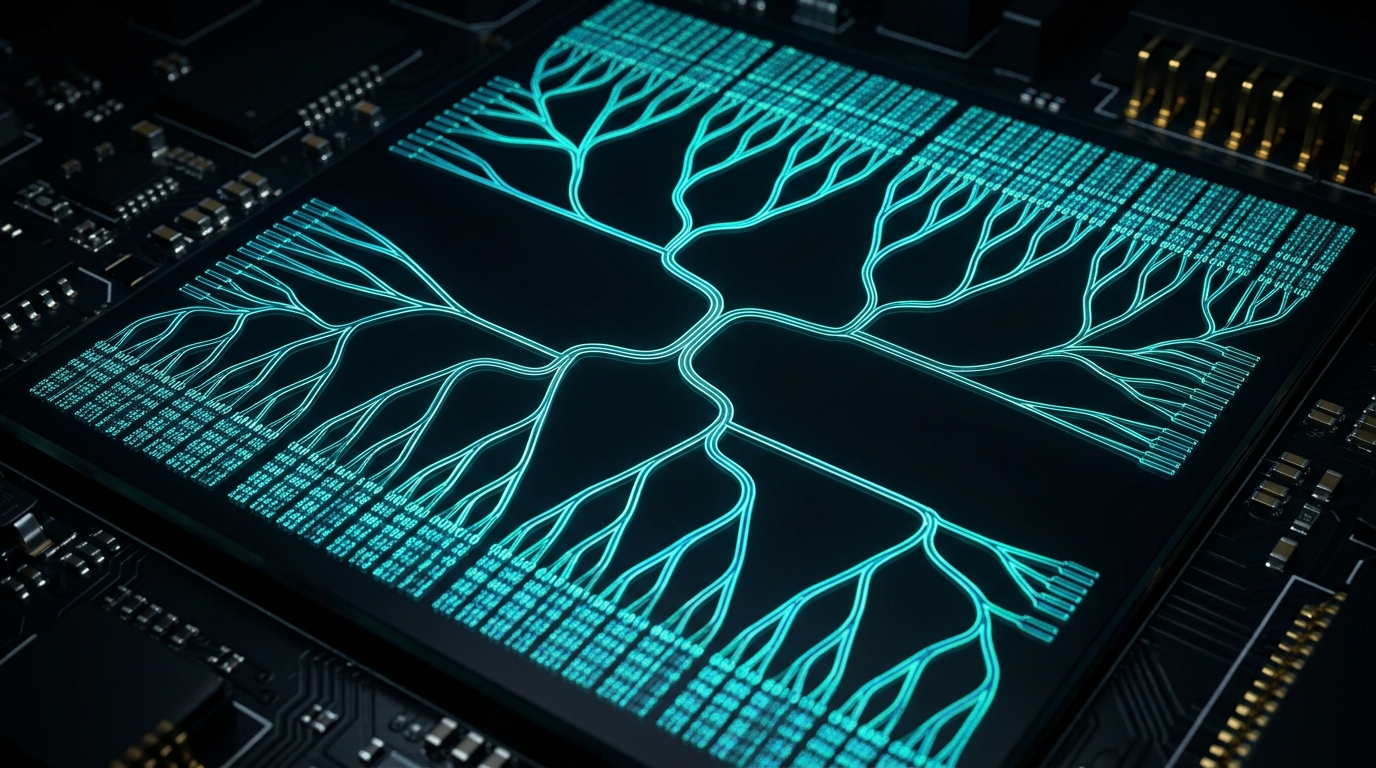
The OQFT is organized into a five-layer structure that exposes a tunable parallelism/latency trade-off. The number of hot zones is the dial:
| Hot-zone configuration | Runtime behavior | Resource implication |
|---|---|---|
| Two hot zones | Matches serial-QFT latency | Baseline parallel footprint |
| Four hot zones | Roughly halves runtime | ~500 additional logical ancillae; peak parallelism 128 logical qubits |
| Additional hot zones | Asymptotically approaches constant-time execution | Substantial, escalating resource cost |
The practical reading: latency is no longer fixed by the algorithm. An attacker — or a defender modeling the threat — can trade qubits for wall-clock time, and the study puts concrete numbers on the first meaningful step of that trade across instance sizes spanning 256–2048 bits.
Adder Choice: Same Volume, Different Parallelism
The study compares the two canonical ripple-carry adders used inside the transform.
| Adder | Reference | Space-time volume | Parallelism demand |
|---|---|---|---|
| Gidney adder | Gidney 2018 | Comparable | One profile |
| Cuccaro adder | Cuccaro et al. 2004 | Comparable | Different profile |
“Under this model, leading Gidney and Cuccaro adders have similar space-time volume but require different levels of parallelism.” — OQFT co-design study, arXiv:2605.15297
That finding matters because it decouples total work from how fast that work can be poured through the machine. Two adders that look equal on a spreadsheet of total operations behave very differently when you ask how many logical qubits must act at once. Reaction-limited operation and parallelism demand — not raw gate count — emerge as the primary drivers of resource estimation.
The design also handles a subtle correctness hazard. Endianness mismatches arise between phase-gradient and data registers; the study resolves them with cyclic phase-gradient swaps and alternating QFT reflections, keeping the arithmetic correct without paying a heavy routing tax.
The analysis is deliberately scoped to surface codes and cultivation-only magic-state factories. It reports relative trade-offs — match, halve, approach constant-time — not absolute wall-clock runtimes, and stops short of full physical qubit totals. Read it as a resource-estimation framework, not a deployment spec.
Industry Context: What This Shifts in the PQC Timeline
NIST finalized its first post-quantum standards — ML-KEM, ML-DSA, and SLH-DSA — in August 2024, and U.S. federal guidance points organizations toward retiring quantum-vulnerable algorithms through the early 2030s. Those timelines were drawn against conservative assumptions about how expensive fault-tolerant factoring would be.
Work like the OQFT co-design erodes the conservatism in three time horizons:
- Near-term (1–2 years): Hardware and architecture teams now have concrete resource-estimation targets — roughly 500 additional logical ancillae and 128 logical qubits of peak parallelism for half-time execution across 256–2048-bit instances. Quantifiable benchmarks accelerate planning, and accelerated planning shortens the path from lab to capability.
- Medium-term (3–5 years): The hot-zone pattern — decoupling storage from processing and tuning parallelism — is generalizable. It could become a standard design idiom inside fault-tolerant quantum compilers and schedulers industry-wide, not just for QFT.
- Long-term (5+ years): As additional hot zones push QFT toward constant-time execution, parallel mobile-resource architectures could move Shor-style workloads toward practical feasibility — though only at substantial resource cost.
The economic asymmetry is the point CISOs should internalize. “Harvest now, decrypt later” adversaries are already capturing encrypted traffic with long confidentiality horizons. Data you transmit today under RSA-2048 must stay secret for as long as it has value. If the cost of the decryption step keeps falling, the breakeven date for that harvested data moves toward the present.
The BeQuantum Perspective
We read papers like this not to predict a date, but to pressure-test our customers’ crypto-agility. A result that turns QFT latency into a tunable parameter tells us the threat curve is steeper than fixed qubit-count headlines imply — and that the right defensive posture is one that does not depend on guessing the exact year.
Here is how organizations like ours are addressing this. BeQuantum’s PQC Layer wraps existing TLS and key-exchange flows in hybrid post-quantum primitives (classical + ML-KEM), so a future drop in factoring cost does not retroactively expose today’s sessions. Our Digital Notary anchors signed artifacts to a blockchain-verified, PQC-signed audit trail, giving you cryptographic proof of when something was signed — which matters precisely because attackers harvest and wait. For keys that cannot leave a controlled boundary, IceCase hardware keeps long-lived secrets in a quantum-resistant signing enclave rather than in software that inherits whatever the underlying algorithm’s lifespan turns out to be.
The through-line: build for crypto-agility so that the next OQFT-style result is a news item, not an incident.
What You Should Do Next
- Within 90 days, audit your TLS certificate chain and code-signing keys for algorithm and key lifespan. Inventory every place RSA or ECC protects data with a confidentiality horizon past 2030 — those are your harvest-now-decrypt-later exposures.
- Within two quarters, pilot hybrid key exchange (classical + ML-KEM) on one high-value, externally facing service. Measure the latency delta in production rather than trusting vendor benchmarks, and use it to scope a full rollout.
- Establish a standing crypto-agility review that tracks fault-tolerant resource-estimation research — including preprints like this one — so architectural assumptions are revisited on a schedule, not after a breach.
FAQ
Q: Does this paper mean RSA-2048 is broken now? A: No. The study is a preprint that models the cost of running a fault-tolerant Quantum Fourier Transform; it does not report a working machine or an absolute runtime. Its significance is that it makes QFT latency a tunable resource trade-off, which tightens the planning assumptions behind PQC migration deadlines.
Q: Why does halving QFT runtime matter if no large quantum computer exists yet? A: The QFT is the bottleneck subroutine in Shor’s algorithm. Every reduction in its fault-tolerant cost lowers the resource bar a future machine must clear to factor large integers, which moves the practical-attack date earlier and shrinks the window for migrating long-lived secrets.
Q: What is the single most useful number for my risk model? A: The half-time configuration: ~500 additional logical ancillae and a peak of 128 logical qubits of parallelism to roughly halve runtime across 256–2048-bit instances. It gives you a concrete, citable benchmark for how cheaply speed can be purchased in this architecture.
Last updated: 2026-05-29. Based on arXiv:2605.15297v1.