- Crosstalk-mediated attacks on shared quantum hardware can compromise algorithm outputs — and most cloud quantum providers lack default protections against them
- Combining dynamical decoupling with buffer qubits yields the strongest mitigation, outperforming either technique alone
- Organizations running circuits on multi-tenant quantum platforms should audit their qubit isolation posture before scaling quantum workloads
Shared Quantum Hardware Creates a New Attack Surface
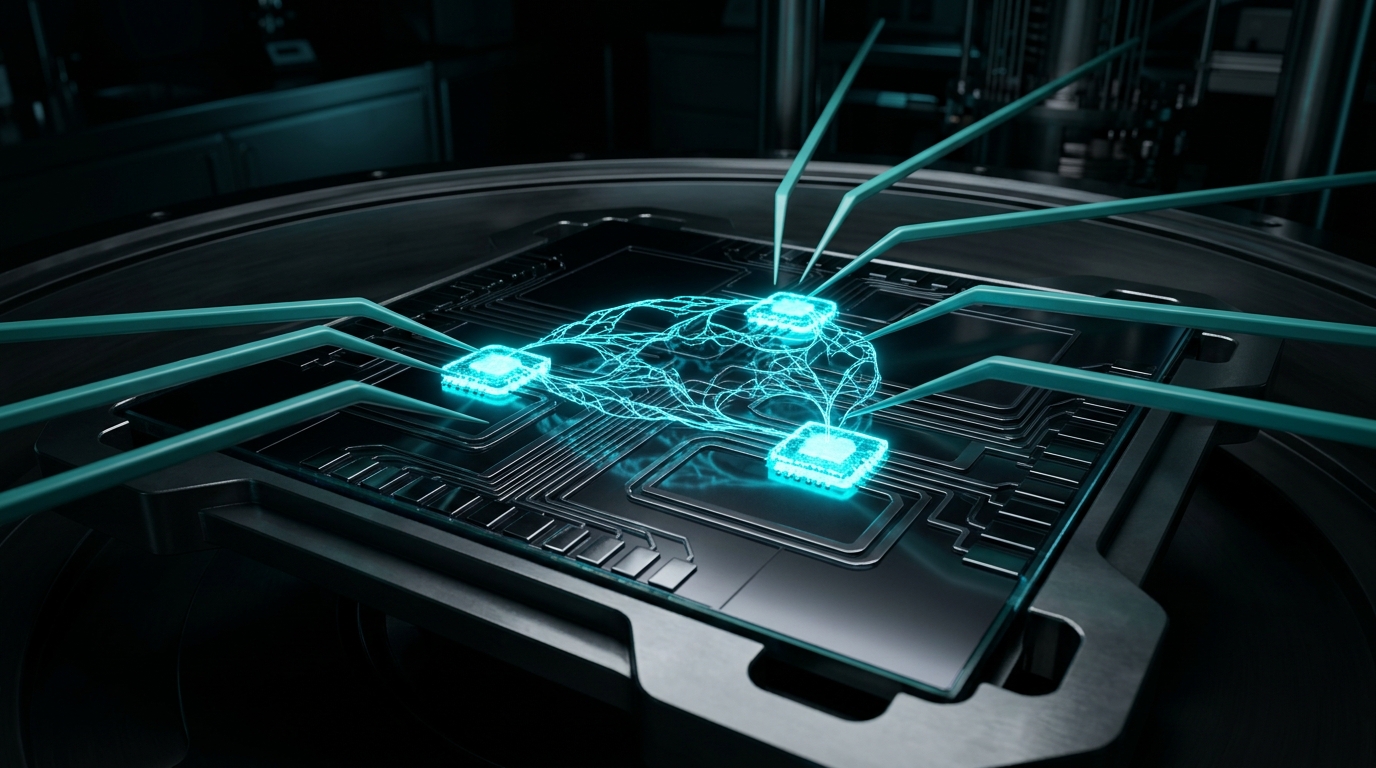
Your organization just deployed a quantum circuit on IBM Quantum or Amazon Braket. It runs alongside circuits from other tenants on the same physical processor. Unknown to your team, a neighboring circuit’s operations are bleeding electromagnetic interference into your qubits — degrading your results, or worse, deliberately extracting information about your computation.
This is not a theoretical risk. Researchers demonstrated in a revised study published on arXiv that crosstalk-mediated attacks can specifically target quantum algorithms running on shared hardware. They tested the attack against a three-qubit implementation of Grover’s search algorithm — one of the foundational algorithms for quantum speedup — and showed that unintentional (and intentional) circuit interference occurs when multiple quantum circuits execute in close physical proximity.
Multi-tenant quantum computing refers to the practice of running multiple users’ quantum circuits simultaneously on the same quantum processor, analogous to how cloud servers host multiple virtual machines on shared physical hardware. Unlike classical multi-tenancy, where hypervisors provide strong isolation between workloads, quantum processors currently lack equivalent isolation mechanisms. Qubits on the same chip interact through electromagnetic crosstalk, and no “quantum hypervisor” exists to enforce boundaries between tenants.
The attack surface here is physical, not logical. That distinction matters for every CISO evaluating quantum cloud services: your threat model must now account for hardware-layer interference that no software patch can fully resolve.
How Crosstalk-Mediated Attacks Work on Quantum Processors
The Physics of Quantum Crosstalk
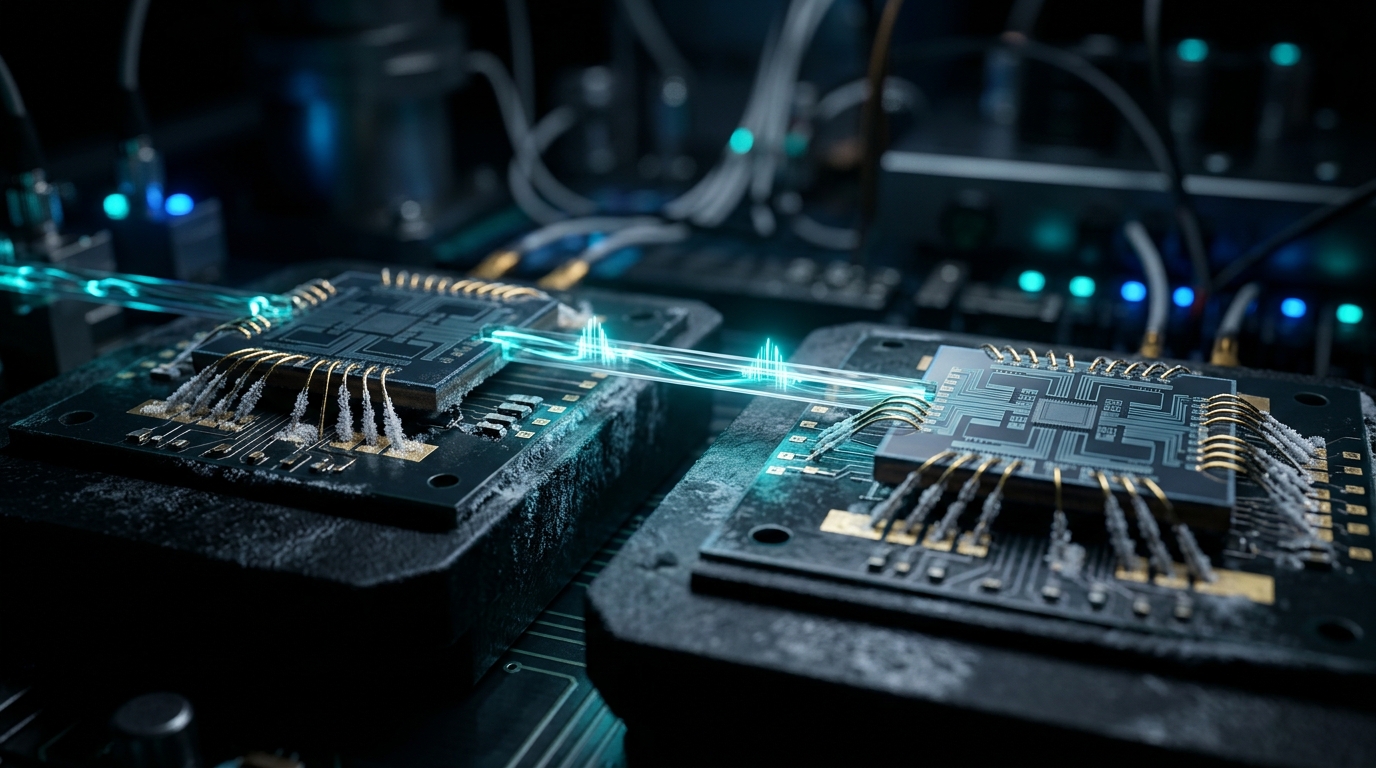
Quantum processors execute operations by applying precisely calibrated microwave pulses to individual qubits. When two circuits run on physically adjacent qubits, the microwave pulses intended for one qubit can inadvertently influence neighboring qubits. This electromagnetic leakage — crosstalk — introduces uncontrolled errors into quantum computations.
In a benign scenario, crosstalk simply degrades computational fidelity. In an adversarial scenario, an attacker deliberately designs circuits to maximize crosstalk into a target tenant’s qubits, either corrupting their results or inferring information about their computation based on observed interference patterns.
The arXiv study (2409.14598v2) demonstrated this attack against a three-qubit Grover’s search algorithm. Grover’s algorithm provides quadratic speedup for unstructured search problems and serves as a building block for cryptographic applications — making it a high-value target.
While both strategies offer some level of attack mitigation, their combined application yields the most significant performance improvement. — Authors, arXiv:2409.14598v2
Two Mitigation Strategies, One Clear Winner
The researchers evaluated two defensive techniques, both individually and in combination:
Gate-based dynamical decoupling inserts additional quantum gate operations that effectively “refocus” a qubit’s state, canceling out low-frequency noise introduced by crosstalk. Think of it as noise-canceling headphones for qubits — the extra operations destructively interfere with the unwanted electromagnetic coupling.
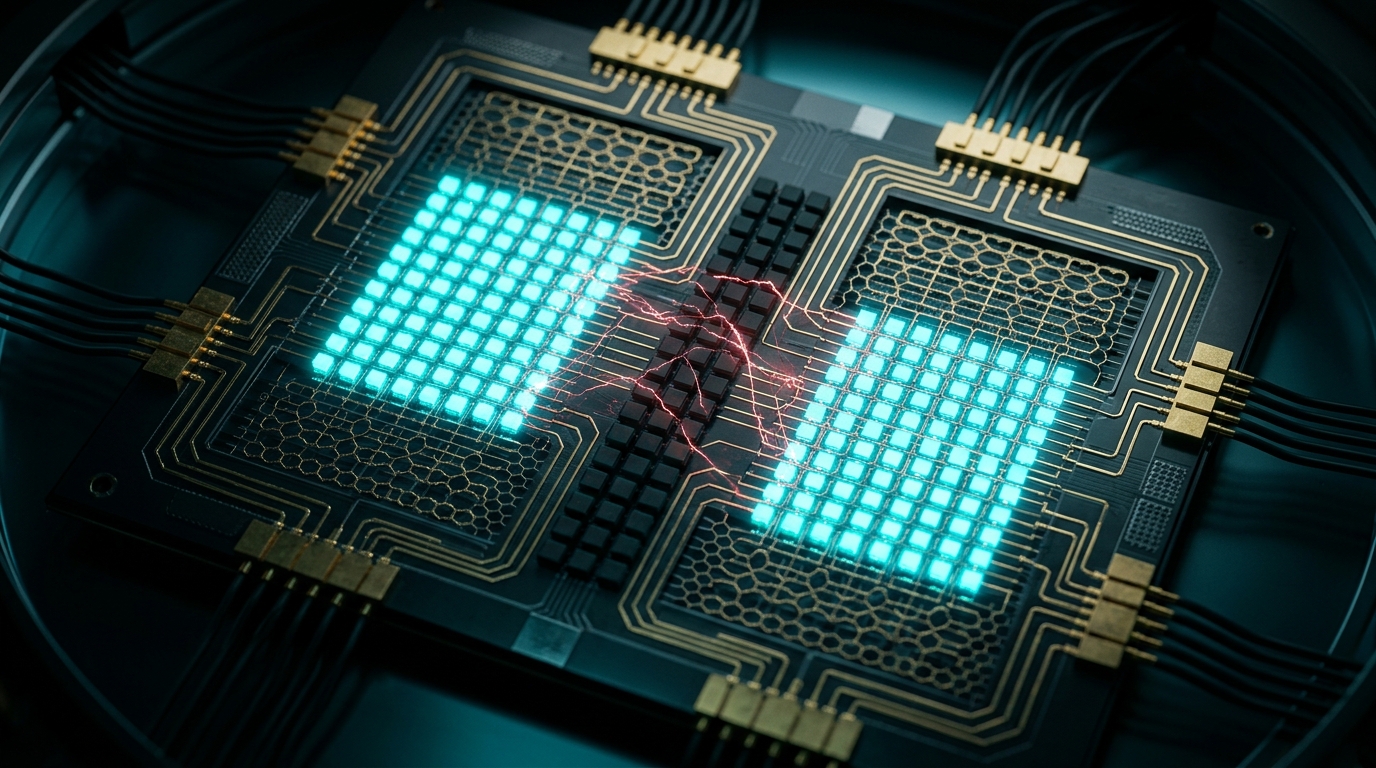
Buffer qubits take a spatial approach: intentionally leaving unused qubits between tenants’ active circuits to increase physical separation and reduce electromagnetic coupling strength. This is the quantum equivalent of an air gap, trading processor utilization for isolation.
| Mitigation Strategy | Mechanism | Tradeoff | Effectiveness (Alone) | Effectiveness (Combined) |
|---|---|---|---|---|
| Dynamical Decoupling | Temporal — inserts refocusing gates | Increases circuit depth and execution time | Partial mitigation | Strongest when paired |
| Buffer Qubits | Spatial — physical separation between circuits | Reduces available qubits for computation | Partial mitigation | Strongest when paired |
| No Mitigation | None | None | Vulnerable to crosstalk attacks | N/A |
| Combined (DD + Buffer) | Temporal + Spatial | Both tradeoffs apply | N/A | Most significant improvement |
The critical finding: neither technique alone fully neutralizes the attack. Only the combined application of dynamical decoupling and buffer qubits produced what the authors describe as “the most significant performance improvement” — restoring algorithm fidelity under adversarial conditions.
[IMAGE: A quantum processor chip viewed from above with visible qubit arrays, some qubits glowing cyan representing active circuits separated by dark inactive buffer qubits, with faint red electromagnetic interference lines crossing between adjacent active regions]
What the Study Did Not Measure
Security architects should note the gaps before building policy on this research alone. The study did not publish specific error rates or fidelity measurements for either the attacks or the mitigations. It did not identify which quantum hardware platform was used. It tested only three-qubit circuits — well below the scale of circuits organizations will run on 100+ qubit processors now available. And it evaluated only two mitigation strategies, leaving open the question of whether alternative approaches (qubit frequency detuning, hardware-level shielding, or scheduling-based isolation) might perform better.
These gaps do not diminish the finding. They scope it. The threat is demonstrated; the optimal defense at production scale remains an open research question.
The Regulatory and Market Context for Quantum Cloud Security
Quantum cloud computing is scaling fast. IBM, Google, Amazon, Microsoft, and IonQ all offer multi-tenant access to quantum processors. The economic logic is identical to classical cloud: amortize expensive hardware across many users. But the security model has not kept pace with the access model.
No current regulatory framework — not NIST’s post-quantum cryptography standards, not SOC 2, not ISO 27001 — addresses qubit isolation in multi-tenant quantum environments. NIST’s PQC standardization effort (FIPS 203, 204, and 205, finalized in 2024) focuses on algorithmic resilience against quantum attacks on classical cryptography. The hardware-layer security of quantum computers themselves sits in a regulatory vacuum.
This creates three near-term risks for organizations adopting quantum cloud services:
-
No contractual guarantees for qubit isolation. Review your quantum cloud provider’s terms of service. Most do not specify how or whether tenant circuits are physically separated on the processor.
-
No audit mechanism for crosstalk exposure. Unlike classical cloud environments where you can verify VM isolation through attestation, no equivalent verification exists for quantum circuit isolation.
-
Compliance ambiguity. If your quantum workload processes data subject to ITAR, HIPAA, or financial regulations, the absence of defined isolation standards creates unquantified compliance risk.
The tension between maximizing quantum hardware utilization through multi-tenancy and ensuring computational integrity will define quantum cloud architecture for the next decade. Organizations that treat quantum processors like black boxes — submitting circuits without understanding the physical execution environment — accept risks they cannot currently measure.
Within three to five years, as multi-tenant quantum computing scales to support more simultaneous users, hardware vendors will likely need to redesign qubit layouts with built-in buffer zones. Standardized security frameworks for shared quantum resources will become necessary. The organizations that engage with this problem now — rather than after an incident — will shape those standards rather than scramble to comply with them.
The BeQuantum Perspective: Hardware-Layer Trust in a Multi-Tenant World
This research reinforces a principle central to BeQuantum’s architecture: trust must be verifiable at every layer, including the physical hardware layer.
BeQuantum’s approach to quantum-era security addresses this through three mechanisms:
The PQC Layer ensures that cryptographic operations remain secure against quantum-capable adversaries, using NIST-standardized algorithms (ML-KEM, ML-DSA, SLH-DSA). But algorithm-level security is necessary, not sufficient, when the execution environment itself is compromised.
The Digital Notary provides blockchain-anchored verification of computational integrity. For organizations running quantum workloads on shared hardware, the ability to independently verify that outputs have not been corrupted by crosstalk interference — intentional or otherwise — becomes a critical audit capability. If your quantum circuit’s output can be tampered with at the hardware layer, you need an external integrity check that the quantum provider cannot influence.
IceCase hardware isolation represents the physical-layer answer to the multi-tenancy problem. Rather than relying on software-level mitigations (dynamical decoupling) or capacity-reducing workarounds (buffer qubits), dedicated hardware partitions eliminate the crosstalk vector entirely for high-assurance workloads. This mirrors the evolution in classical computing from shared hosting to dedicated instances to confidential computing enclaves — each step driven by security requirements that outgrew the previous isolation model.
The research from arXiv:2409.14598v2 validates this layered approach. Dynamical decoupling and buffer qubits mitigate crosstalk; they do not eliminate it. Organizations processing sensitive workloads on quantum hardware need defense in depth — from the algorithm layer through the verification layer to the physical execution environment.
What Your Security Team Should Do in the Next 90 Days
1. Audit your quantum cloud provider agreements (Week 1-2). Request documentation on qubit allocation policies, tenant isolation mechanisms, and whether dynamical decoupling or buffer qubits are applied by default. If your provider cannot answer these questions, that is your finding.
2. Classify quantum workloads by sensitivity (Week 3-4). Not every quantum experiment requires hardware-level isolation. Research and optimization workloads may tolerate some crosstalk risk. Cryptographic key generation, financial modeling, and any workload subject to regulatory compliance should be flagged for enhanced isolation.
3. Establish a quantum security baseline (Month 2-3). Define minimum isolation requirements for each workload classification. Include crosstalk mitigation in your quantum computing governance framework alongside algorithm selection, access controls, and output verification. Engage with providers that offer verifiable isolation — or plan your migration path to those that will.
Frequently Asked Questions
Q: Can crosstalk attacks on quantum computers steal data like classical side-channel attacks?
A: The mechanism differs from classical side-channel attacks but the risk category is analogous. Crosstalk-mediated interference can corrupt a target circuit’s outputs and may allow an attacker to infer information about the target’s computation based on observed interference patterns. The arXiv study focused on output corruption of Grover’s algorithm rather than data exfiltration, but the physical coupling that enables corruption could theoretically support inference attacks as the technique matures.
Q: Do current quantum cloud providers protect against crosstalk between tenants?
A: No major quantum cloud provider currently publishes specific crosstalk isolation guarantees in their service-level agreements. Some providers implement basic qubit scheduling to reduce co-tenancy on adjacent qubits, but standardized, verifiable isolation mechanisms do not yet exist. This is an active area of both academic research and vendor development.
Q: Should we avoid multi-tenant quantum computing entirely?
A: Not necessarily. The risk should be proportional to the sensitivity of your workload. Exploratory research, algorithm development, and non-sensitive optimization tasks can reasonably tolerate current multi-tenant environments. Cryptographic operations, regulatory-sensitive computations, and any workload where output integrity is critical should either use enhanced isolation (combined dynamical decoupling and buffer qubits) or dedicated hardware access until standardized protections emerge.
Last updated: April 2026. Based on arXiv:2409.14598v2.